
The Breakthrough
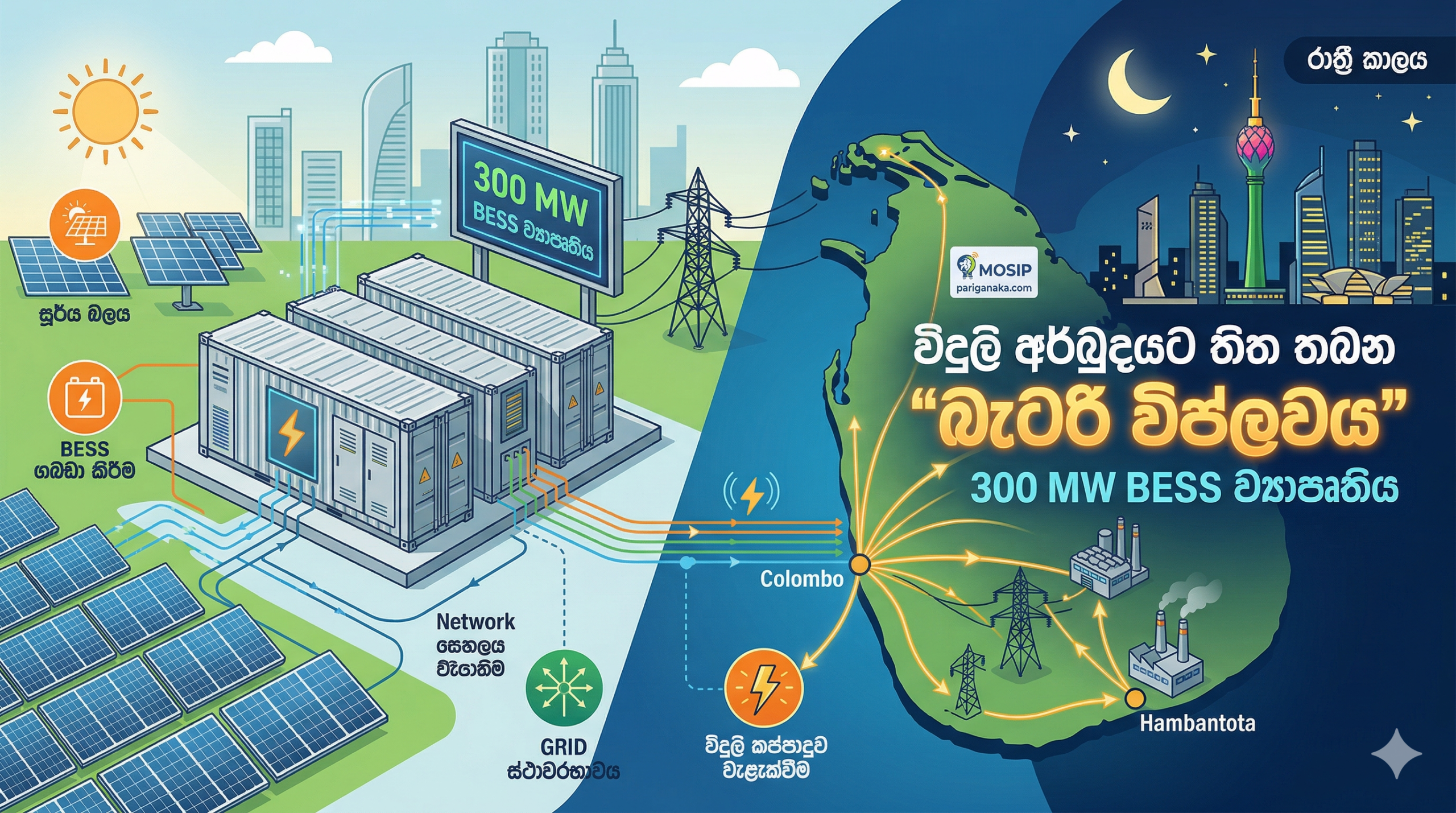
On April 1, 2026, Sri Lanka’s Cabinet officially approved a landmark proposal to procure 300 MW of Battery Energy Storage Systems (BESS). This move, fast-tracked by the Public Utilities Commission (PUCSL), aims to stabilise the national grid as the country aggressively integrates more solar and wind power.
Why This Matters Now
With global energy disruptions caused by the ongoing Middle East conflict, Sri Lanka is under pressure to slash its reliance on expensive diesel and coal. The problem? Solar and wind are intermittent. You can’t generate solar power at midnight—unless you store it.
The Two-Pronged Strategy
The government is tackling the storage problem in two distinct ways:
- 25 Standalone Units: 250 MW of the capacity will come from 25 separate units (10 MW/40 MWh each). These will be connected directly to the medium-voltage network across the island.
- On-Site Solar Integration: The remaining 50 MW will be installed directly at existing solar power plants, allowing producers to store excess daytime energy for use during the evening peak.
A Win for the Private Sector
The projects are being developed on a Build, Own, and Operate (BOO) basis. Local energy giants like WindForce PLC are already leading the charge, having recently secured their 13th grid-scale BESS project in Panadura. This is a clear signal that the “Green Tech” sector is becoming a primary driver for the Sri Lankan economy in 2026.
The “Techie” Takeaway
For your students and tech readers, this represents a shift toward Smart Grid technology. We aren’t just building power plants anymore; we are building a distributed, intelligent network that uses AI to decide when to store power and when to release it.
Leave a Reply