
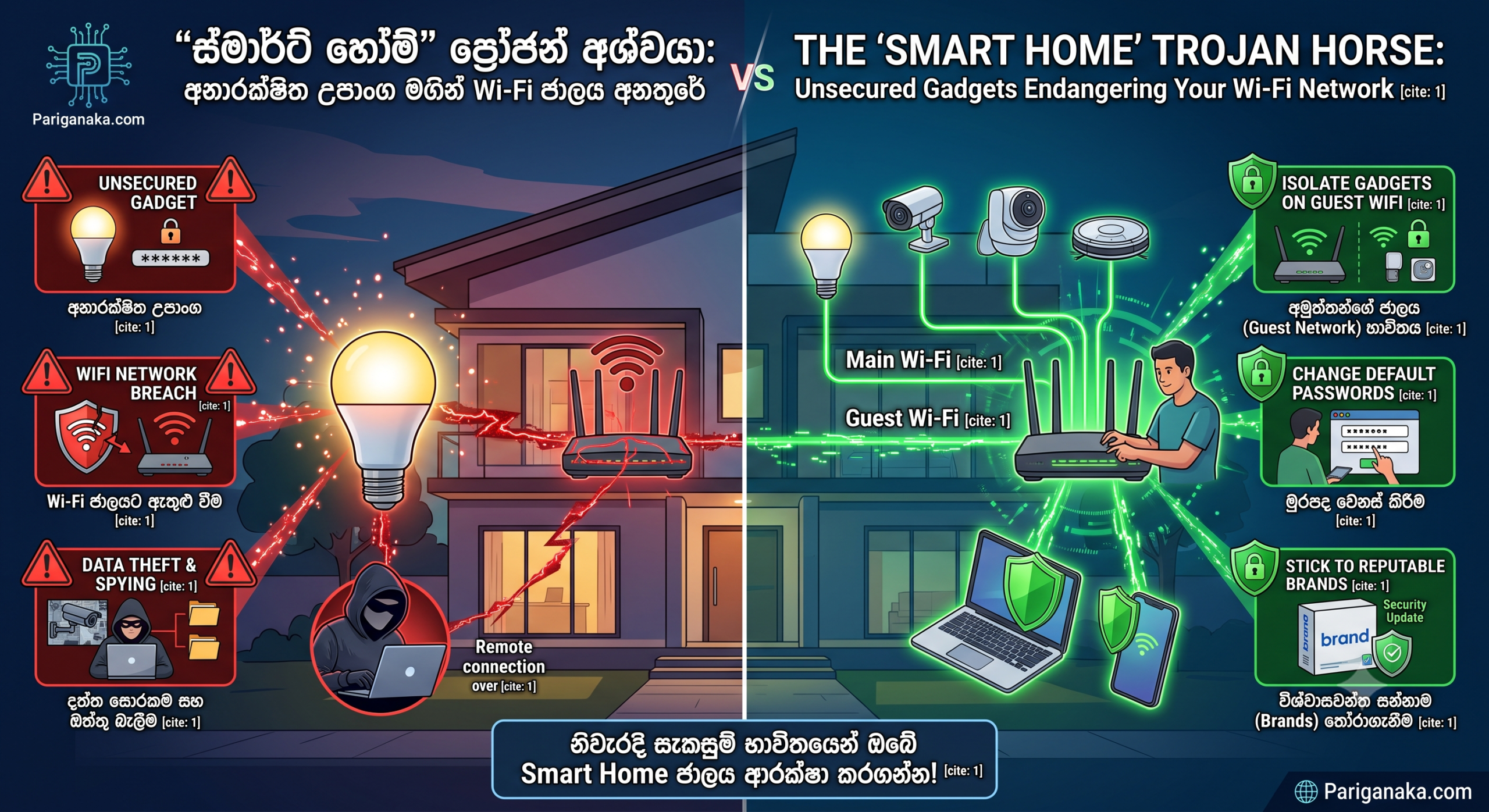
In 2026, our homes are smarter than ever. We have smart TVs, robot vacuums, Wi-Fi security cameras, and voice-controlled lights. It is incredibly convenient to turn on your AC before you even arrive home.
But this convenience comes with a massive hidden risk. Cybercriminals have realized that while laptops and smartphones have strong built-in security, most smart home gadgets do not. Here at Pariganaka.com, we want to show you how a cheap, unbranded smart device can act as an unlocked backdoor into your private Wi-Fi network.
1. The Weakest Link in Your Digital Fortress
When you connect a device to your home Wi-Fi, it shares a digital space with your personal phone, your work laptop, and your family’s data.
- The Problem: Tech giants like Apple and Microsoft spend billions securing their operating systems. But the manufacturer of a cheap smart plug or smart bulb usually spends zero dollars on security.
- The Vulnerability: Millions of these cheap devices are shipped with weak, public default passwords (like “admin” and “12345”) and firmware that is never updated to patch security holes.
2. How the Hack Actually Happens
Hackers do not need to sit outside your house in a van to break into your network.
- The Scan: Cybercriminals use automated software to scan the internet for vulnerable smart devices. Once they find your cheap, unsecured smart bulb or security camera, they log into it using the default password.
- The Pivot: The smart bulb itself does not hold any valuable data. However, because the bulb is connected to your home Wi-Fi, the hacker is now inside your network.
- The Attack: From that bulb, the hacker can launch attacks against your main computer, intercept unencrypted internet traffic, or use your internet connection to conduct illegal activities, making it look like you did it!
3. The “Creep” Factor: Hijacked Cameras
It is not just data theft you have to worry about. The most terrifying smart home hacks involve devices with cameras and microphones.
- Baby Monitors and CCTVs: Hackers actively target cheap indoor security cameras. If you do not change the default password, a complete stranger halfway across the world can log in, watch the inside of your home, and even speak through the device’s two-way audio.
- Robot Vacuums: Many modern robot vacuums map the floor plan of your house and use built-in cameras for object avoidance. If hacked, these become mobile spy cameras roaming through your living room and bedrooms.
4. Smart Ways to Lock Down Your Home
You do not need to throw away your smart gadgets, but you must isolate them. Here is how to build a digital wall around your home network.
- Set Up a “Guest Network” for Gadgets: This is the ultimate defense! Go into your Wi-Fi router settings and turn on the “Guest Network” feature. Connect all your smart TVs, bulbs, and vacuums to this Guest Wi-Fi, while keeping your laptops and phones on your Main Wi-Fi. If a hacker breaches a smart bulb, they are trapped on the guest network and cannot reach your private computers.
- Change the Default Passwords Immediately: The second you plug in a new smart device or router, open its companion app and change the default admin password to something long and complex.
- Stick to Reputable Brands: Avoid buying unbranded, suspiciously cheap smart home gadgets from random online marketplaces. Stick to established brands (like Philips, Google, Apple, or Amazon) that regularly push automatic security updates to their devices.
Quick Guide: Unsafe vs. Safe Smart Home
| Network Setup | Unsafe Setup ❌ | Secure Setup ✅ |
| Wi-Fi Connection | All devices on the same network | Smart gadgets isolated on a Guest Network |
| Device Passwords | Left as default (“admin” / “0000”) | Changed immediately during setup |
| Hardware Choice | Cheap, unbranded devices | Reputable brands with security updates |
The Bottom Line:
A smart home should make your life easier, not invite cybercriminals into your living room. Treat every internet-connected gadget as a potential security risk. By isolating your smart devices on a separate Wi-Fi network and changing default passwords, you can enjoy the convenience of the future without sacrificing your privacy.
Keep your digital castle secure, and stay tuned to Pariganaka.com for more modern tech survival guides!
Leave a Reply