
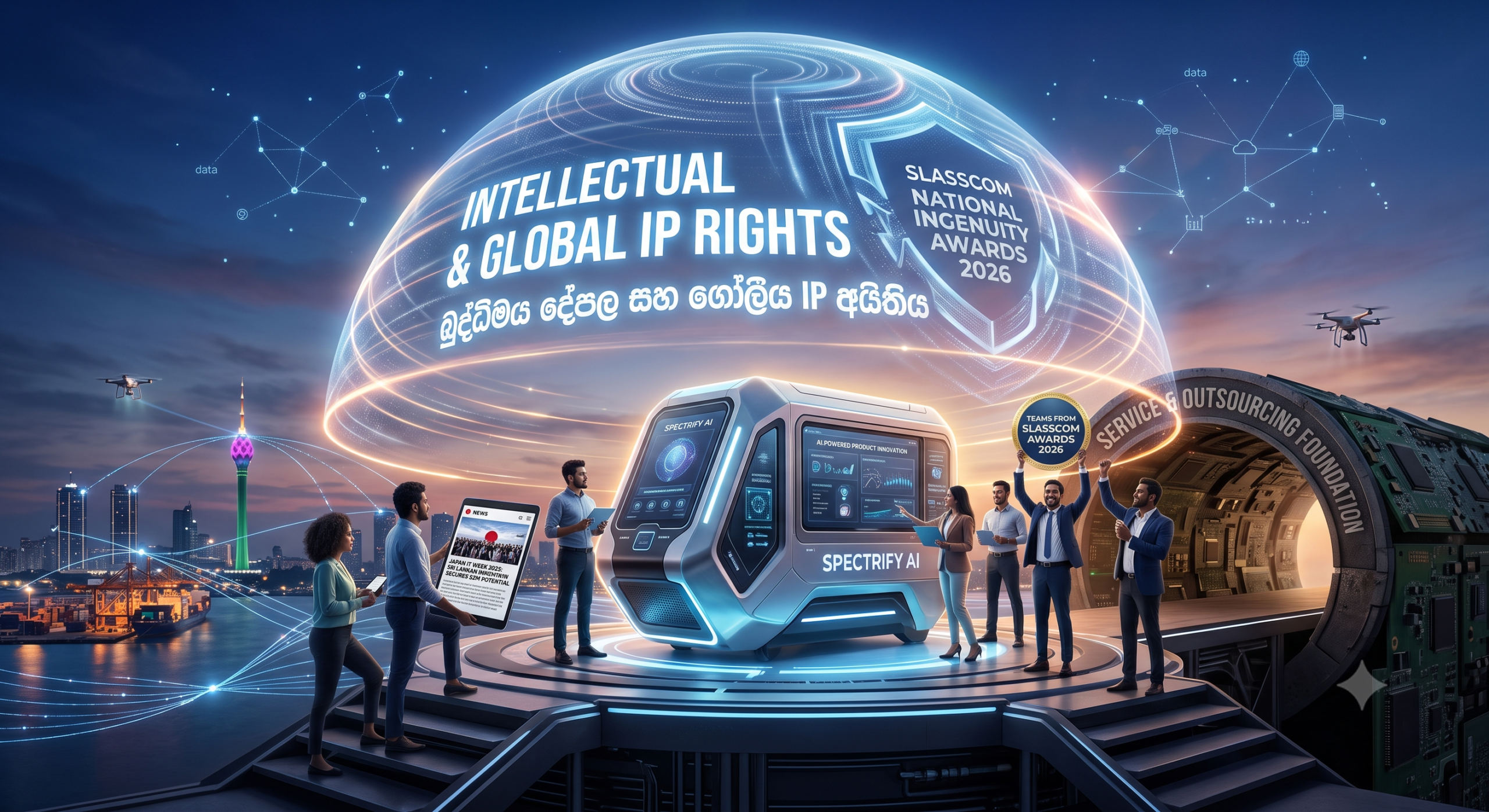
For years, Sri Lanka’s IT sector was globally recognized primarily as a premier destination for outsourcing and high-quality coding. But in 2026, the narrative is completely flipping. The national goal has shifted from merely providing digital services to creating our own world-class tech products and holding the Intellectual Property (IP) rights to them.
As the country races toward its ambitious goal of building a US$5 billion knowledge economy by 2030, here is how Sri Lanka is transitioning into a true product-based tech hub.
🏆 SLASSCOM National Ingenuity Awards 2026: Taking Local Talent Global
A major catalyst for this “product economy” push is the recently concluded 8th edition of the SLASSCOM National Ingenuity Awards (SNIA) 2026.
- Rewarding Originality: The awards recognized groundbreaking tech innovations from established companies, startups, universities, and even school students across the island. The focus this year wasn’t just on clean code, but on originality, business scalability, and practical global impact.
- Unlocking Global Capital: Platforms like SNIA act as massive launchpads. By showcasing high-potential startups (with innovations ranging from AI-driven analytics to advanced robotics), the awards directly connect local creators with foreign and domestic venture capitalists. It is no longer just a trophy; it is a ticket to global expansion.
⚖️ Securing the Rights: The Push for IP Protection
Creating world-class products is only half the battle; owning the legal rights to them is where the real economic value lies. The Sri Lankan government is actively stepping up to secure these rights on the world stage.
- Sri Lanka at WIPO: Addressing the World Intellectual Property Organization (WIPO) General Assembly in Geneva recently, Sri Lankan representatives reaffirmed the country’s absolute commitment to building a modern, secure, and transparent IP ecosystem.
- Complete Digitization: A massive milestone was achieved in May 2026 with the successful digitization of Sri Lanka’s entire IP registry. Furthermore, local trademarks are now fully integrated into WIPO’s Global Brand Database. This means a Sri Lankan developer who creates a revolutionary new AI tool can now establish and defend their ownership globally with unprecedented ease.
🇯🇵 Conquering East Asia: Selling Our Solutions
This new product-focused strategy is already paying massive dividends abroad. During the Japan IT Week Spring 2026 exhibition in Tokyo, a delegation of ten local ICT companies proved that Sri Lankan tech can compete with the best.
Rather than just offering cheap labor, these companies showcased high-end proprietary solutions in Artificial Intelligence, the Internet of Things (IoT), and complex custom software. Their efforts generated over 300 business leads and an estimated US$2.0 million in future business potential, proving that the world is ready to buy what Sri Lanka is building.
The Pariganaka Takeaway: 2026 marks the year Sri Lanka graduates from a tech dependent to a tech creator. The era of waiting for outsourced projects is ending. The infrastructure is in place, the IP laws are modernized, and global investors are watching. For local tech professionals and entrepreneurs, the message is loud and clear: Stop just writing code for others, and start building products for yourself.
Leave a Reply