
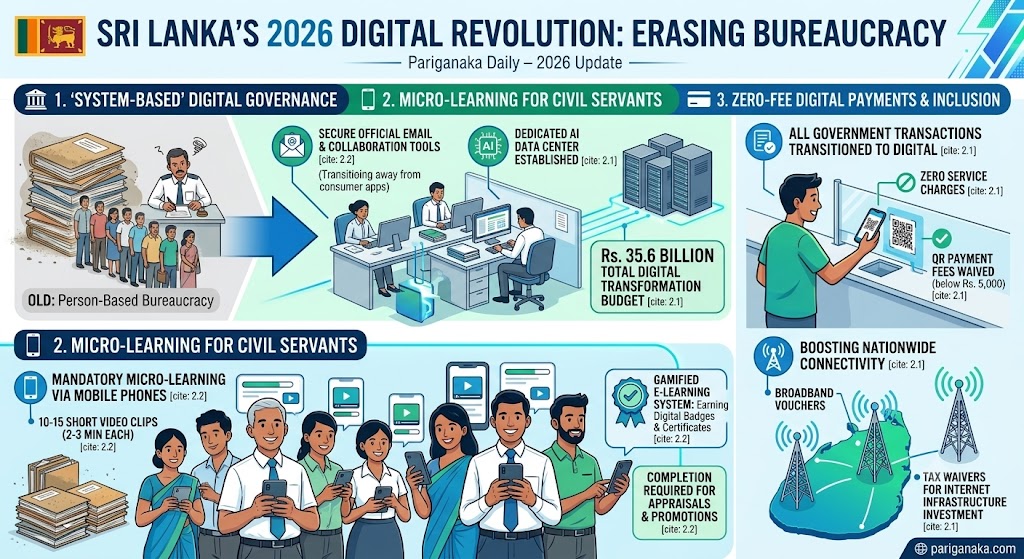
For decades, getting anything done in the Sri Lankan public sector meant navigating a maze of paperwork, long queues, and waiting for a specific official’s signature. However, as we move through 2026, the government is officially dismantling this outdated model. Sri Lanka is transitioning its public service from a traditional “person-based” methodology to a modern, highly efficient “system-based” approach.
Backed by a massive Rs. 35.6 billion (approximately $120 million) budget allocation for digital transformation, this initiative is rapidly redefining how citizens interact with the state.
Here are the top three ways this digital overhaul is eliminating bureaucracy and modernizing government services this year.
🏛️ 1. The Shift to “System-Based” Digital Governance
The primary objective of this massive transformation is to eliminate service delays and enhance efficiency by upgrading the technological expertise of public officers.
- Securing Communications: The days of conducting official government business over consumer apps are ending. Public officers are receiving foundational training to transition away from WhatsApp and Viber, moving strictly to secure, official government email and collaboration tools.
- National AI Infrastructure: To support this data-heavy transition, the 2026 budget has specifically earmarked Rs. 750 million to establish a dedicated AI data center, enhancing Sri Lanka’s capabilities in emerging technologies.
📱 2. Micro-Learning and Gamification for Civil Servants
Training hundreds of thousands of government employees simultaneously is a logistical nightmare. To overcome “technological anxiety” among senior officials, the Ministry of Digital Economy is rolling out innovative training methods.
- Bite-Sized Education: Instead of dragging officials into long, traditional lectures, the government is utilizing a “Micro-learning” methodology. Employees receive learning content directly on their mobile phones in the form of 10 to 15 short video clips, each lasting just two to three minutes.
- Earning Digital Badges: To encourage participation, the E-Learning platform uses “Gamification”—such as badge-awarding systems—and issues digitally signed certificates upon completion. Completing these digital literacy courses is now a mandatory policy requirement for annual performance appraisals and promotions.
💳 3. Zero-Fee Digital Payments and Financial Inclusion
The days of carrying exact change to a government office are over. As part of the 2026 digital roadmap, public services are adopting frictionless financial technologies.
- Fee-Free Government Transactions: All government transactions are being transitioned to a digital payment system. To encourage mass adoption, no service charges will be applied, and QR payment fees are completely waived for transactions below Rs. 5,000.
- Connecting the Nation: To ensure everyone can access these digital services, the government is introducing broadband vouchers to support online learning and waiving taxes to encourage private investments in expanding nationwide internet coverage.
The Pariganaka Takeaway:
Sri Lanka’s 2026 digital transformation proves that we are finally leaving the era of red tape behind. By upskilling civil servants through mobile micro-learning and investing heavily in secure AI infrastructure, the government is building a system that serves the citizen, rather than forcing the citizen to serve the system. This transition to a “system-based” state isn’t just about new technology; it is about reclaiming millions of lost hours for the Sri Lankan people.
Leave a Reply