
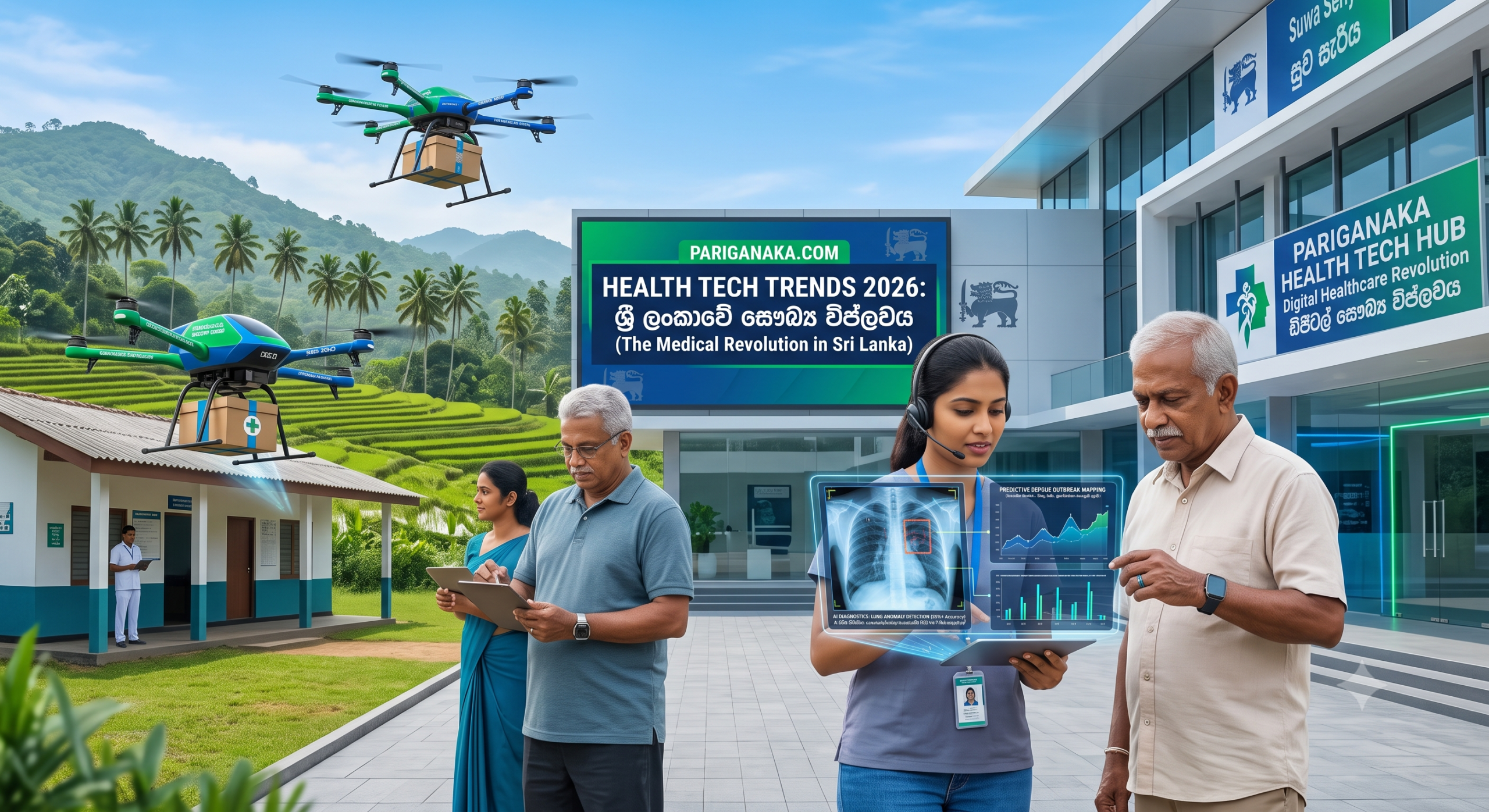
For decades, accessing specialized healthcare in Sri Lanka meant enduring long queues at the National Hospital in Colombo or waiting months for a specialist appointment. Today, the landscape has fundamentally shifted. As we progress through 2026, Sri Lanka’s healthcare system is transitioning from a reactive model—treating you after you get sick—to a proactive, data-driven ecosystem.
By merging Artificial Intelligence with wearable technology and autonomous delivery networks, local health tech startups and government initiatives are bridging the gap between urban hospitals and rural clinics.
Here are the top three digital health (HealthTech) trends saving lives across Sri Lanka this year.
🩺 1. AI-Assisted Diagnostics in Rural Hospitals
The critical shortage of specialized radiologists and pathologists in rural areas used to cause severe delays in diagnosis. Now, AI is serving as a powerful second opinion.
- Instant Scan Analysis: Peripheral hospitals in areas like Monaragala and Mullaitivu are now equipped with cloud-connected diagnostic software. When a patient gets an X-ray, MRI, or CT scan, an AI model instantly analyzes the image, cross-referencing it with millions of global medical records.
- Prioritizing Critical Cases: The AI can detect microscopic anomalies—such as early-stage lung cancer or minor brain hemorrhages—within seconds, with over 95% accuracy. It immediately flags high-risk cases and automatically forwards them to a human specialist in Colombo for final verification, cutting diagnostic waiting times from weeks to mere minutes.
⌚ 2. Smart Wearables and Predictive Dengue Tracking
The standard smartwatch has evolved from a simple fitness tracker into a clinical-grade medical device, seamlessly integrated into Sri Lanka’s digital health registry.
- Continuous Vital Monitoring: Local health apps now sync directly with smart rings and watches to monitor blood oxygen (SpO2), heart rate variability, and basal body temperature in real-time. If the AI detects the specific physiological patterns that precede a heart attack, it automatically triggers an alert to the user and their designated emergency contacts.
- Predictive Epidemic Mapping: Sri Lanka is utilizing anonymized wearable data to combat Dengue fever. By analyzing localized spikes in sudden body temperature increases (fever) across a specific neighborhood, public health inspectors can predict a localized Dengue outbreak days before hospital wards start filling up, allowing for immediate, targeted mosquito fogging.
🚁 3. Medical Drone Delivery Networks
Traffic congestion and rugged terrain often delay the transport of life-saving medical supplies. In 2026, the sky is the new fast lane for emergency medicine.
- The Autonomous Supply Chain: Working alongside the 1990 Suwa Seriya ambulance service, automated medical drones are now deployed from regional hubs. If a patient in a remote village is bitten by a snake, or a rural clinic desperately needs a specific blood type for a maternal emergency, a drone can be dispatched instantly.
- Cold-Chain Transport: These drones are equipped with temperature-controlled lockboxes to transport sensitive items like antivenom, vaccines, and blood bags. Traveling at high speeds in a straight line, they bypass winding mountain roads and traffic, delivering critical supplies to rural outposts in a fraction of the time it would take a vehicle.
The Pariganaka Takeaway: Healthcare in 2026 is no longer restricted by geography. By empowering rural clinics with AI diagnostics and establishing rapid drone supply chains, Sri Lanka is democratizing medical access. Technology is proving that the future of medicine isn’t just about building bigger hospitals—it is about utilizing data and connectivity to bring the hospital directly to the patient, no matter where they live on the island.
Leave a Reply