
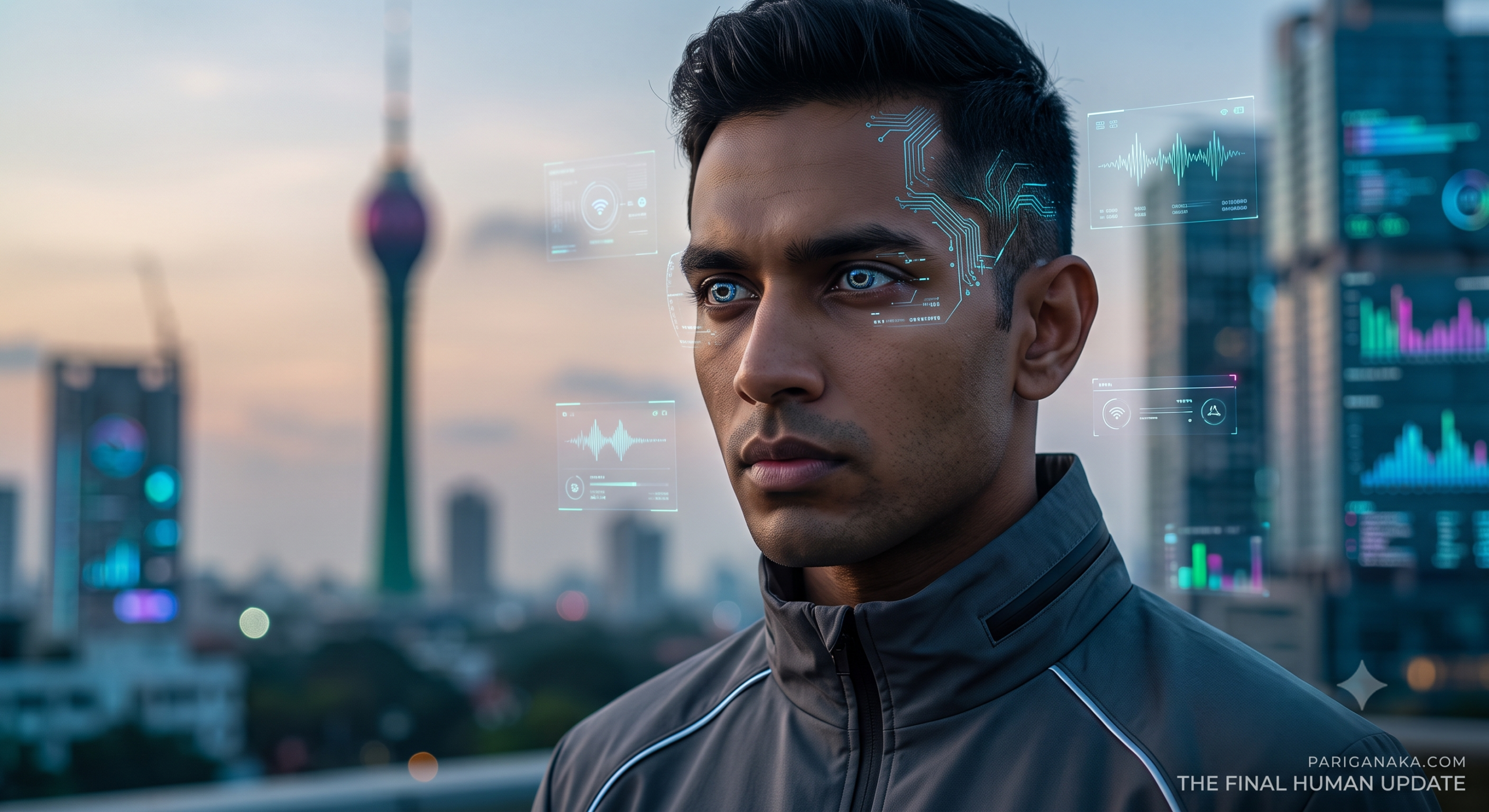
For the past twenty years, humanity has been obsessed with updating machines. We waited in line for the newest smartphones, downloaded the latest software patches, and upgraded our Wi-Fi routers. But as we navigate through 2026, a massive shift is happening. The screens are disappearing. The devices are shrinking.
Technology is no longer something we carry in our pockets; it is becoming a part of who we are.
Welcome to the era of Human 2.0. Here at Pariganaka.com, our tagline, “The Final Human Update,” isn’t just a catchy phrase—it is the reality of the next technological revolution. We are crossing the bridge between biology and artificial intelligence. Here is how the final update is rolling out right now.
1. The Mind as a Mouse: Brain-Computer Interfaces (BCI)
The days of tapping on glass screens and typing on plastic keyboards are slowly coming to an end.
- The Tech: Companies pioneering Neural technology have moved beyond early clinical trials. Brain-Computer Interfaces (BCIs) use microscopic threads implanted in the brain or advanced non-invasive wearable bands to read neural signals.
- The Reality: People can now control computer cursors, type messages, and interact with smart home devices entirely through thought. What started as a medical miracle for those with paralysis is rapidly becoming the ultimate productivity tool for the everyday user.
2. From Wearables to “Inside-ables”
We are used to smartwatches tracking our steps and heart rates, but the update to human hardware goes much deeper.
- Smart Contacts & AR: Augmented Reality has moved from bulky headsets to standard-looking glasses and smart contact lenses. Digital information—like live translations, navigation arrows, and messages—is now projected directly onto your retinas, blending the digital and physical worlds perfectly.
- Biometric Nanotech: Microscopic sensors can now monitor your bloodstream in real-time. Instead of going to the doctor when you feel sick, your internal system will ping your phone to warn you that you are about to catch a cold in two days, automatically ordering the necessary vitamins to your doorstep.
3. The AI Symbiosis: A Co-Pilot for Your Brain
Up until now, AI was a tool we consulted. We typed a question, and it gave an answer. The final update changes this dynamic completely.
- Contextual Intelligence: With wearable cameras and constantly active microphones, your personal AI sees what you see and hears what you hear. It doesn’t wait for a prompt.
- Real-World Application: If you are in a meeting and someone asks a complex financial question, your AI instantly whispers the correct data into your earpiece or flashes it on your AR glasses before you even have to think about it. You aren’t just using AI; you are thinking with it.
The Paradigm Shift: Human 1.0 vs. Human 2.0
| Feature | Human 1.0 (The Past) 📉 | Human 2.0 (The Update) 📈 |
| Interacting with Tech | Tapping screens, typing on keyboards | Thinking, gesturing, glancing |
| Healthcare | Reactive (Treating symptoms after they appear) | Proactive (Nanotech predicting illness early) |
| Memory & Knowledge | Memorizing facts or Googling answers | Instant AI recall projected into vision |
| Connection Speed | Fiber Wi-Fi to a physical router | Neural connection directly to the cloud |
The Ethical Frontier: Are We Ready?
With great upgrades come terrifying vulnerabilities. If your brain is connected to the internet, can it be hacked? If an AI is processing your daily life, who owns the data of what you see and hear?
These are the most critical questions of our generation. As we embrace this “Final Update,” cybersecurity is no longer just about protecting your bank account—it is about protecting your thoughts, your biology, and your autonomy.
The Bottom Line:
We are standing on the edge of human evolution, driven not by nature, but by code and silicon. Technology is no longer a tool; it is becoming an extension of our human senses.
Are you ready for the upgrade? Stay connected with Pariganaka.com as we decode the future, protect your digital soul, and prepare you for tomorrow’s reality.
Leave a Reply