
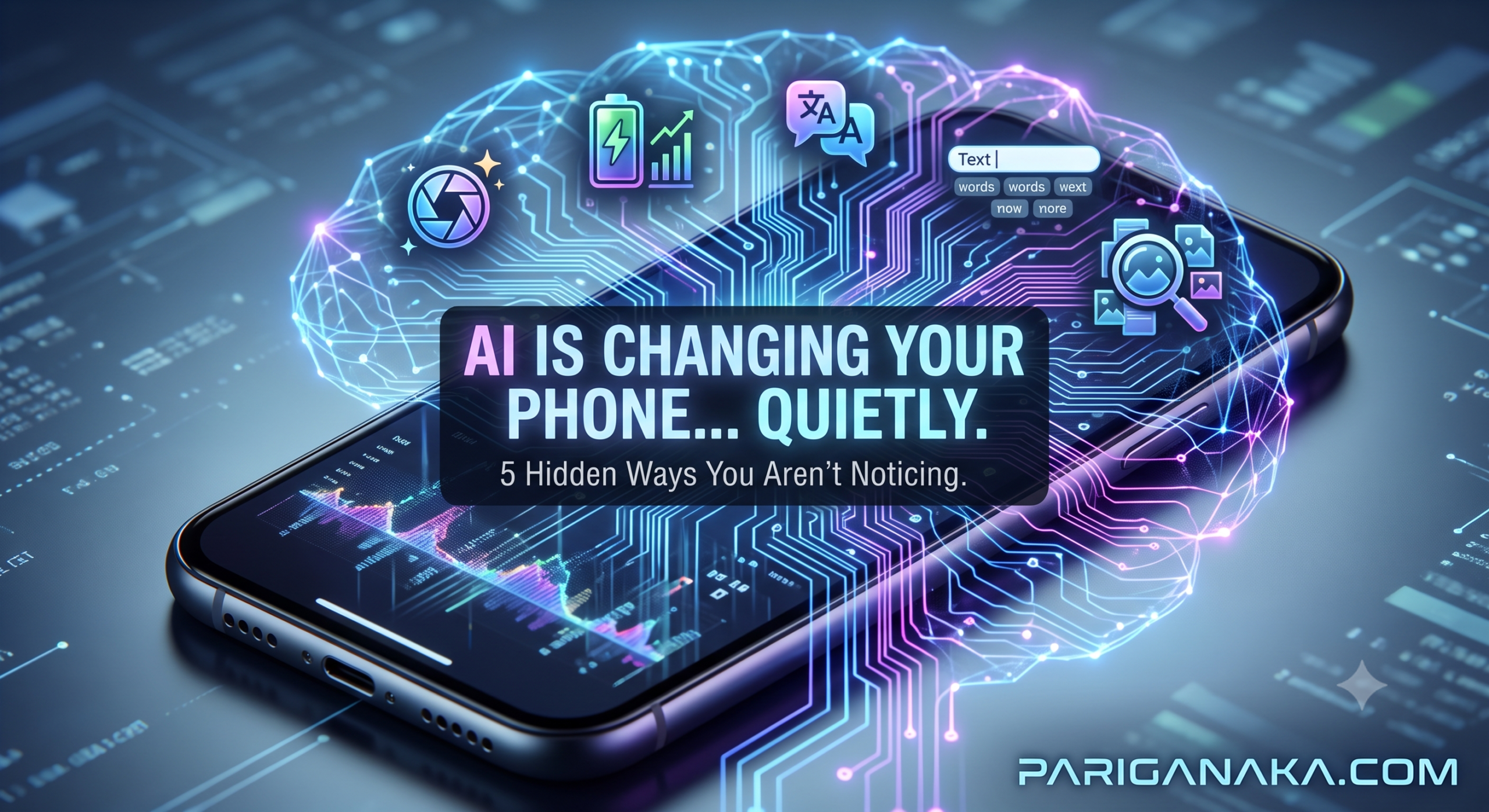
Artificial Intelligence is no longer just about chatting with bots or generating images; it’s deeply embedded in the devices we use every day. If you own a smartphone made in the last few years, AI is already working behind the scenes to improve your experience.
Here are five ways AI is quietly changing how you use your phone right now.
1. Photography: The End of Bad Photos
Remember when taking a good photo required perfect lighting and a steady hand? AI has changed that.
- Computational Photography: When you press the shutter button, your phone doesn’t just take one picture. It takes several frames at different exposures and uses AI to instantly stitch them together, balancing the shadows and highlights.
- Scene Recognition: Your camera can identify if you are pointing it at a dog, a sunset, or a plate of food, automatically adjusting the color settings to make the subject pop.
- Magic Erasers: Tools that let you instantly remove photobombers or unwanted objects from the background rely entirely on AI to fill in the missing pixels seamlessly.
2. Battery Life: Learning Your Habits
Battery technology hasn’t changed drastically, but how our phones manage power has.
- Adaptive Battery: Modern operating systems use machine learning to understand your usage patterns. The AI learns which apps you use the most and which you rarely open.
- Power Allocation: It then restricts battery power for those rarely used apps, ensuring your phone has enough juice to get you through the day based on your specific routine.
3. Audio and Voice Calls: Crystal Clear Sound
AI is transforming how we hear and are heard.
- Noise Cancellation: When you make a call in a busy street or a noisy cafe, AI algorithms filter out the background noise, isolating your voice so the person on the other end hears you clearly.
- Real-time Translation: Features like Live Translate allow you to have phone conversations with someone speaking a different language, with AI translating the audio on the fly.
4. Predictive Text and Autocorrect (That Actually Works)
Autocorrect used to be a source of constant frustration, but it has gotten significantly smarter.
- Contextual Understanding: Instead of just checking if a word is spelled correctly, the AI now understands the context of your sentence. It predicts the next word you want to type based on your personal writing style and the topic you are discussing.
- Smart Replies: The suggested quick replies you see in messaging apps are generated by AI analyzing the incoming message and offering the most likely natural responses.
5. Searching Your Own Phone
Finding a specific photo or file used to mean endless scrolling.
- Visual Search: You can now open your gallery and search for “dog on a beach” or “receipt from last month.” The AI scans the content of your images to find exactly what you are looking for without needing manual tags.
- Universal Search: Swiping down on your home screen and typing a query will use AI to search your apps, contacts, messages, and the web simultaneously, anticipating what you need before you finish typing.
The Future is Here These subtle AI integrations are just the beginning. As neural processing units (NPUs) in smartphones become more powerful, we can expect our devices to become even more intuitive, predictive, and personalized.
Leave a Reply