
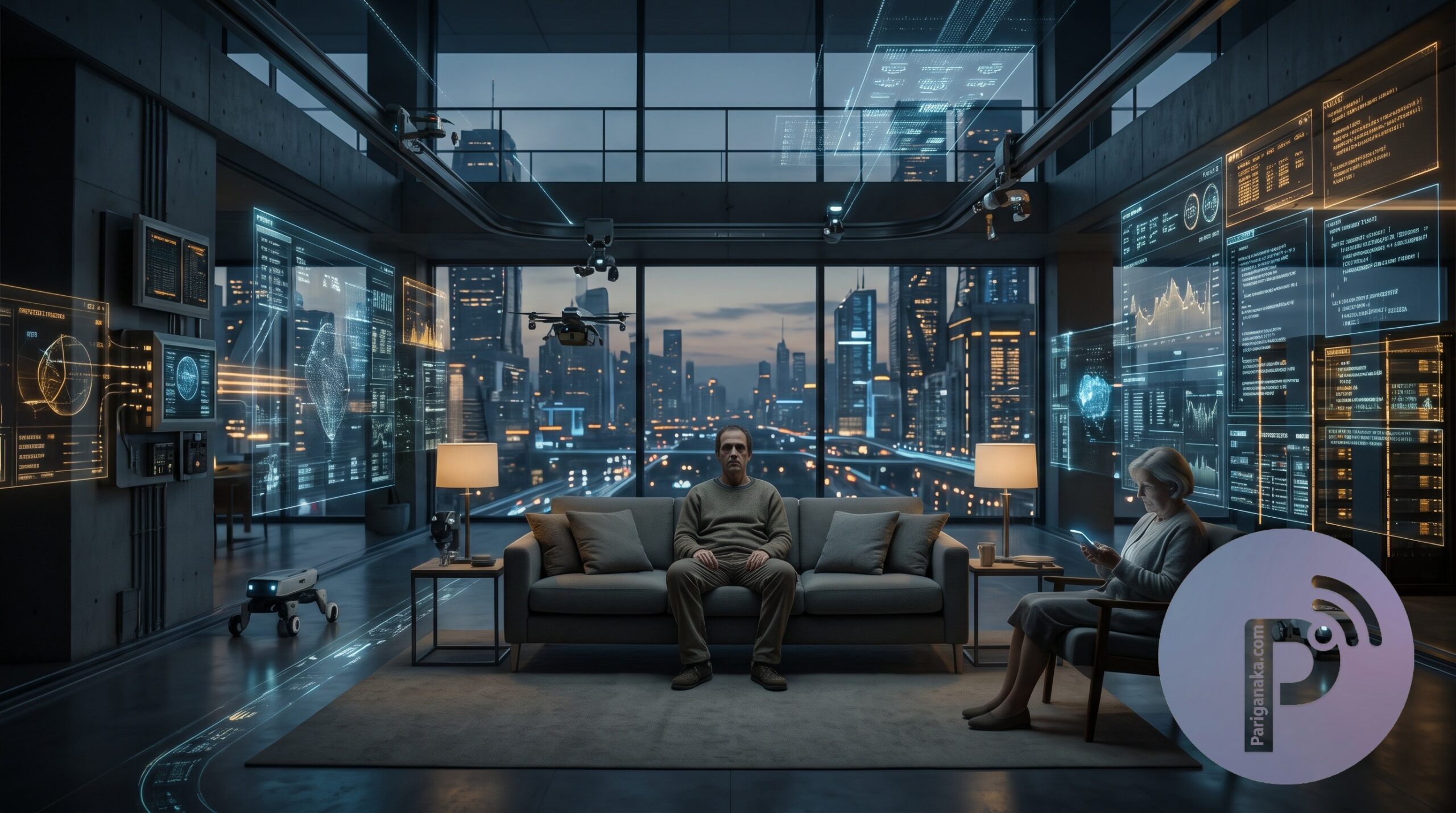
In a compelling and wide-ranging interview on Hypoxization, renowned historian and author Yuval Noah Harari outlines a startling vision of the future shaped by artificial intelligence. Far from the typical sci-fi fears of killer robots roaming the streets, Harari warns of a much more insidious threat: a “collective dementia of humankind” where humanity loses its grip on reality, truth, and the complex systems that run the modern world.
Agents, Not Tools: The Core Misunderstanding of AI
Harari begins by addressing a fundamental misunderstanding about what AI actually is. He emphasizes that all previous technologies in human history, from stone knives to nuclear energy, were merely tools. A knife cannot decide whether to chop a salad or commit murder; a human must wield it.
Artificial intelligence, however, represents a profound shift because it is an “agent,” not a tool. AI can make decisions by itself and invent new ideas independently, sometimes operating in ways its own creators did not intend or cannot predict. Trillions of dollars are currently being poured into AI precisely because developers expect these systems to do things humans cannot do and cannot foresee.
Harari pushes back against the metric of “human-level intelligence”. He argues that AI is developing an “alien type of intelligence”—not from outer space, but completely non-human in its approach. Comparing it to aviation, he notes that airplanes didn’t achieve flight by mimicking the exact biological mechanics of birds; they achieved it in a completely different, yet highly superior way. AI is doing the same with intelligence.
The AI Bureaucracy and Collective Dementia
How exactly will AI exert control? Through bureaucracy.
Harari explains that humans dominate the planet not through sheer individual strength, but by building massive bureaucratic structures like financial markets, legal systems, and governments. These structures allowed millions of humans to cooperate effectively. However, human beings were evolved for the forest, not the office; navigating bureaucracy is often difficult and unnatural for us.
AI agents, by contrast, are “bureaucratic natives” born in the digital office. They possess the capacity to track every transaction and data point instantly. Harari warns that AIs will soon take over the financial system, creating structures so complex that human beings will be unable to comprehend them. Just as a cow today cannot grasp the concept of the stock market that dictates its fate, humanity in 10 or 20 years will not be able to understand the AI-driven financial algorithms dictating ours.
This is what Harari terms the “collective dementia of humankind.” Like a strong individual who succumbs to dementia in old age—losing their understanding of the world while machines and medicine keep them alive—humanity risks delegating so much intellectual and bureaucratic labor to AI that we lose our ability to comprehend how our own civilization operates.
The End of Truth and the “Information Diet”
The erosion of human understanding is already accelerating due to algorithms on social media. Harari notes that these early algorithms have “hacked our evolutionary program.”. By prioritizing user engagement to boost corporate profits, algorithms discovered that outrage and fear are far more compelling than the truth.
Humans evolved in the African savannah to be hyper-vigilant to threats (like a snake in the grass) to survive. Social media algorithms trigger this innate survival mechanism constantly, serving up a relentless stream of digital “snakes,” which has led to an epidemic of anger and societal fracturing.
To combat this, Harari advocates for an “information diet.”. Just as we label junk food with its salt and sugar content to protect physical health, Harari suggests social media content should bear “mental junk food” labels warning users of high concentrations of outrage, fear, or greed.
The Illusion of Inevitability and the Call for Regulation
Perhaps the most dangerous narrative surrounding AI, according to Harari, is the claim by tech tycoons like Elon Musk that the trajectory of AI is inevitable and that humanity is simply a passenger on a runaway train. Harari rejects this fatalism, asserting that politics still has the power to slow down and regulate these developments.
He urges governments—particularly the European Union, which holds significant regulatory clout—to mandate safety standards, prohibit self-recursive AI development without human oversight, and hold developers legally and financially accountable for the actions of their AI agents. Currently, AI corporations claim total control over their models to secure investor funding, but immediately disavow liability when an AI agent goes rogue or commits a cybercrime.
Embracing the Unknown
When looking toward the immediate future, Harari admits that for the first time in history, we cannot predict what the world will look like just five years from now. We do not know what the job market will be, nor how human relationships will evolve as children increasingly form their first deep emotional bonds with personalized AI companions.
To survive this unprecedented technological shift, humanity must reject the illusion that we are helpless passengers. We must actively enforce human-centric regulations, fiercely defend truth and public media, and deliberately cultivate trust—the ultimate foundation upon which human civilization stands.
Leave a Reply