
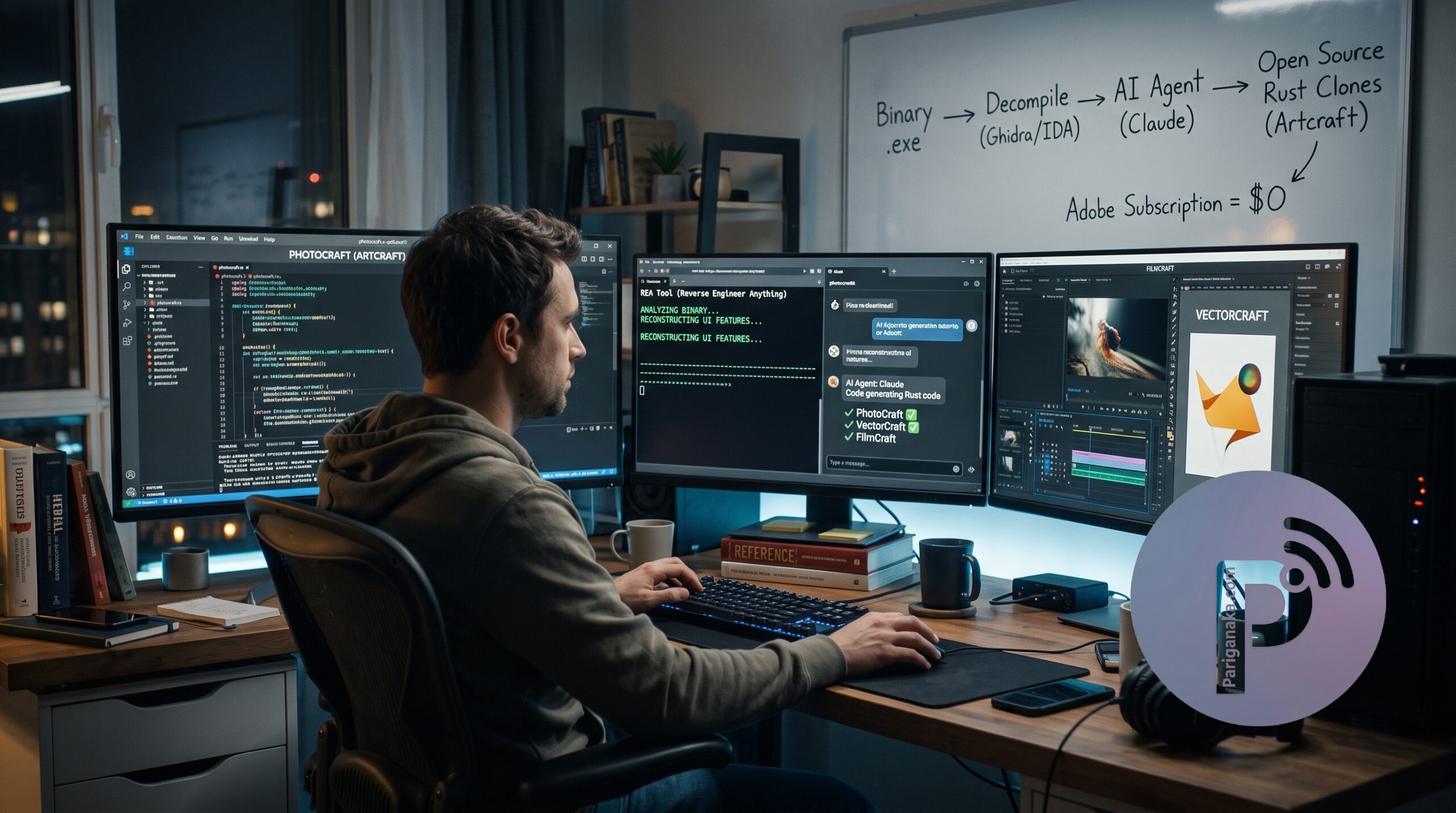
In a video published by Asian Dad Energy, a veteran tech developer explores a recent viral milestone in artificial intelligence: an engineer using AI tools to reverse-engineer and clone Adobe’s entire software suite.
This achievement highlights a massive shift in software engineering, demonstrating how AI agents are rapidly driving down the marginal cost of building and reproducing complex software.
1. The Artcraft Project: Replicating Giant Applications
Frustrated by high subscription costs and controversial customer terms, software engineer Brandon Thomas created Artcraft, an open-source project designed to clone Adobe’s Creative Cloud. Using Anthropic’s Claude Code as an AI development assistant, Thomas built Rust-based open-source alternatives to Adobe’s flagship applications:
- PhotoCraft: An alternative to Adobe Photoshop.
- VectorCraft: An alternative to Adobe Illustrator.
- FilmCraft: An alternative to Adobe Premiere Pro.
Beyond creative software, the same methodology was applied to reverse-engineer core applications in the Microsoft Office suite, yielding tools such as WordCraft (Word), DeckCraft (PowerPoint), and GridCraft (Excel).
While these early versions are still unpolished compared to their multi-billion-dollar commercial counterparts, they demonstrate that single developers can now replicate products created by Fortune 500 corporations.
2. Under the Hood: Automated Reverse Engineering Tools
While the Artcraft project used a custom clean-room workflow with AI coding agents, general automated frameworks are emerging, such as the Reverse Engineer Anything (REA) tool.
Historically, compiled machine code inside binary executable files (.exe) created significant technical barriers to software reverse engineering. The automated AI reverse-engineering workflow circumvents these barriers through a structured process:
- Decompilation: The tool connects AI agents with standard binary analysis utilities like Ghidra and IDA to translate raw machine code back into human-readable code.
- Analysis & Coverage: The agent evaluates individual features, identifying gaps, missing data logic, or unparsed instructions.
- Iterative Reconstruction: The AI incrementally reconstructs application functions feature-by-feature until the original program’s functionality is fully mirrored.
3. Legal and Ethical Dilemmas
Though consumer dissatisfaction with proprietary pricing models drives interest in open-source alternatives, using AI to systematically copy binary software introduces complex legal and ethical questions:
- Blurred Intellectual Property Lines: Converting binary code into equivalent functionality in another language sits on a grey legal boundary between fair re-implementation and digital piracy.
- Vulnerability for Small Developers: Independent developers and small software businesses face existential risks, as their products can be rapidly copied and offered for free.
- Corporate Lobbying: Major enterprise tech firms are expected to push for stricter copyright regulations and royalty models similar to music licensing to safeguard their digital IP.
4. Where the Value Shifts in the Software Economy
As AI drastically reduces the cost of producing pure software code, economic value will likely shift toward hard-to-replicate moats rather than the codebase itself:
- Compute Infrastructure: Massive data centers, specialized hardware, and hyperscaler compute capacity.
- Regulatory & Compliance Barriers: Complex legal approvals, industry security standards, and enterprise compliance requirements.
- Data & Network Effects: Proprietary training datasets and deeply integrated user ecosystems.
- Services & Enterprise Support: Dedicated hosting infrastructure, SLA guarantees, and long-term client trust.
Conclusion
The ability for individual developers to reverse-engineer commercial software at scale marks a fundamental shift in the software economy. As open-source alternatives become faster to build and maintain, the ultimate value of tech companies will increasingly rest on infrastructure, data moats, and operational trust.
Leave a Reply