
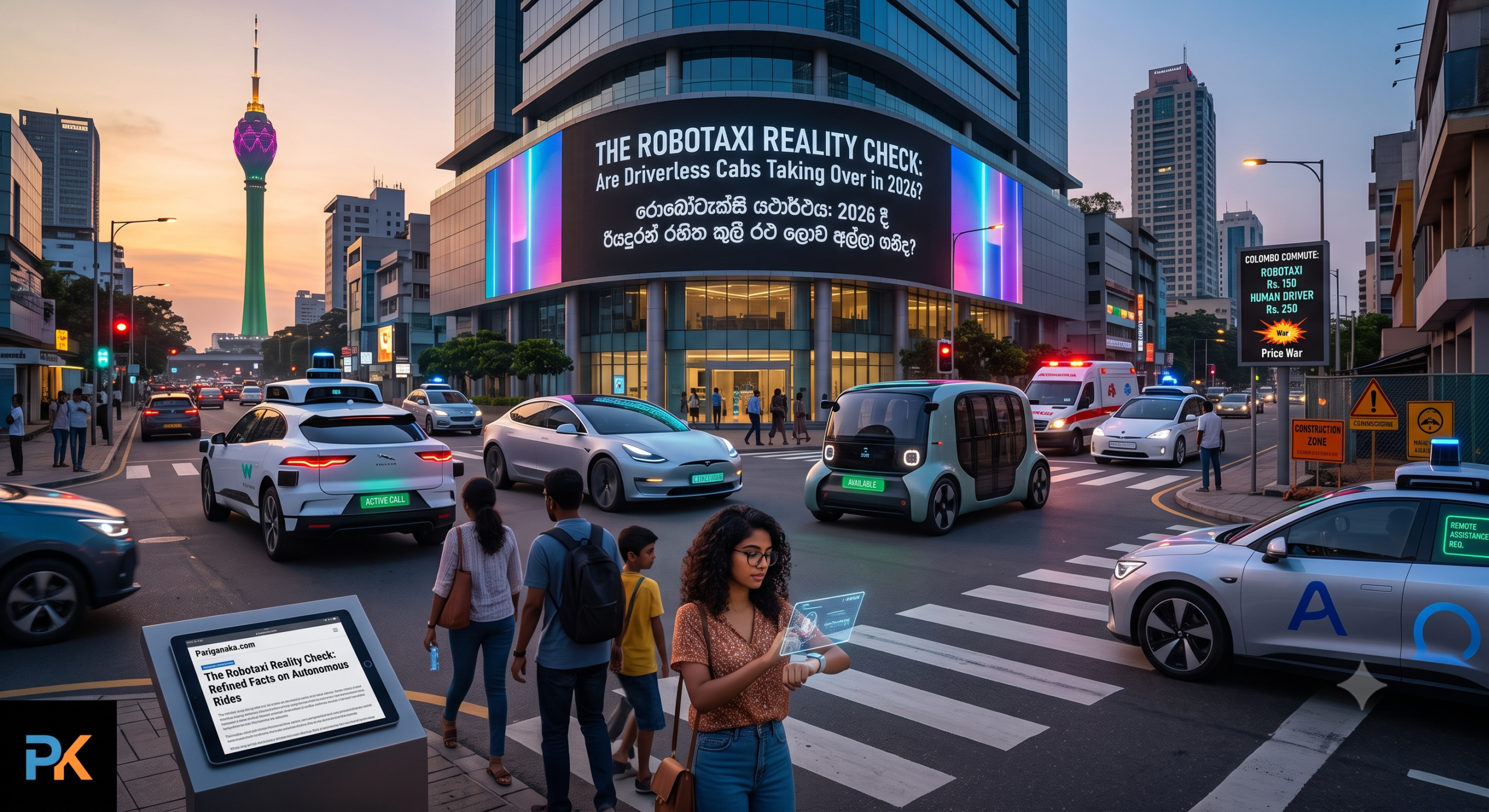
Welcome back to Pariganaka.com! Remember when the idea of hopping into the back seat of a car with no steering wheel and no driver felt like a distant sci-fi fantasy? As we move through the latter half of 2026, that fantasy is rapidly becoming a standard morning commute for millions.
The robotaxi industry has officially graduated from closed-course beta tests and limited pilot programs into full-scale commercial operations in major cities worldwide. However, the road to an autonomous future has been bumpier than expected. Here is a refined look at where the robotaxi industry actually stands today, the major players dominating the streets, and the roadblocks still standing in the way.
The Global Leaders: Who is Winning the Race?
The landscape of autonomous ride-hailing has consolidated significantly over the past few years, leaving a few heavyweights battling for urban supremacy:
- Waymo (Alphabet): Often considered the gold standard for safety and reliability, Waymo has aggressively expanded its operational territory beyond its strongholds in Phoenix and San Francisco. By partnering directly with existing ride-share networks like Uber, they have seamlessly integrated their autonomous fleet into the daily habits of everyday users.
- Tesla’s Cybercab Push: Moving away from traditional vehicle ownership models, Tesla has doubled down on its dedicated robotaxi network. While they have faced intense regulatory scrutiny regarding their camera-only “Full Self-Driving” architecture, their sheer volume of data collection continues to make them a formidable, albeit controversial, force.
- Baidu (Apollo Go): While Western companies navigate strict municipal regulations, China’s Baidu has scaled at a staggering pace. Operating in massive hubs like Beijing and Wuhan, Apollo Go has achieved a level of market saturation and aggressive pricing that Western companies are currently struggling to match.
- Zoox (Amazon): Taking a different approach, Zoox’s custom-built, symmetrical, bi-directional vehicles are finally seeing broader deployment, offering a unique “carriage-style” passenger experience optimized specifically for dense, low-speed urban environments.
The Economics: Are They Actually Cheaper?
The ultimate promise of the robotaxi was always economic: remove the human driver, and the cost of a ride plummets. In 2026, we are finally seeing this theory tested at scale.
In highly saturated markets, companies are engaged in aggressive price wars, sometimes offering rides at a fraction of the cost of a traditional Uber or Lyft. However, the underlying unit economics remain brutally expensive. The hardware (LiDAR, radar, advanced computing rigs), remote operation centers, and specialized maintenance facilities mean that while the passenger is paying less, the companies are still burning through billions in capital to sustain the illusion of cheap transport.
The Roadblocks: Edge Cases and Public Trust
Despite millions of driverless miles logged, the technology is not infallible. The industry is currently wrestling with several critical challenges:
- The “Edge Case” Dilemma: Robotaxis are excellent at following the rules of the road. They struggle, however, when humans break those rules. Erratic pedestrians, complex construction zones with contradictory signage, and unpredictable human drivers still cause robotaxis to freeze, block intersections, or require remote human intervention.
- Emergency Vehicle Interactions: Municipalities continue to express frustration over incidents where autonomous vehicles fail to appropriately yield to fire trucks or ambulances, leading to ongoing tension between tech firms and city officials.
- Vandalism and Cultural Resistance: In some cities, robotaxis have become symbols of tech-driven gentrification and job displacement. This has led to viral trends of people disabling the vehicles (such as the infamous “traffic cone on the hood” protests) or outright vandalizing them.
The Verdict
The robotaxi revolution is no longer a question of “if,” but “how fast.” The technology is undeniably here, and it is actively reshaping urban mobility. However, rather than an overnight takeover, the rollout is proving to be a slow, block-by-block negotiation between artificial intelligence, city infrastructure, and human patience.
If robotaxis were introduced to the busy, unpredictable streets of Colombo tomorrow, would you feel safe taking one for your daily commute?
Leave a Reply