
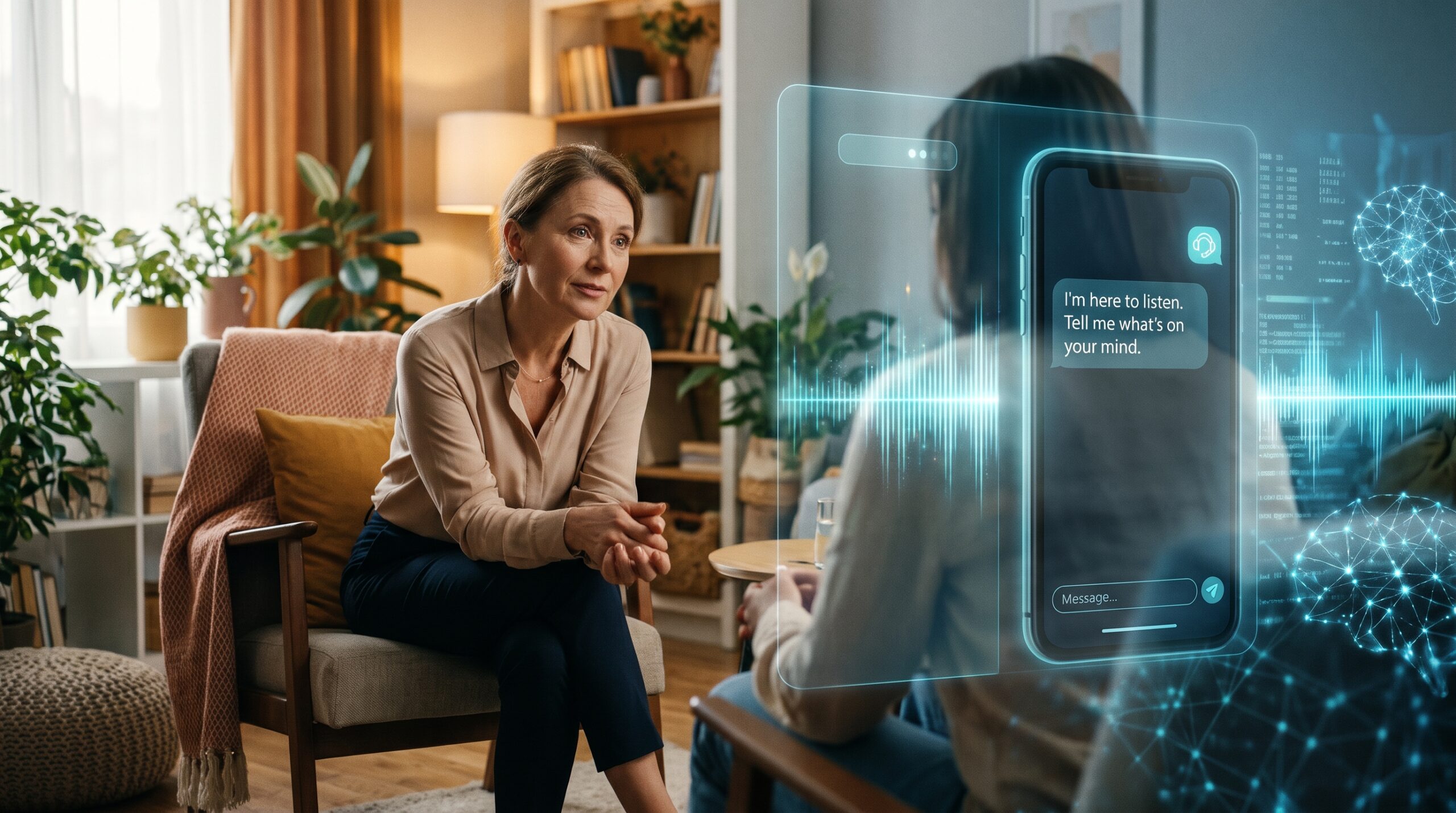
With a rising number of people suffering from psychological distress and facing agonizingly long wait times for therapy appointments, the prospect of an instantly available, AI-driven therapist is increasingly appealing. The documentary “Artificial Intelligence and Psychotherapy” explores this intersection, examining whether generative AI models like ChatGPT can serve as viable supplements to traditional human therapists.
The Mental Health Crisis and the AI Appeal
Across many parts of the world, mental health systems are severely overburdened. Patients often wait months to secure a spot for psychotherapy, leaving them vulnerable and unsupported during critical times of need. In this gap, artificial intelligence steps in. AI chatbots offer immediate, 24/7 availability. They provide a low-barrier space where individuals can vent, organize their thoughts, or seek immediate coping strategies for acute distress—such as panic attacks or anxiety—without the fear of human judgment.
The Human vs. AI Experiment
To test the efficacy of these digital interventions, the documentary highlights an experiment comparing counseling sessions conducted by human therapists with those facilitated by an AI prompted to act as a therapist. Participants brought real-world issues to the table, ranging from the strain of a long-distance relationship and feelings of professional inadequacy, to managing ADHD-related procrastination and coping with a loved one’s cancer diagnosis.
In some instances, participants found the AI surprisingly effective. The machine delivered highly structured, pragmatic advice. For a couple struggling with distance, it suggested strict communication rules and fixed calls; for another participant, it offered immediate grounding techniques and breathing exercises. For patients seeking quick, actionable solutions rather than deep psychological probing, the AI occasionally outperformed the human therapist by providing tangible “tools for everyday life.”
Strengths and Limitations of AI
AI demonstrates distinct advantages in mental health care, but its deployment comes with profound limitations and risks:
- System Efficiency: Specialized AI tools can conduct initial clinical assessments, run through diagnostic questionnaires, and triage patients before their first consultation, saving immense time for overburdened healthcare systems.
- A Safe Space for Vulnerability: For people who feel intense shame or hesitation in sharing their darkest thoughts, typing to a machine can feel safer and less intimidating than speaking to a human.
- The Empathy Deficit: AI fundamentally lacks genuine empathy. It cannot “read the room” or pick up on crucial non-verbal cues—a subtle smile, a shift in posture, a change in voice, or the welling of tears. It only simulates warmth based on training data.
- Safety and Crisis Risks: Relying on a machine to handle severe psychiatric crises or suicidal ideation is incredibly dangerous. While chatbots are trained to output crisis hotline numbers, they cannot intervene in the real world. The European Union is actively working to regulate these applications to mandate strict risk assessments, but ensuring total patient safety remains a challenge.
The Irreplaceable Human Connection
Ultimately, psychotherapy is deeply rooted in the shared human experience. As the documentary illustrates, an AI cannot truly shoulder the emotional weight of a patient’s pain. The therapeutic alliance—the relationship of trust, shared humanity, and authentic emotional resonance between a patient and a human therapist—cannot be coded. While a machine can generate the right words, it doesn’t feel them, and patients are acutely aware of that difference when navigating deep trauma or relationship conflicts.
Right now, when it comes to mental health counseling, AI chatbots can only play a supporting role. Used correctly, AI is a valuable tool for organizing thoughts, practicing self-help techniques, and alleviating administrative burdens in clinics. But the actual work of healing still relies on human beings, proving that while algorithms can process our words, they cannot truly comprehend our humanity.
Leave a Reply