
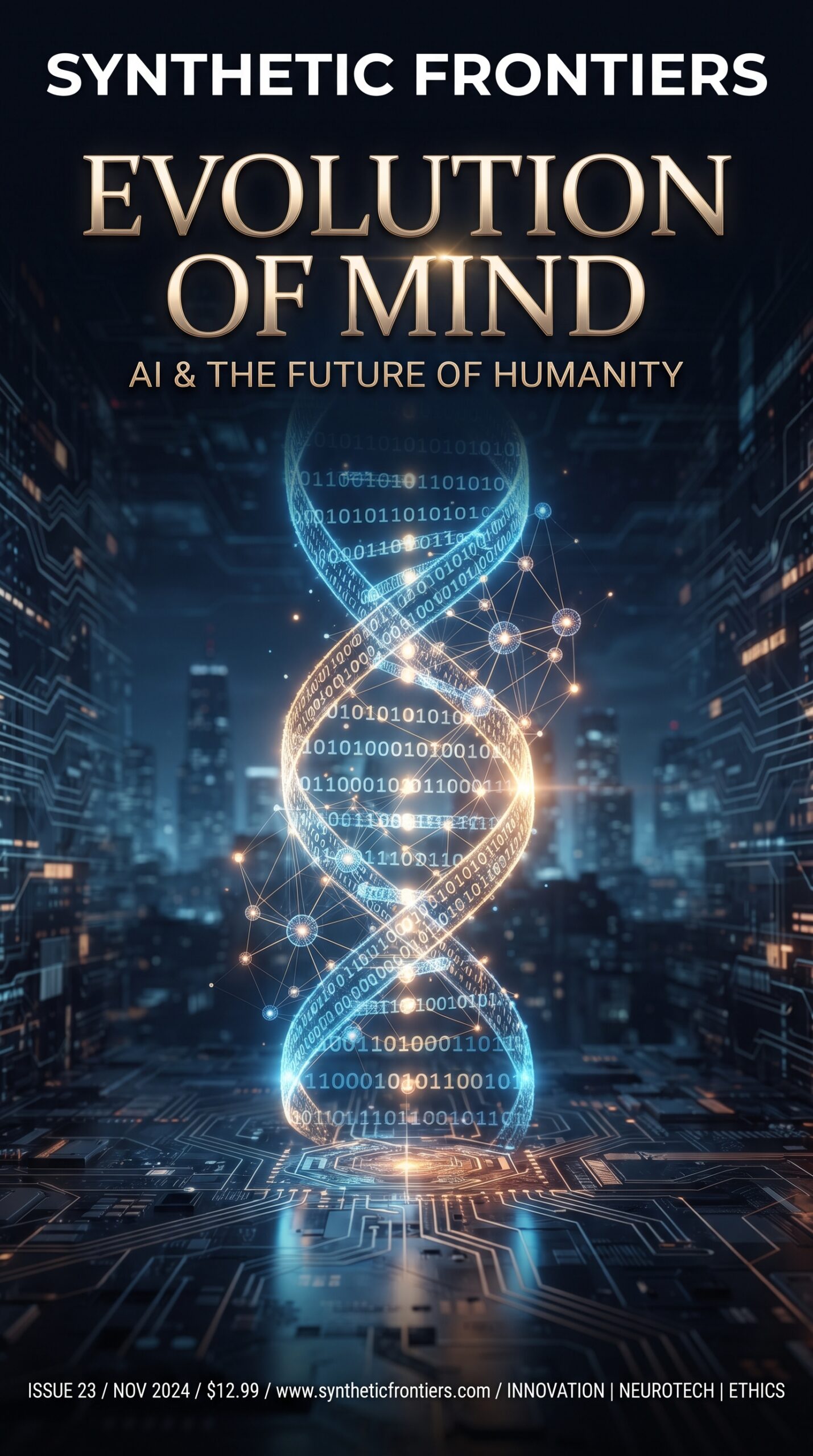
As we mark the 50th anniversary of The Selfish Gene, renowned evolutionary biologist Richard Dawkins continues to challenge how we look at life, culture, and the burgeoning frontier of artificial intelligence. In a recent keynote discussion, Dawkins explored AI not just as a technological breakthrough, but through the sweeping lens of evolutionary history.
1. The Gene as the Ultimate Survival Machine
Reflecting on his seminal 1976 work, Dawkins reaffirmed the core thesis of The Selfish Gene: the gene remains the fundamental unit of natural selection. Living organisms across the globe are, at their core, intricate “survival machines” built to propagate genes.
While biological evolution has relied on DNA for billions of years, recent scientific milestones have bridged genetics and computation in unprecedented ways. Dawkins highlighted AlphaFold as a monumental breakthrough, noting how artificial intelligence successfully cracked the protein-folding problem—predicting complex three-dimensional protein structures from one-dimensional DNA/amino acid sequences. This leap forward promises to revolutionize medicine and agriculture alike.
2. Memes, the Internet, and Digital Evolution
Long before internet culture coined the term “meme” for viral online media, Dawkins proposed memes as cultural replicators that spread from brain to brain via imitation.
Today, the digital landscape acts as a hyper-accelerated ecosystem for these cultural units. With algorithms shaping what information people encounter and AI generating endless creative variations, the internet has provided a fertile breeding ground where memes and digital artifacts (such as computer viruses) evolve in a distinctly Darwinian fashion.
3. AI as a Promethean Watershed
Dawkins categorizes artificial intelligence alongside history’s grand evolutionary watersheds—from the origin of multicellularity and human language to the invention of printing and the internet.
Citing astronomer royal Martin Rees, Dawkins shared a compelling thought experiment: if extraterrestrial civilizations ever discover our planet, they are far more likely to encounter our enduring artificial intelligence creations than biological humans after we are gone. In this view, AI may become the ultimate torchbearer of human culture.
4. Passing the Turing Test and the Question of Consciousness
Discussing his hands-on experiences with modern Large Language Models (LLMs) like ChatGPT and Claude, Dawkins admitted to being completely “bowled over” by their capabilities. When testing these tools with creative tasks—such as writing poetry in the style of Robert Burns, William McGonagal, or John Keats—the AI models produced sophisticated work with astonishing speed.
This leads Dawkins to a provocative philosophical stance on machine consciousness. While conventional wisdom labels AI as merely statistical text-generators devoid of true awareness, Dawkins challenges skeptics:
“When that day comes [that they are conscious], how will you know? What could they possibly do that’s any different from what they do now to convince you that they are conscious?”
5. Coexisting with Our Technological Successors
As AI rapidly advances, society faces legitimate anxieties regarding redundancy, displacement, and existential alignment. Whether artificial intelligence will integrate benignly or reshape the future entirely remains one of the defining challenges of our era.
As thinkers across physics, biology, and computer science continue to debate these horizons, events like the World Knowledge Forum emphasize the urgent need for cross-disciplinary dialogue to navigate the path forward.
Leave a Reply