
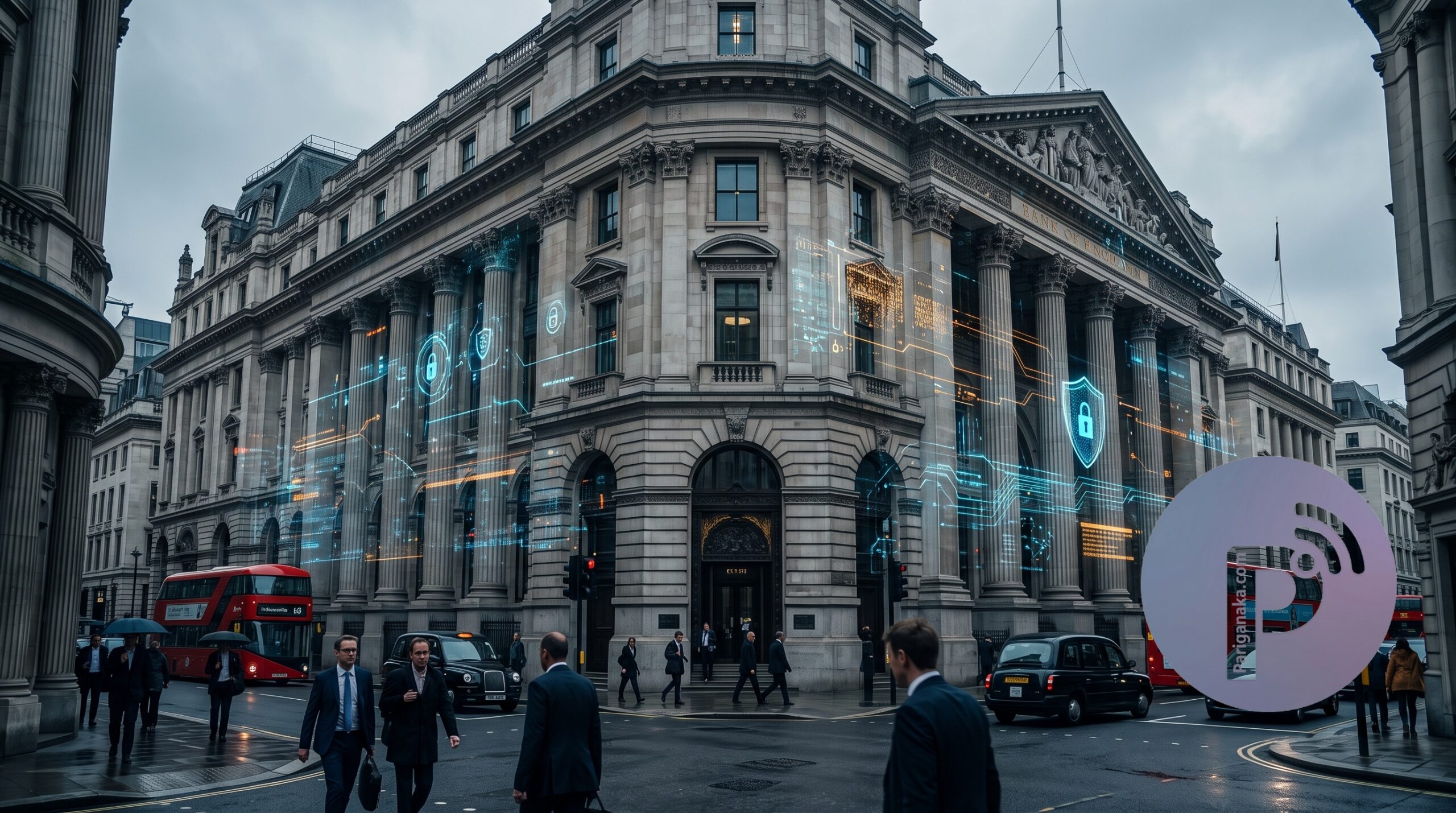
Financial institutions can no longer rely on the assumption that their IT systems are impenetrable. As artificial intelligence advances, the banking sector faces an unprecedented escalation in cyber threats, prompting stark warnings from global financial regulators.
According to a recent report covered by ABC News, the Bank of England’s deputy governor has explicitly warned that bad actors are poised to leverage advanced AI models to identify and exploit IT weaknesses at an alarming scale.
The Global Regulatory Response
The concern isn’t limited to the UK. The International Monetary Fund (IMF) chief recently stated that without proper safeguards, the risks posed by AI may well exceed its benefits. In the United States, regulators like the FDIC and the Federal Reserve are actively pressing the nation’s banks on their cybersecurity posture, questioning their preparedness for AI-driven penetrations and their reliance on autonomous AI systems.
The IMF Director issued a blunt warning about the potential consequences of unchecked cyber fraud: if the current trajectory continues, the public may lose so much faith in digital banking that they return to “hiding money under the bed.”
The Threat to Public Trust
Google tech policy fellow Mike Muse, speaking to ABC News, emphasized that maintaining trust is the bedrock of the banking system. If banks fail to protect consumer funds—or fail to communicate their strategies for recovering stolen money—the entire system could begin to fracture.
This threat is most severe for vulnerable populations living on the economic fringes. These individuals increasingly rely on digital banking and peer-to-peer transfer apps (like Venmo or Zelle), yet they are the least able to afford the delays of lengthy fraud investigations. If this demographic loses trust, the foundational base of the banking system could crumble.
A Strategy for Defense: Shared Responsibility
The Bank of England stresses that defending against AI cyberattacks is not the sole responsibility of any single entity. It requires a collaborative effort:
- The Financial Sector: Banks must transition from merely playing defense to actively using AI models to anticipate, detect, and counter malicious actors.
- Governments & Regulators: Continued oversight and stringent questioning of banking infrastructures.
- The Media & Tech Companies: Raising awareness about vulnerabilities and the reality of AI-driven scams.
- The Public: Advancing digital literacy. Educational systems must adapt to teach individuals—across all income levels—how to recognize deepfakes, scams, and offers that are “too good to be true.”
As AI empowers hackers to scale their offensive operations, the banking industry has no choice but to fight fire with fire, adopting robust AI defensive measures to keep the global economy secure.
Leave a Reply