
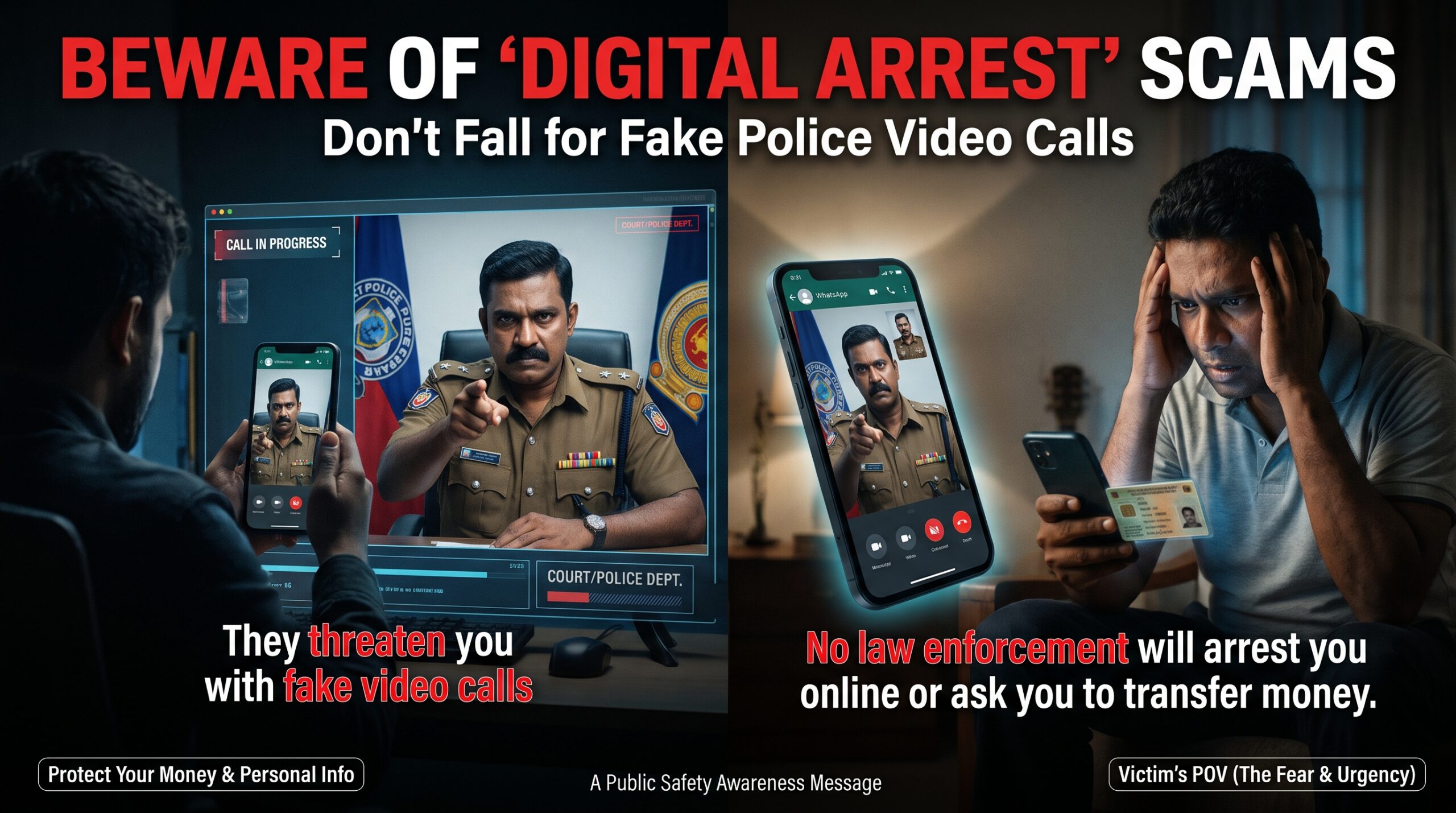
As our daily lives become increasingly intertwined with digital platforms, cybercriminals are constantly finding sophisticated new ways to deceive the public. With dozens of digital scams and cybercrimes reported daily in Sri Lanka, a particularly alarming new trend has emerged: the “Digital Arrest” scam.
What is a “Digital Arrest” Scam?
In this fraudulent scheme, scammers impersonate law enforcement officers, customs officials, or representatives from justice-dispensing institutions, contacting ordinary citizens via phone or WhatsApp video calls. They claim that your National Identity Card (NIC), passport, or personal details have been linked to serious illegal activities—such as money laundering, financial fraud, intercepted illegal parcels, or severe traffic violations recorded by police CCTV systems.
Capitalizing on people’s innate respect for and fear of the law, the scammers often appear on video calls wearing clothing that mimics official Sri Lanka Police uniforms or sitting in front of fabricated police station backdrops. To heighten the panic, they demand that you remain on the video call continuously—placing you under a bogus “digital arrest”—and insist that to prevent immediate physical arrest and detention while an “investigation” is underway, you must transfer all the money from your bank accounts into a specified “safe” or “supervisory” account for verification.
How the Scam Unfolds: Step-by-Step
- The Initial Hook: You receive an unexpected phone call or message claiming your identity or phone number has been flagged in an ongoing criminal investigation, or a parcel in your name containing contraband has been seized.
- Escalation to Video Call: The caller transfers you to a “senior officer” on WhatsApp or Skype. On the screen, a fraudster in a fake police uniform sits in front of a staged office with official-looking emblems and walkie-talkie sound effects playing in the background.
- Forged Documentation: To make the threat believable, scammers send fabricated arrest warrants, court summons, or police reports via WhatsApp bearing your name and NIC number.
- Psychological Isolation (“Digital Arrest”): The fraudsters forbid you from disconnecting the call, leaving your room, or contacting family members and lawyers, claiming that breaking “surveillance” will result in immediate physical arrest and public humiliation.
- Financial Extortion: Under the guise of “clearing your name” or “auditing your funds” to prove they are not proceeds of crime, they coerce you into transferring your savings into a designated bank account, promising it will be refunded once the inquiry concludes. Once transferred, the money—and the scammers—vanish.
Major Red Flags to Watch Out For
- There is no such thing as a “Digital Arrest”: Sri Lankan law enforcement and judicial authorities never conduct arrests, interrogations, or court hearings via WhatsApp, Skype, or any other video-calling platform.
- Demands for money transfers: No legitimate police officer, judge, or government institution will ever ask you to transfer money to a bank account to “verify” funds, secure bail, or avoid arrest.
- Pressure and secrecy: Scammers rely on urgency and fear. Legitimate legal processes follow formal procedures and allow you the right to consult a lawyer or family member.
- Unsolicited messaging of legal documents: Official arrest warrants and summons are served through proper legal channels, not forwarded as image files over social media messaging apps.
How to Protect Yourself and Your Loved Ones
- Hang up immediately: If you receive a call from someone claiming to be from the police or courts threatening immediate arrest unless you stay on a video call or pay money, disconnect the call right away.
- Never share sensitive details: Do not reveal your NIC number, bank account details, One-Time Passwords (OTPs), or screenshots of your financial statements to unknown callers.
- Verify independently: If you are genuinely concerned about a claim made on a call, hang up and visit your nearest local police station in person, or call the official police hotlines directly to verify.
- Educate vulnerable family members: Senior citizens and individuals less familiar with cyber manipulation tactics are primary targets. Share this information with parents and elderly relatives so they know what to do if targeted.
What to Do If You Are Targeted or Scammed
If you have been contacted by scammers or have fallen victim to a fraudulent transfer, act immediately:
- Contact Your Bank: Immediately call your bank’s fraud hotline to freeze your accounts and request an urgent recall or block on the unauthorized transaction.
- Preserve Evidence: Take screenshots of the caller’s phone number, WhatsApp profile, chat history, fake documents, and bank transaction receipts.
- Report to the Authorities:
- File a complaint with the Criminal Investigation Department (CID) Cyber Crimes Division or visit your nearest police station.
- Report the incident to the Sri Lanka Computer Emergency Readiness Team (SLCERT) via their hotline at 101 or online at cert.gov.lk.
- For urgent police assistance or to verify suspicious claims, contact the Sri Lanka Police Emergency Hotline (119).
Leave a Reply