
Published: August 6, 2026 | By Pariganaka Editorial Team
The world of Artificial Intelligence doesn’t just move fast; it moves in leaps. Just a few years ago, we were marveling at chatbots that could write a decent email or generate a slightly weird image. Today, the conversation has entirely shifted. As we step into August 2026, the tech industry is moving away from models that just sit in a browser tab toward AI that can reason through complex scientific problems and run directly on your devices.
The biggest headline this month revolves around a quiet but monumental update from OpenAI, ushering in a fundamental change in how artificial intelligence “thinks”. Here is what this means for developers, businesses, and the global tech ecosystem.
⏸️ The “System 2” Architecture
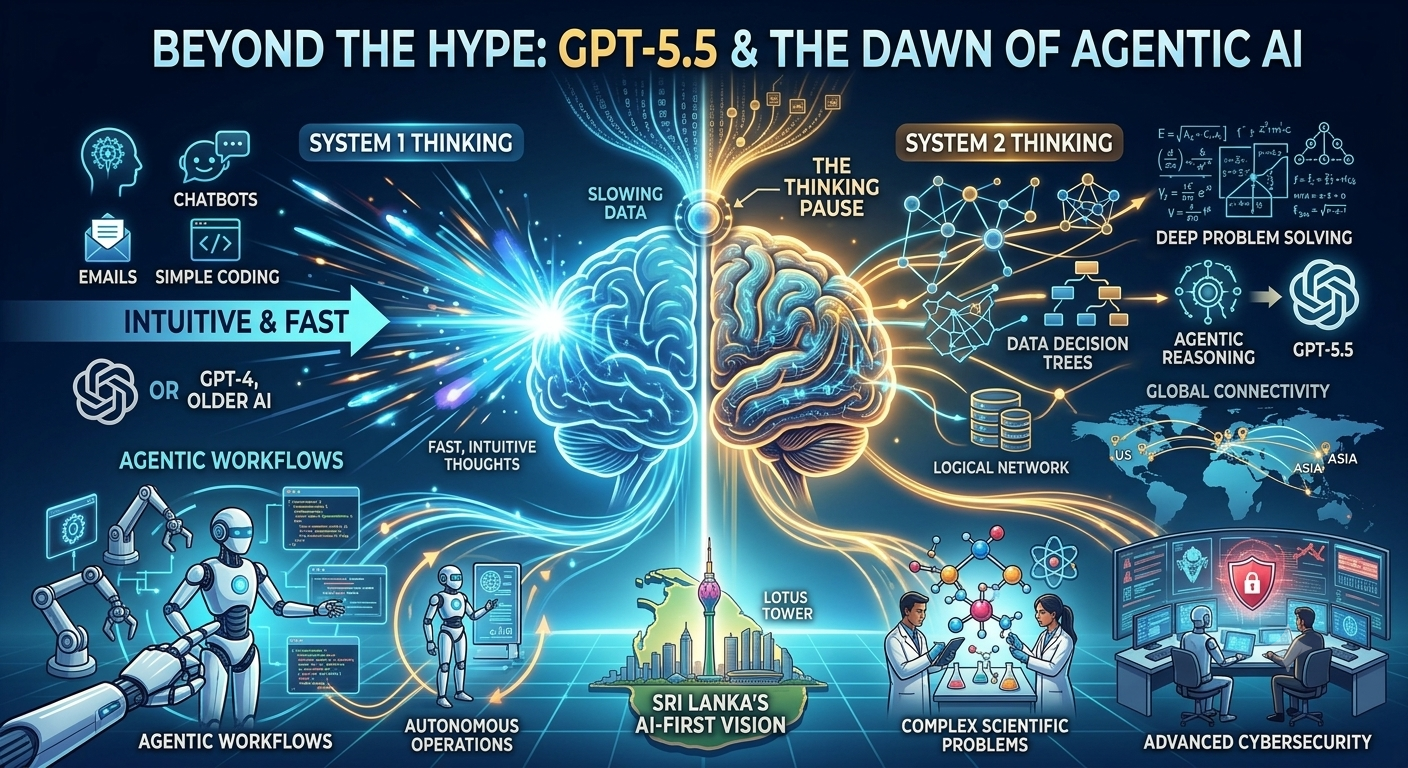
OpenAI quietly rolled out GPT-5.5 in early August, and the global tech community is buzzing. The most significant upgrade here isn’t just about the model knowing more facts; it is about its native “System 2” architecture.
To understand this, we can look at human psychology:
- System 1 Thinking: Fast, intuitive, and sometimes prone to jumping to conclusions. Previous AI models operated primarily in this mode.
- System 2 Thinking: Slow, deliberate, and deeply analytical.
With GPT-5.5, when you present a complex coding architecture challenge, a multi-layered business strategy prompt, or an advanced mathematical problem, the model literally pauses to reason through the steps. If 2024 was the year of “multimodal” AI (models that could see and hear), 2026 is officially the year of “agentic reasoning”.
🏢 Enterprise Integration: The FPT & OpenAI Partnership
This leap in reasoning is rapidly making its way directly into enterprise operations. Just today, August 6, 2026, global IT corporation FPT announced it has been named an OpenAI Select Partner.
This partnership highlights how major corporations are actively utilizing these advanced models:
- Advanced Cybersecurity: FPT will integrate OpenAI’s frontier capabilities to help organizations detect, prioritize, and remediate network vulnerabilities faster, strengthening resilience against sophisticated AI-enabled threats.
- Agentic Workflows: FPT plans to develop new agentic AI solutions for enterprise workflows, shifting operations toward AI-native ways of working and deep human-AI collaboration.
- Developer Productivity: By combining a global workforce of AI-augmented engineers with these new tools, they project up to a 60% shorter development time, over 50% less rework, and a 30% uplift in raw developer productivity.
🇱🇰 The Local Impact
As Sri Lanka pushes forward with its national “AI-First” vision and the upcoming Sri Lanka AI Week 2026, understanding this shift is critical. Local developers must transition from traditional coding to orchestrating these new agentic models. The paradigm is shifting from manually writing software to “expressing intent,” where developers articulate desired outcomes, and the AI autonomously delivers and integrates the architecture.
To stay competitive on the global stage, Sri Lankan tech firms must embrace models with System 2 thinking—utilizing them not just as typing assistants, but as strategic co-pilots in complex problem-solving.
Leave a Reply