
By Pubudu Siriwansa | Founder, Pariganaka.com
For the past fifteen years, the smartphone has been the center of our digital universe. We have looked down at glowing rectangles to manage our bank accounts, connect with our families, and run our businesses. But as we navigate through 2026, a massive hardware revolution is unfolding right before our eyes. We are officially entering the Post-Smartphone Era.
Welcome back to Pariganaka.com. Today, I want to talk about a shift that is radically changing how we interact with the digital world: the rise of Spatial Computing and Predictive Wearables.
We are finally looking up from our screens. But what does this mean for the everyday Sri Lankan tech consumer? Let’s break it down.
1. The Rise of Predictive Wearables (ඔබේ අවශ්යතා කලින් හඳුනන තාක්ෂණය)
Until now, technology has been reactive: you open an app, you tap a button, and the phone does what you ask. In 2026, technology is predictive.
With the mainstream adoption of AI-integrated smart rings, advanced hearables (smart earbuds), and screenless AI pins, your devices are constantly analyzing your environment and habits.
- Contextual AI: Instead of pulling out your phone to check your schedule, your earpiece quietly whispers that your next Zoom meeting is in 10 minutes and your Uber is waiting outside.
- Health as a Background Process: We have moved past simple step counters. Today’s wearables continuously monitor metabolic trends and stress levels, alerting a busy MSME owner in Maharagama to take a break before burnout hits.
- The Benefit: Less screen time, less digital fatigue, and a more seamless integration of technology into our physical lives.
2. Spatial Computing: Your New Infinite Workspace
When Apple and Meta heavily pushed mixed-reality headsets a few years ago, many dismissed them as expensive gaming toys. Today, Spatial Computing is reshaping the workspace.
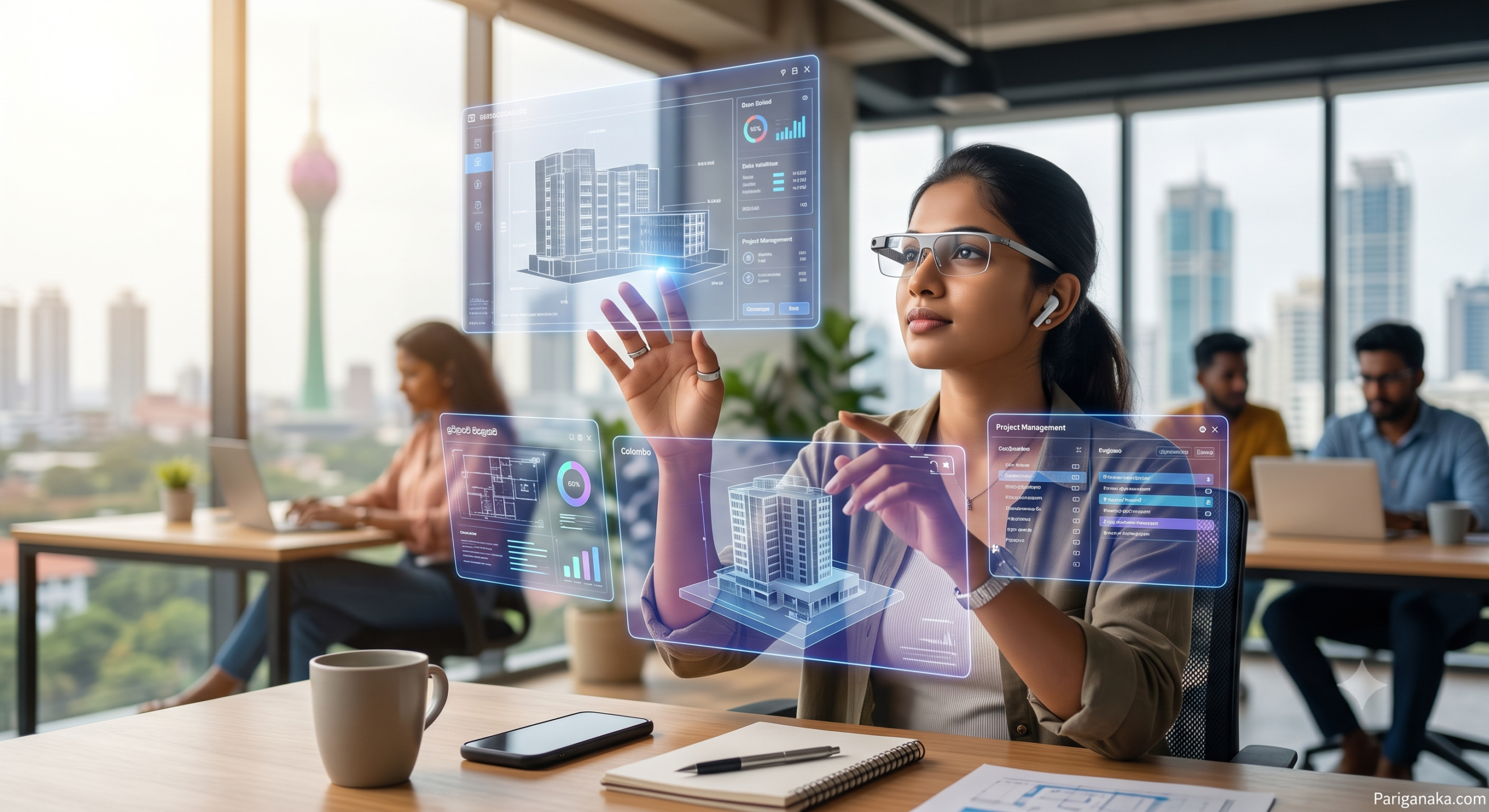
Instead of buying three expensive external monitors, professionals are slipping on lightweight mixed-reality glasses.
- The Virtual Office: Imagine a software engineer sitting in a coffee shop in Kandy, but through their spatial glasses, they are looking at a massive, multi-screen command center that only they can see.
- Interactive Commerce: Sri Lankan architects and real estate developers are no longer showing clients 2D blueprints. They are walking them through fully rendered 3D holographic models of homes before a single brick is laid.
3. The Reality Check: Should You Buy In? (පාරිභෝගික සහාය)
As your consumer advocate, I have to ground this excitement in reality. While the technology is phenomenal, the Sri Lankan market faces unique challenges.
- The Price Tag: Import taxes and exchange rates still make premium spatial headsets a massive investment. If you are a casual user, it is not worth emptying your savings just yet.
- My Recommendation: If you are a digital professional, a 3D designer, or a developer, these tools are now legitimate ROI-generating assets. However, for the average consumer, I recommend stepping into the post-smartphone era via predictive wearables (like smart rings or AI audio glasses) first. They offer tremendous value without the staggering price tag of a full spatial headset.
The Final Human Update
At Pariganaka.com, I constantly remind my readers:
“The Final Human Update යනු තාක්ෂණය මිනිසා අභිබවා යාම නොව, තාක්ෂණය හරහා මිනිසා අලුත් වීමයි.” (The Final Human Update is not about technology surpassing humanity, but humanity renewing itself through technology.)
The transition from smartphones to spatial computing is exactly this. It is technology stepping out of our hands and seamlessly blending into our surroundings, allowing us to be more present in the real world. The screen as we know it is disappearing, and what replaces it will be entirely up to how we choose to use it.
Leave a Reply