
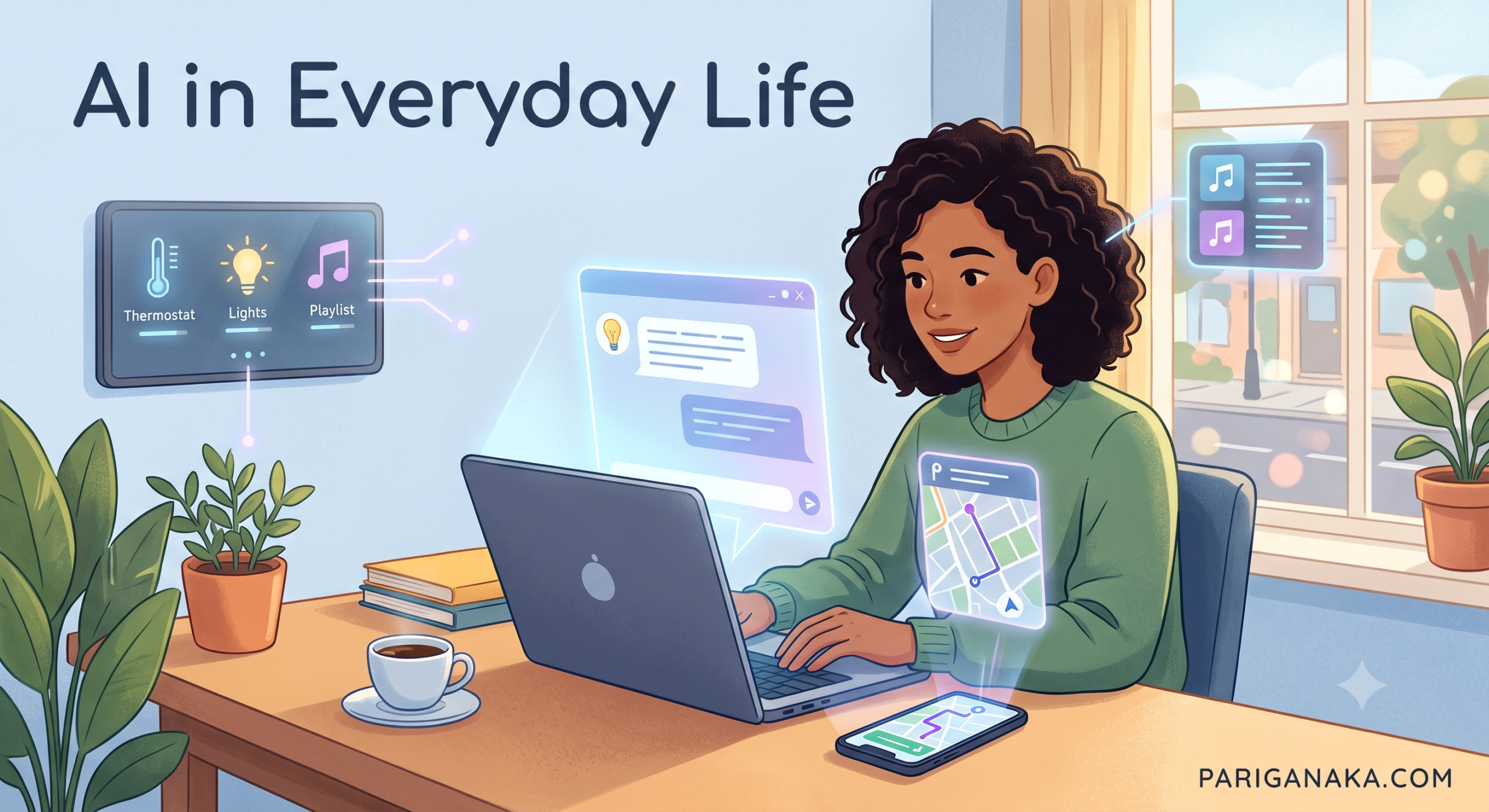
Artificial Intelligence (AI) has dominated headlines for the past few years, often accompanied by complex jargon, futuristic imagery, or apocalyptic warnings. For the average person just trying to navigate the digital world, it can all feel a bit overwhelming.
But here at the human-friendly tech hub, we believe technology should be accessible, understandable, and—above all—useful. When you strip away the science-fiction hype, AI is simply a tool. In fact, it is a tool you are probably already using every single day without even realizing it. Let’s break down what AI actually looks like in our daily lives and how you can harness it to make your routines a little bit easier.
What is AI, Really?
At its core, Artificial Intelligence is simply a computer’s ability to perform tasks that typically require human intelligence. This includes things like recognizing speech, making decisions, translating languages, and identifying patterns.
Instead of being explicitly programmed with a rigid set of rules (e.g., “If X happens, do Y”), modern AI systems are trained on massive amounts of data. They learn from this data, allowing them to make predictions and adapt to new situations.
3 Ways AI is Already in Your Routine
You don’t need a cutting-edge robot to experience AI. It is quietly humming in the background of your smartphone, your web browser, and your home.
- Navigating Your Commute: When you use Google Maps or Waze, AI is analyzing real-time traffic speeds, road closures, and historical data to predict the absolute fastest route to your destination.
- Curating Your Entertainment: Have you ever wondered how Netflix or Spotify always seem to know exactly what you want to watch or listen to next? That is a recommendation algorithm—a form of AI—analyzing your past behavior to serve up personalized content.
- Protecting Your Inbox: The reason your email inbox isn’t entirely flooded with scams and unwanted advertisements is due to AI-driven spam filters. These systems constantly learn the characteristics of spam emails and divert them before you ever have to see them.
How to Start Using AI Intentionally
Beyond the background processes, there are now incredibly powerful AI tools designed for you to interact with directly. Here is how you can start putting them to work.
1. Generative Text Assistants
Tools like ChatGPT or Gemini are designed to understand natural language and generate text. They can act as an incredibly knowledgeable brainstorming partner.
- Drafting difficult emails: Ask the AI to help you word a polite but firm message to a contractor.
- Meal planning: Input the ingredients you currently have in your fridge and ask for three simple recipe ideas.
- Summarizing information: Paste a long, confusing document into the chat and ask for a simple, three-point summary.
2. Smart Home Routines
If you have a smart speaker (like Amazon Echo or Google Nest), you are already talking to an AI. Instead of just asking for the weather, try setting up “Routines.”
- Create a “Good Morning” routine where a single command turns on your lights, reads the top news headlines, and starts your coffee maker.
3. AI-Enhanced Photography
Modern smartphone cameras rely heavily on computational photography. AI works behind the scenes to balance the lighting, focus on faces, and even erase unwanted objects in the background of your photos (like Google’s “Magic Eraser”).
The Human Element: Why You Are Still in Control
It is easy to feel intimidated by technology that “learns,” but it is crucial to remember that AI is not a replacement for human judgment. AI can write a draft of an email, but it doesn’t know the unique personality of the person you are sending it to. It can suggest a recipe, but it doesn’t know your specific family traditions.
Technology works best when it amplifies our human capabilities, rather than trying to replace them. By approaching AI with curiosity rather than fear, we can use these tools to handle the mundane tasks, freeing up our time and mental energy for the things that truly matter.
Leave a Reply