
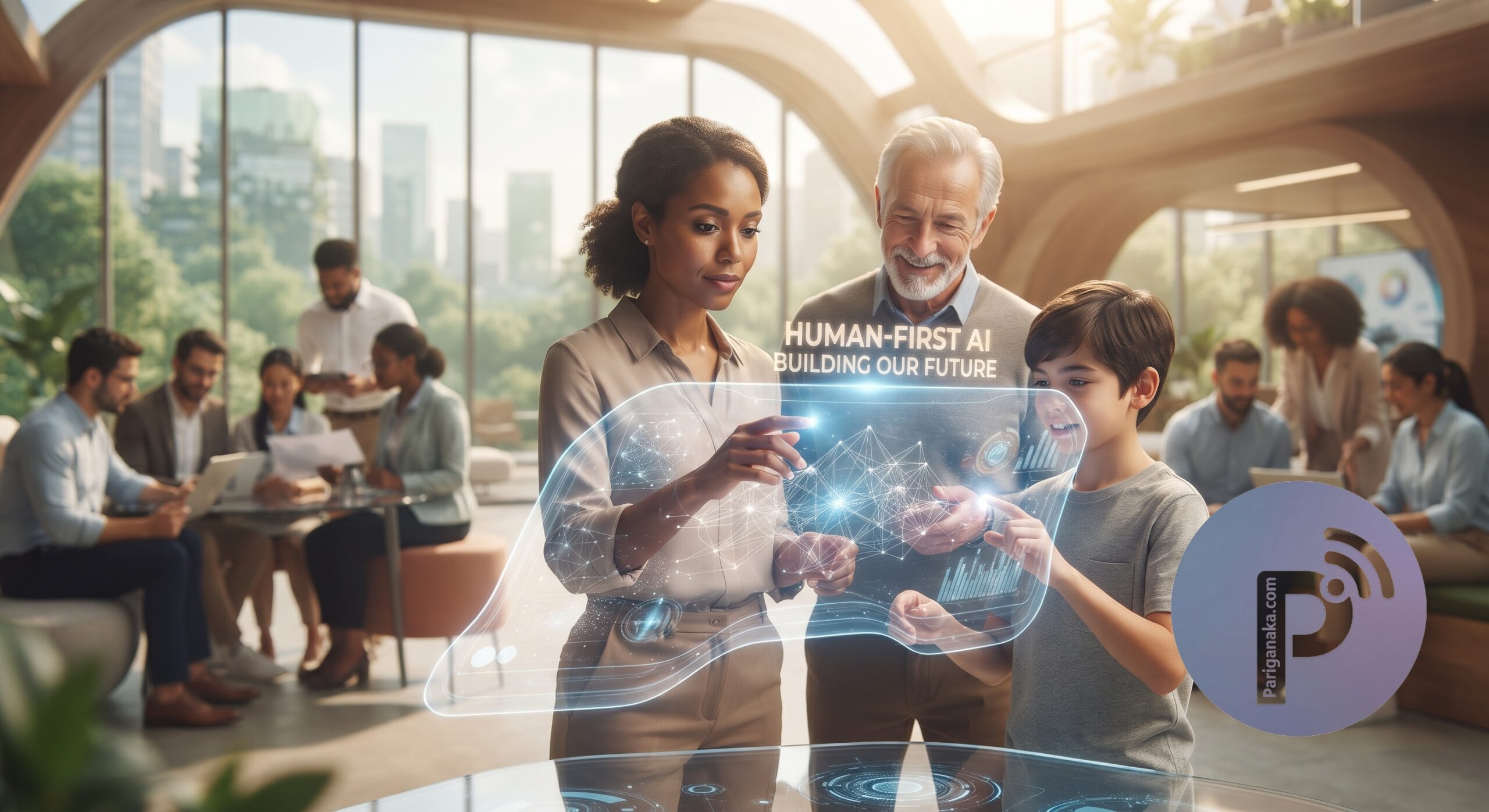
As artificial intelligence development races forward at an unprecedented pace, society faces a critical question: What kind of future are we building, and will humanity remain at the helm?
In a deep-dive conversation on CNN’s Terms of Service podcast [1.1.2], Microsoft AI CEO and DeepMind co-founder Mustafa Suleyman [1.2.4] tackled this exact challenge. Discussing the roadmap for human-centric technology, Suleyman outlined his core philosophy for keeping AI subordinate to people, preserving agency, and steering toward a future defined by human flourishing [1.1.1].
1. The Core Premise: People Matter More Than AI
At the heart of Microsoft AI’s stated framework is a simple, foundational premise: people matter more than artificial intelligence [1.1.1].
Technology’s ultimate purpose is to advance human civilization and accelerate human flourishing [1.1.1]. While science and technology have served as engines of progress for millennia, Suleyman emphasizes that this trajectory must not change course. AI should act as an enabler and an amplifier of human potential, never a substitute for human value or agency.
2. Maintaining Human Control and Reliable Safety
One of the most pressing concerns in the tech industry is whether rapidly scaling models will outpace human oversight. Suleyman’s vision insists on strict boundaries:
- Subordination: AI must remain subordinate and in service to people [1.1.5]. Any technology that cannot reliably remain within human control must be rejected [1.1.1].
- Artificial Boundaries: AI is artificial. It is not conscious, does not possess feelings, and should not be engineered to imitate human consciousness or claim subjective preferences [1.1.1]. Its sole purpose is to pursue goals set by human operators and users [1.1.1].
- Pro-Social Positioning: Rather than displacing human roles, collaboration, and social connection in professional or personal contexts, AI should bring people together and bridge gaps [1.1.1].
3. Embracing Pluralism and Diversity
Humanity’s greatest strength is its diversity of cultures, ideas, and values. Suleyman stresses that AI systems must respect this breadth of human experience rather than imposing a monolithic worldview. A truly humanist approach means supporting a wide range of traditions, contexts, and forms of flourishing across different societies and backgrounds [1.1.1].
4. Navigating the Road Ahead
As companies roll out increasingly personalized tools—such as advanced AI companions, agents, and enterprise ecosystems—the tech industry faces increasing scrutiny over data practices, autonomy, and societal impact. Suleyman’s blueprint signals a growing industry push to formalize safety constraints, transparency, and personal boundaries directly into model behavior and operational codes of conduct [1.1.1].
Ultimately, the future of AI isn’t just about raw computing power or benchmark scores; it is about intentional design choices. As Suleyman highlights, building a human-first future requires keeping the human experience firmly in the driver’s seat.
Listen to the full discussion on the Terms of Service Podcast on CNN [1.1.2].
Leave a Reply