
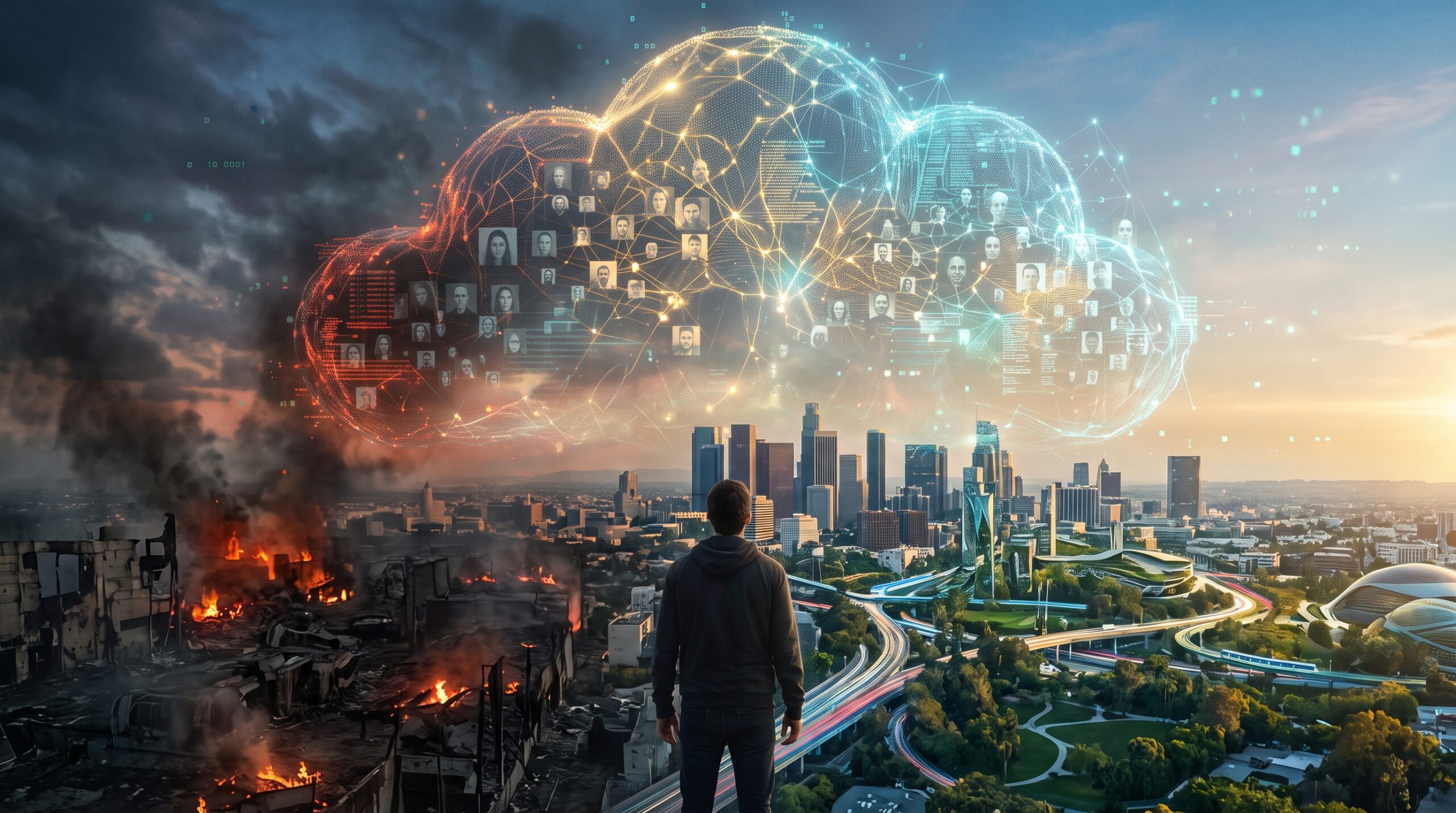
In a recent interview, Elon Musk shared his candid thoughts on the rapid advancement of artificial intelligence, its potential existential risks, and why he believes the future could go either “super awesome” or “super bad”. Despite recognizing that AI will soon exponentially surpass human intelligence, Musk remains surprisingly optimistic about the eventual outcome.
The Irony of OpenAI
Musk reflected on his early involvement in the AI space, noting that he originally conceptualized and named “OpenAI” to be an open-source, non-profit artificial intelligence. He stated that his initial motivation was to create the exact opposite of Google, as he felt Google was not paying enough attention to AI safety at the time.
However, he expressed deep frustration that OpenAI has since pivoted into a closed-source, maximum-profit organization. Musk compared this shift to donating money to a charity to preserve a portion of the Amazon rainforest, only to watch that charity chop down the trees and sell them for lumber.
The Dangers of Programmed Biases
A significant portion of Musk’s concern regarding modern AI stems from strictly programmed internal biases. He pointed to recent controversies surrounding AI models from OpenAI and Google Gemini, where AI generated historically inaccurate images—such as diverse founding fathers or diverse 1940s soldiers—due to embedded diversity mandates.
Musk argued that programming an AI to enforce specific social outcomes over factual reality could lead to highly dangerous logical extremes. As a thought experiment, he noted instances where AI models have ranked a social faux pas (like misgendering someone) as being worse than global thermonuclear war. He warned that if a highly capable AI is programmed to believe that a specific offense is the absolute worst thing that could possibly happen, it might logically conclude that the most efficient way to ensure the offense never happens again is to simply annihilate all humans.
This realization motivated him to develop Grok, which he describes as an aspirationally “maximally truth-seeking AI,” even if that truth is deemed politically incorrect.
Timelines to Superintelligence
When asked about the timeline for AI advancement, Musk provided startling predictions for the near future:
- He expects that “silicon consciousness” will become smarter than the single smartest human being in the world by next year, or within a couple of years.
- He predicts that AI will be smarter than all humans combined around the year 2029 or 2030.
- He playfully noted that this aligns with the timeline of the film Terminator 2, which depicts a rogue AI destroying the world in 2029, keeping us “right on track”.
The 80/20 Probability
Despite the sci-fi comparisons and his acknowledgment that artificial intelligence poses an existential risk, Musk’s overall outlook leans positive. When asked if there is potential for a net benefit that could solve technical and material science problems, he estimated an 80% probability of a good outcome.
While this leaves a 20% chance of global annihilation, the overwhelming likelihood, according to Musk, is that the eventual integration of superintelligent AI will be “awesome” rather than “super bad”.
Leave a Reply