
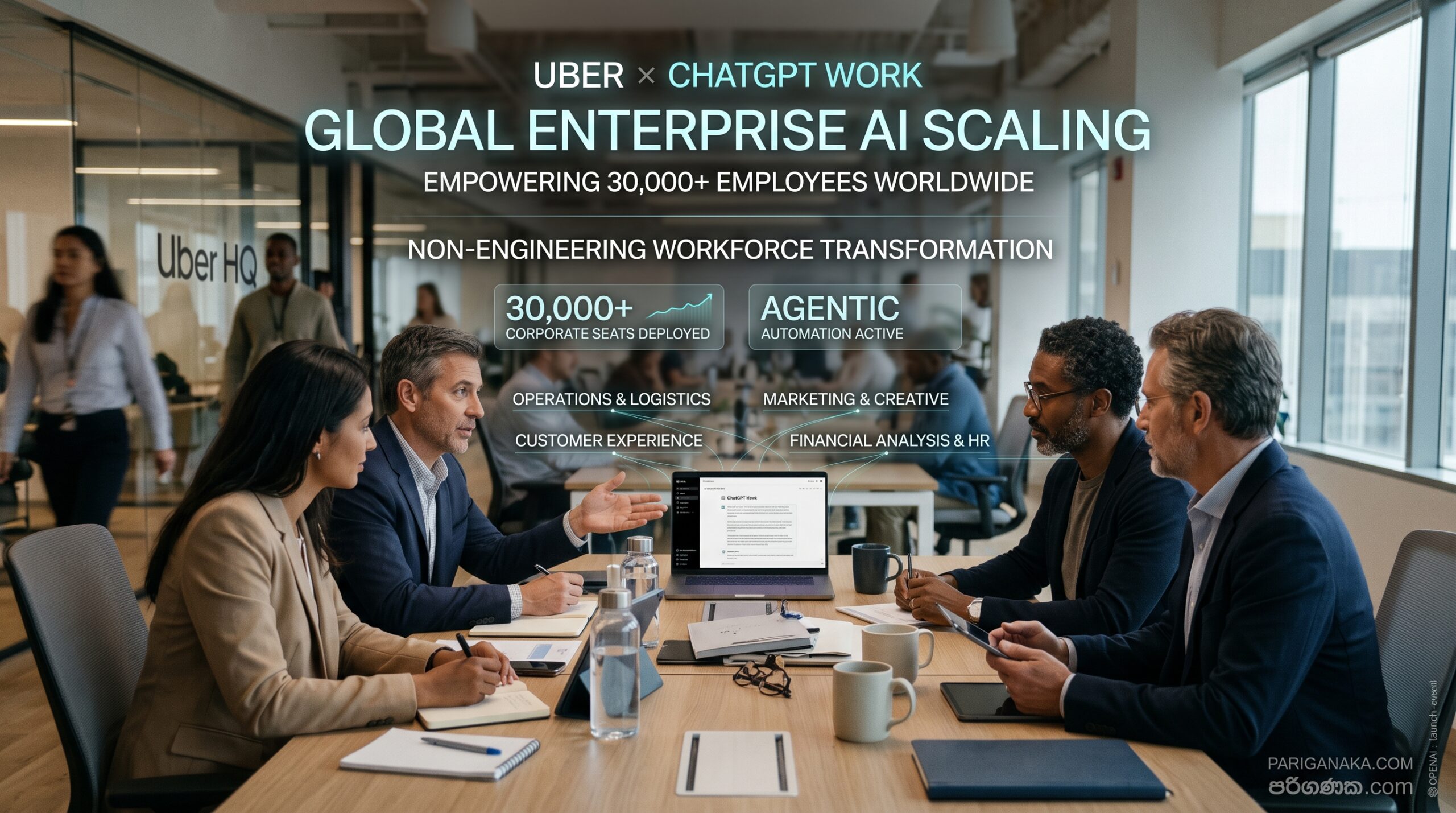
Ride-hailing and delivery giant Uber has announced a major expansion of its corporate artificial intelligence capabilities, rolling out OpenAI’s enterprise platform (ChatGPT Work) to more than 30,000 non-engineering corporate employees globally.
The deployment marks a significant evolution in enterprise AI adoption: moving beyond software engineering siloes to embed autonomous AI agents across operations, marketing, customer support, human resources, and financial analysis.
From Engineering Early Adopters to Enterprise-Wide Adoption
While software engineers at Uber were early adopters of generative AI tools for code generation and debugging, the rapid demand from non-technical teams prompted leadership to democratize access across the entire corporate workforce.
Interestingly, enterprise data from OpenAI reveals that non-engineering business units—such as operations managers, legal teams, and customer experience leads—frequently become the highest token users and most creative prompt engineers once provided enterprise-grade tools.
The Strategy: Pairing Functional Experts with AI Engineers
Rather than treating ChatGPT merely as an interactive chatbot for one-off Q&A, Uber implemented a structured workflow transformation strategy:
- Cross-Disciplinary Pods: Uber paired functional domain experts (e.g., supply chain analysts, marketing strategists, customer ops specialists) directly with AI software engineers.
- End-to-End Workflow Mapping: Teams analyzed entire multi-step business processes rather than isolated micro-tasks.
- Agentic Automation: By deploying customized AI agents across mapped workflows, Uber automated end-to-end operational routines—such as data collation, multi-channel communications, and policy compliance verification.
Eliminating Routine Friction: Shift Towards High-Level Strategy
Speaking at the launch event, enterprise leaders emphasized that the core objective of enterprise AI is removing the physical and mental fatigue of routine administrative tasks.
By offloading repetitive data entry, document summarization, and manual report formatting to AI agents, employees can shift focus from “hunched over machines typing away” toward strategic decision-making, human relationships, and creative problem-solving.
Democratizing AI: Preventing the Concentration of Power
A central theme of the rollout is ensuring that artificial intelligence acts as an equalizer rather than a privilege restricted to technical elites.
By putting advanced agentic tools into the hands of 30,000+ employees simultaneously, Uber aims to prevent internal concentrations of technical power, ensuring that domain experts in every department are empowered to automate their own workflows while keeping human judgment firmly in control.
Leave a Reply