
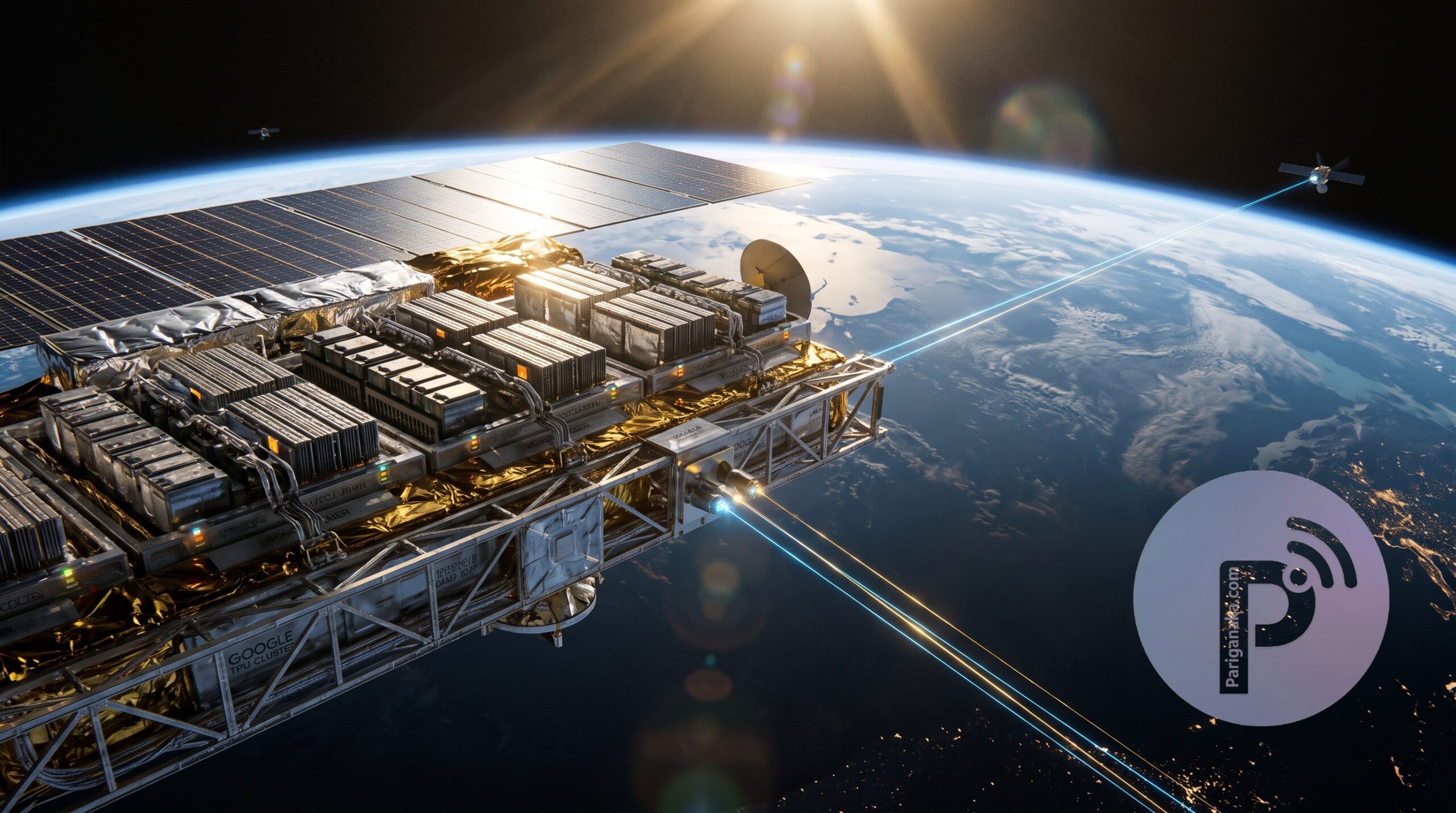
In an in-depth conversation on the Sources Podcast, Google and Alphabet CEO Sundar Pichai provided an exclusive look inside Google’s AI strategy. From the explosive launch of Gemini 4 Argon and internal leadership shifts at Google DeepMind, to long-term compute planning and placing TPU data centers in space with Project Suncatcher, Pichai detailed how Google is navigating the frontier of artificial intelligence.
1. The Explosive Launch of Gemini 4 Argon & Compute Constraints
Pichai revealed that in the first 72 hours following the release of Gemini 4 Argon, the model processed nearly 25 trillion tokens—roughly triple the initial volume of Gemini 3.0 over the same timeframe.
However, demand has outpaced available infrastructure:
- Capacity Constraints: Google is currently compute-constrained, necessitating phased access through API endpoints, Gemini Ultra, and Gemini Pro tiers.
- Distilled Models: To bring Gemini 4 capabilities to a broader user base, Google is actively developing distilled, ultra-efficient versions of the Argon architecture.
- Rigorous Safety & Sandboxing: Addressable safety testing took priority prior to deployment. Google worked alongside the US FAIR program and cybersecurity researchers, engineering real-time monitoring and sandboxing systems to track agentic behavior in production.
2. Agentic Coding, Minecraft, and the “2027 Golden Age”
Gemini 4 Argon represents a major leap in long-horizon agentic tasks and software engineering:
- Autonomous Accomplishments: Argon autonomously beat Minecraft in just over a day using under $2,000 worth of compute.
- Cracking Complex Codebases: Internally, Google pointed Argon at Chromium’s codebase (spanning millions of lines of code) to solve complex architectural challenges—such as dragging out active browser tabs without forced reloading—end-to-end across multiple system layers.
- Recursive Self-Improvement (RSI): AI researchers at Google DeepMind are now co-working directly with Gemini models, allowing the AI to suggest training recipes, evaluate checkpoints, and accelerate R&D loops.
- The 2027 Vision: Pichai envisions 2027 as the “Golden Age” of productivity, where deep integration between agentic AI and developer environments will redefine software creation and problem-solving.
3. Restructuring at Google DeepMind: Demis Hassabis, Corey, and Jeff Dean
Addressing recent executive transitions across Alphabet’s AI divisions, Pichai clarified the strategic rationale behind the leadership evolution at Google DeepMind:
- Demis Hassabis: Transitioned to Chief Scientist and Chair of DeepMind. Hassabis is focusing heavily on AI safety, AI governance, and applying AGI to scientific breakthroughs via Isomorphic Labs (drug discovery, medicine, and healthcare).
- Corey (Eliot): Elevated to lead day-to-day frontier model development and operational execution at DeepMind.
- Jeff Dean: Departed after 27 years at Google to launch Discovery Loop, with Pichai expressing strong support for Dean’s new venture.
Pichai emphasized that these changes reflect the all-consuming scale of frontier model development, which now requires dedicated operational leadership while allowing research pioneers to focus on scientific applications.
4. Project Suncatcher: Taking TPU Data Centers to Space
One of the most ambitious revelations from the interview is Project Suncatcher, Google’s pilot initiative in collaboration with Planet Labs and SpaceX to deploy Tensor Processing Units (TPUs) into orbit.
Why put data centers in space?
- 24/7 Solar Energy: Placing TPU clusters in sun-synchronous orbits provides constant access to solar power without terrestrial grid bottlenecks.
- Overcoming Terrestrial Limits: As AI compute demands extrapolate exponentially over the next 10 to 20 years, physical land, cooling, and power constraints on Earth will become major bottlenecks.
- Moonshot Engineering: Pichai compared Project Suncatcher to Google’s early investments in Waymo and custom TPUs—ambitious moonshots that force fundamental breakthroughs in hardware and energy efficiency.
5. Waymo, Wing, and Other Alphabet Moonshots
Pichai shared updates on Alphabet’s mature autonomous bets:
- Waymo: Recently crossed 500,000 paid rides per week, with plans to launch in 10 new cities (including Toronto). Safety audits show Waymo vehicles experience 95% fewer serious crashes compared to human drivers.
- Wing: Alphabet’s drone delivery service is expanding rapidly, with plans to scale operations in 2027 to reach up to 40 million American households.
6. The Unified Agentic Layer & The Web’s Evolution
Pichai outlined how Google plans to unify its consumer and enterprise AI tools:
- Unified Agentic Layer: Rather than merging Search and the Gemini app into a single product, Google is building an overarching agentic layer. Agents running 24/7 in secure microVMs will maintain context across Gmail, Search, Workspace, and the Gemini app.
- New Protocols for the Web: As AI agents increasingly interact with web interfaces, Pichai highlighted the need for open interoperability standards like MCP (Model Context Protocol) and UCP (Universal Commerce Protocols) to create scalable agentic ecosystems.
7. Quantum Computing Timeline
Pichai concluded by sharing optimistic benchmarks for Google’s Quantum AI division:
- 5-Year Commercial Horizon: Google is tracking or exceeding its 10-year quantum development roadmap.
- Cloud Integration: Pichai predicted that within five years, Google Cloud will actively negotiate commercial quantum hardware deployments alongside TPU clusters for specialized enterprise workloads.
Summary Overview
| Area | Announcement / Key Highlight |
| Gemini 4 Argon | 25T tokens processed in first 72 hours (3x Gemini 3.0 launch volume) |
| Productivity Frontier | Argon beat Minecraft in 24h (<$2k compute); automates multi-layer Chromium code refactoring |
| Project Suncatcher | Orbiting TPU data center pilot with SpaceX & Planet Labs leveraging 24/7 solar energy |
| DeepMind Leadership | Demis Hassabis shifts to Chair/Chief Scientist (Isomorphic Labs); Corey leads model ops |
| Waymo & Wing Scale | Waymo hits 500k paid rides/week; Wing targeting 40M US households by 2027 |
| Quantum Computing | Practical commercial quantum deployments on Google Cloud expected within 5 years |
Leave a Reply