
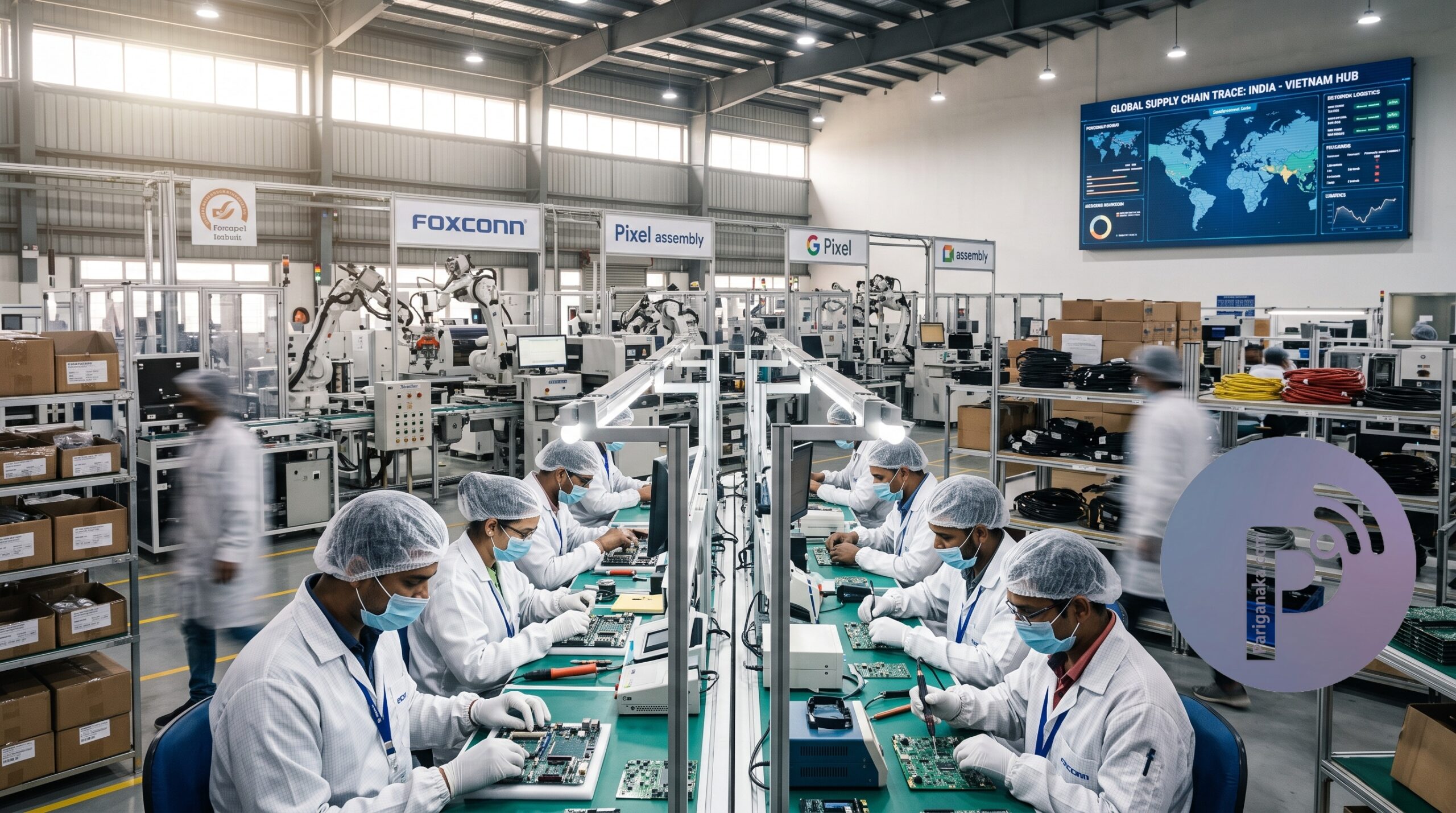
As geopolitical tensions and supply chain risks rise, Google’s “China Plus One” strategy is reportedly entering a decisive phase. The tech giant aims to move its Pixel hardware production out of China completely by 2027. However, relocating assembly lines is only the first step in a complex transition that will test whether emerging hubs like India and Vietnam can truly replicate China’s deep industrial ecosystem.
The “China Plus One” Paradox
Google’s timeline aligns with a broader industry trend of de-risking. Samsung aggressively shifted smartphone production to Vietnam, closing its final Chinese handset factory in 2019, while Apple has taken a more gradual approach by expanding iPhone production in India and other devices in Vietnam.
In this new tech landscape, Vietnam is set to remain the primary base for Google’s premium and flagship devices. Meanwhile, India is taking on an increasing share of final assembly and export volumes. Google is even pairing Taiwanese contract manufacturers like Foxconn and Compal with Indian local partners for Pixel production.
However, experts note a critical paradox in this migration. While final assembly is moving, the underlying supply chains—components, raw materials, and specialized equipment—remain heavily dependent on China. The transition is currently more of a “China Plus One” strategy aimed at diversification rather than a complete “decoupling” or a “China Minus” strategy.
The Infrastructure and Talent Gap
Moving beyond basic assembly presents massive challenges in both workforce talent and infrastructure.
China has spent decades building unparalleled manufacturing hardware, including robust ports, stable electricity, vast industrial parks, and a long tradition of cultivating factory workers. India, conversely, has historically focused its educational systems on elite IT and software engineering, leaving a gap in hardware, laboratory-based training, and shop-floor manufacturing experience.
To build domestic value, India must domesticate critical upstream components like Printed Circuit Boards (PCBs) and advanced materials. While India has initiated upskilling programs—such as the “Chips to Startup” scheme training around 78,000 workers in nanofabrication—about 75% of its existing semiconductor talent pipeline remains concentrated in technician or supervisory roles rather than deep hardware manufacturing.
Vietnam faces similar hurdles. While the country’s electronics exports surged by 51% in the first eight months of 2026 to cross the $100 billion mark, it still relies heavily on imported components and foreign-invested companies. Northern Vietnam’s “golden economic triangle” is seeing an influx of packaging and testing activities, but creating a localized supply base that captures higher value remains a long-term goal.
Cultural and Logistical Roadblocks
The human element is proving just as complex as the hardware. Major manufacturers setting up in India are currently struggling with a global shortage of engineers.
Companies like Foxconn initially relied on Chinese engineers in India, but due to recent visa complications, they had to recall hundreds of them. Replacing them with Taiwanese engineers has introduced new friction points regarding working culture, including differences in shift expectations, working hours, and standard operating procedures (SOPs) for emergency problem-solving. Additionally, logistics in a massive nation like India—where fixing a machine might require flying it across state lines—stand in stark contrast to the rapid, localized support networks available in smaller tech hubs like Taiwan.
The Road Ahead
For India and Vietnam, the ultimate challenge is turning foreign investment and newly built factories into lasting domestic industrial capabilities.
Taiwan is expected to play a crucial role in this transition by exporting its manufacturing know-how, ecosystem development strategies, and “train the trainer” educational models to these emerging markets. While the shift of tech production out of China is well underway, the countries that successfully navigate the talent race and build deep industrial roots will ultimately shape the next generation of the global tech supply chain.
Leave a Reply