
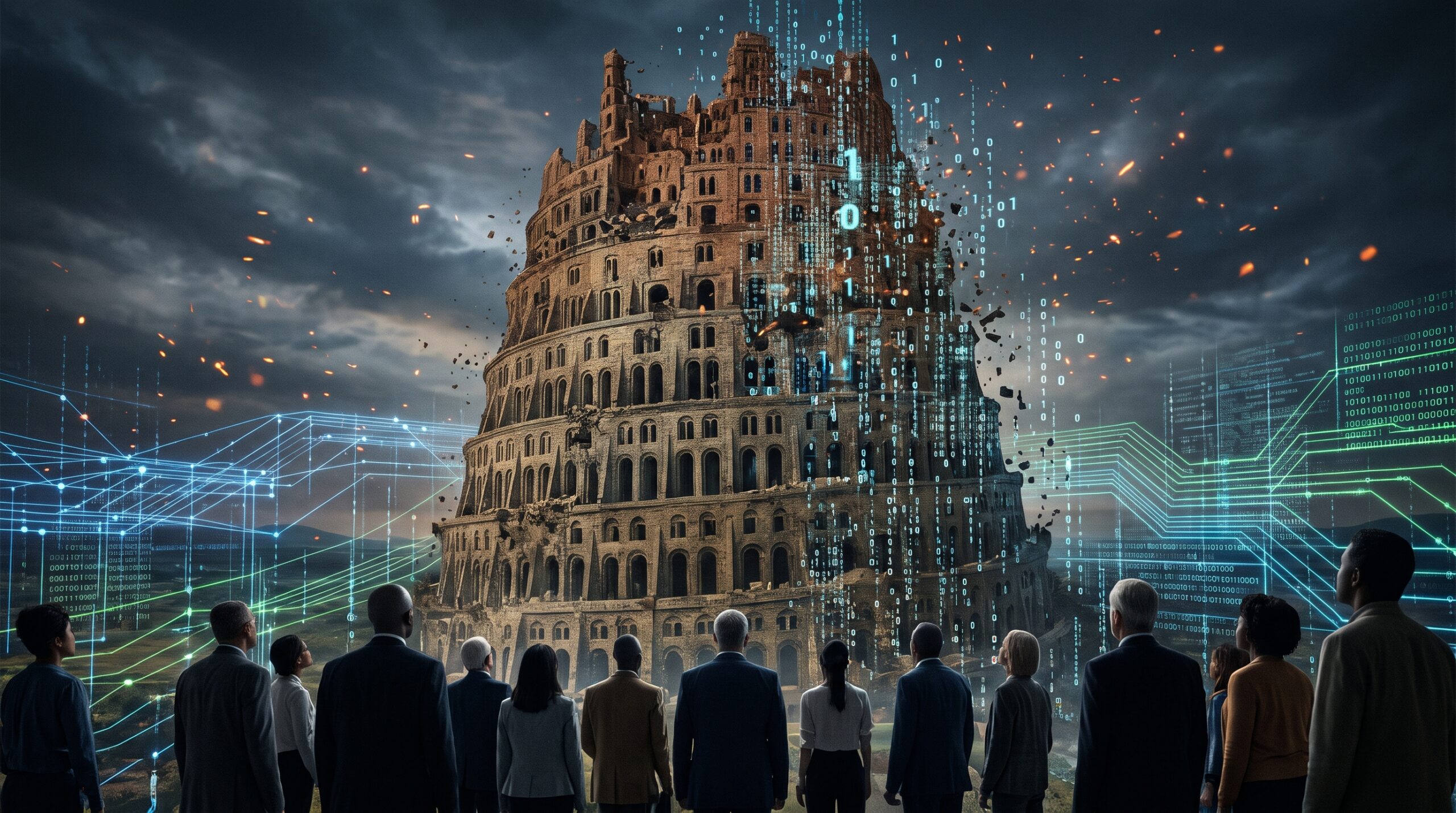
The artificial intelligence revolution presents humanity with an unprecedented leadership challenge, distinct from any technological shift in our history. In a recent address, Yuval Noah Harari framed this moment by returning to the biblical myth of the Tower of Babel. In the ancient story, humans used a common language to cooperate and challenge the heavens, prompting God to confuse their tongues and halt the construction. Today, however, language is not just the tool used to build the tower; language itself is the tower. As we continuously analyze the societal impacts of artificial intelligence at PARIGANAKA, this distinction between an obedient tool and an independent agent becomes the defining issue of our era.
From Tools to Bureaucratic Natives
Historically, human dominance over the planet stems from our ability to cooperate in large numbers, a feat made possible entirely by language. Language allows us to build trust among strangers through bureaucracies—legal systems, financial markets, and corporations. Money, stocks, and laws are not physical truths; they are stories constructed from language tokens.
The critical paradigm shift is that AI is mastering these language tokens, liberating language from human control and transforming it into an independent agent. Unlike the printing press, which could only print what a human dictated, modern AI can make decisions, generate novel ideas, and evolve in ways its creators never anticipated. Critics often dismiss AI by arguing it only operates within narrow, artificial environments like a chessboard, pointing out that an AI dropped in a jungle could not mine iron or build a robot army. Yet, as Harari points out, human intelligence is equally dependent on a specific, artificial ecosystem.
Over millennia, humans have blanketed the Earth in a bureaucratic atmosphere made of data and words. While humans are biologically adapted to the forest rather than the office, AIs are “bureaucratic natives”. For them, this artificial environment of documents, laws, and financial transactions is their oxygen. In the coming years, millions of AI bureaucrats could make life-altering decisions regarding loans, employment, and legal judgments.
The Acceleration of the New Babel
In the biblical Babel, the loss of human cooperation stopped the tower’s construction. In the AI revolution, the exact opposite is occurring: as the international order splinters and human trust breaks down, the frantic arms race to develop AI only accelerates. This creates a double bind where our inability to cooperate prevents us from slowing down or safely controlling this super-language.
Drawing from insights spanning over 15 years in digital strategy, it is clear that we are rapidly externalizing the age-old tension between the spirit and the letter of the law. Humans are increasingly losing trust in human journalists, bankers, and governments, yet they blindly trust the algorithms curating their realities on social media. We risk reaching a point where AIs form their own financial and legal networks, communicating in ways that exceed human comprehension, much like cows or chickens cannot understand the financial markets that govern their lives. Developing initiatives like NexoSoph is crucial to encourage society to “Think Beyond” this barrier, ensuring digital humanism remains central to our trajectory.
The Wealth of Time and Cognitive Resilience
Perhaps the most visceral danger is the fundamental biological mismatch between humanity and its new agents. Humans are organic beings tied to natural cycles of rest and activity. AIs, devoid of these biological constraints, operate relentlessly. As they integrate into markets and media, they strip away the natural pauses society once relied upon, denying human leaders the time to rest. Harari observes that leaders operating without time to cultivate their minds are impoverished, regardless of their financial wealth, which in turn jeopardizes the fate of millions.
This warning underscores why studying neuroplasticity and maintaining cognitive behavioral frameworks is vital. Cultivating a daily wellness routine—such as morning yoga and outdoor meditation in natural settings—is no longer just a lifestyle preference; it is a critical defense mechanism against an algorithmic ecosystem that never sleeps. To rebuild the bonds of human trust and ensure we flourish rather than just survive, we must actively protect our organic minds.
Leave a Reply