
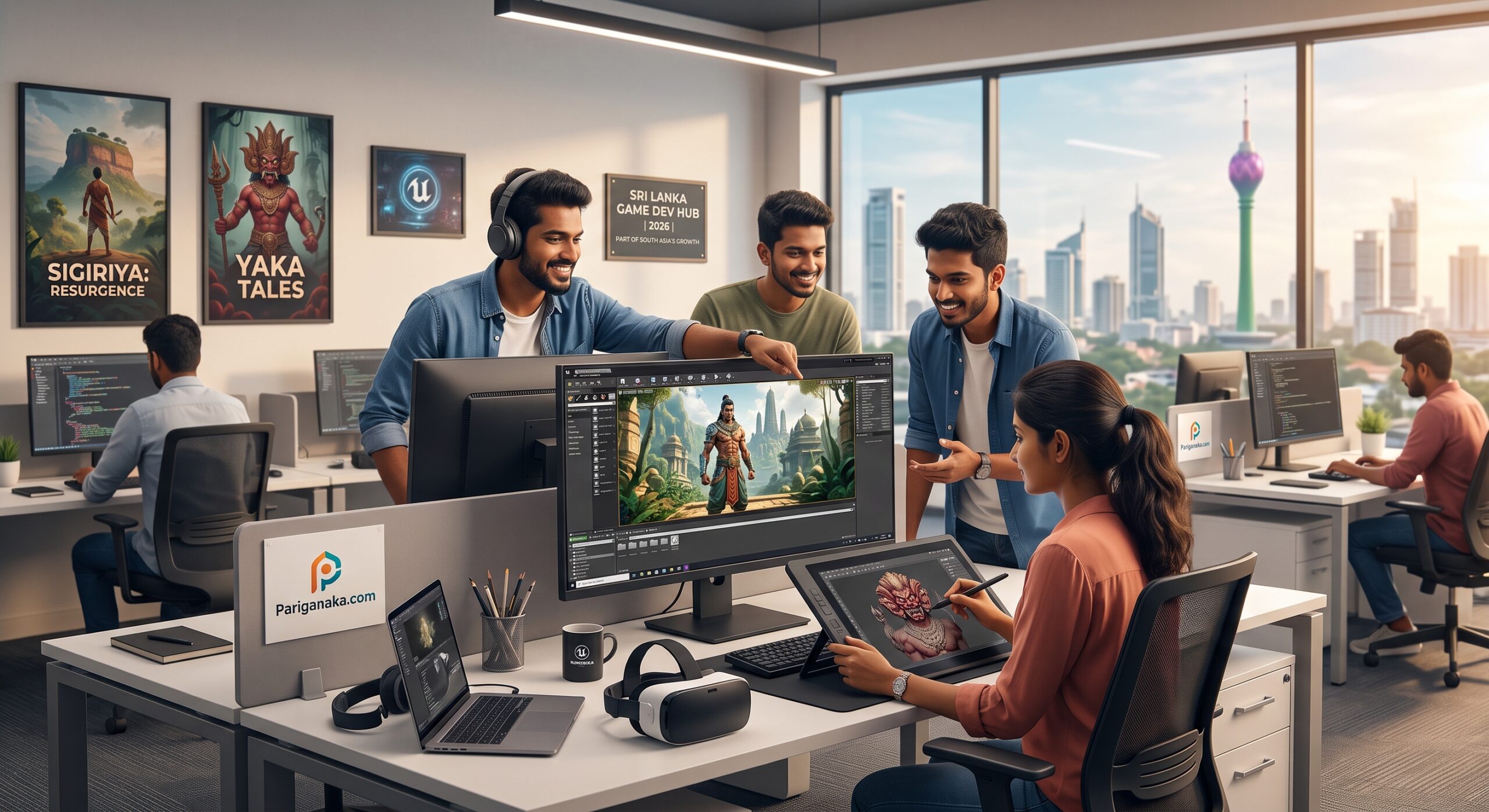
For decades, Sri Lanka’s IT sector was globally recognized primarily for enterprise software engineering and quality assurance. However, as we move deeper into 2026, a vibrant and highly lucrative new sector is taking center stage: Video Game Development.
Driven by passionate creators, accessible next-gen game engines, and a rich cultural history ripe for storytelling, local indie studios are beginning to make serious waves on global platforms like Steam, PlayStation, and the Epic Games Store.
Here is a look at why Sri Lanka is rapidly leveling up as a game development hub and what it means for the future of our tech ecosystem.
1. The Democratization of Game Engines
In the past, developing a high-quality 3D game required massive budgets and hundreds of developers. Today, the landscape has fundamentally changed.
- Accessible Power: The widespread adoption of tools like Unreal Engine 5 and Unity has democratized game creation. Sri Lankan developers now have access to the exact same powerful rendering and physics engines used by major “AAA” studios in the US and Japan.
- AI Integration: Local teams are leveraging AI-driven tools for rapid asset generation, voice acting drafts, and code debugging, allowing small indie teams of 5 to 10 people to produce incredibly polished games in record time.
2. Exporting Sri Lankan Culture and Lore
One of the biggest advantages local developers have is access to fresh, untapped narratives. Global gamers are constantly looking for new worlds to explore, and Sri Lankan creators are delivering.
- Mythology and History: Several upcoming indie titles are drawing heavy inspiration from Sri Lankan folklore, ancient kingdoms, and traditional art styles. By integrating elements like Yakas (demons), traditional martial arts (Angampora), and lush tropical environments, developers are offering unique experiences that stand out in a crowded market.
- Global Appeal: These culturally rich games are proving that localized storytelling has massive global appeal, attracting international publishers looking for diverse content.
3. The Rise of Specialized Education
The educational infrastructure in Sri Lanka is finally catching up with the demands of the creative tech industry.
- New Curricula: Leading state and private universities, as well as specialized tech institutes, have expanded their degree programs to include Game Design, 3D Animation, and Interactive Media.
- Bridging the Gap: We are seeing a steady pipeline of graduates who are not just skilled in traditional coding, but also in level design, game math, and digital sculpting.
4. The Esports Catalyst
The booming Esports scene in Sri Lanka has played a massive role in this evolution. Officially recognized as a national sport, competitive gaming has nurtured a generation of hardcore gaming enthusiasts.
- From Players to Creators: Many professional players and tournament organizers are now transitioning into game development, bringing a deep, intuitive understanding of game mechanics, balancing, and player psychology to the development table.
Final Thoughts
The rise of the Sri Lankan game development scene proves that our tech industry is capable of much more than backend enterprise support; we are a nation of storytellers and digital artists. For young tech enthusiasts reading this on Pariganaka.com, there has never been a better time to download a game engine, start learning, and build your own world.
Would you like me to translate this article into Sinhala or Tamil for your local readers, or would you prefer I write a different article focusing on the latest smartphone trends in the Sri Lankan market?
Leave a Reply