
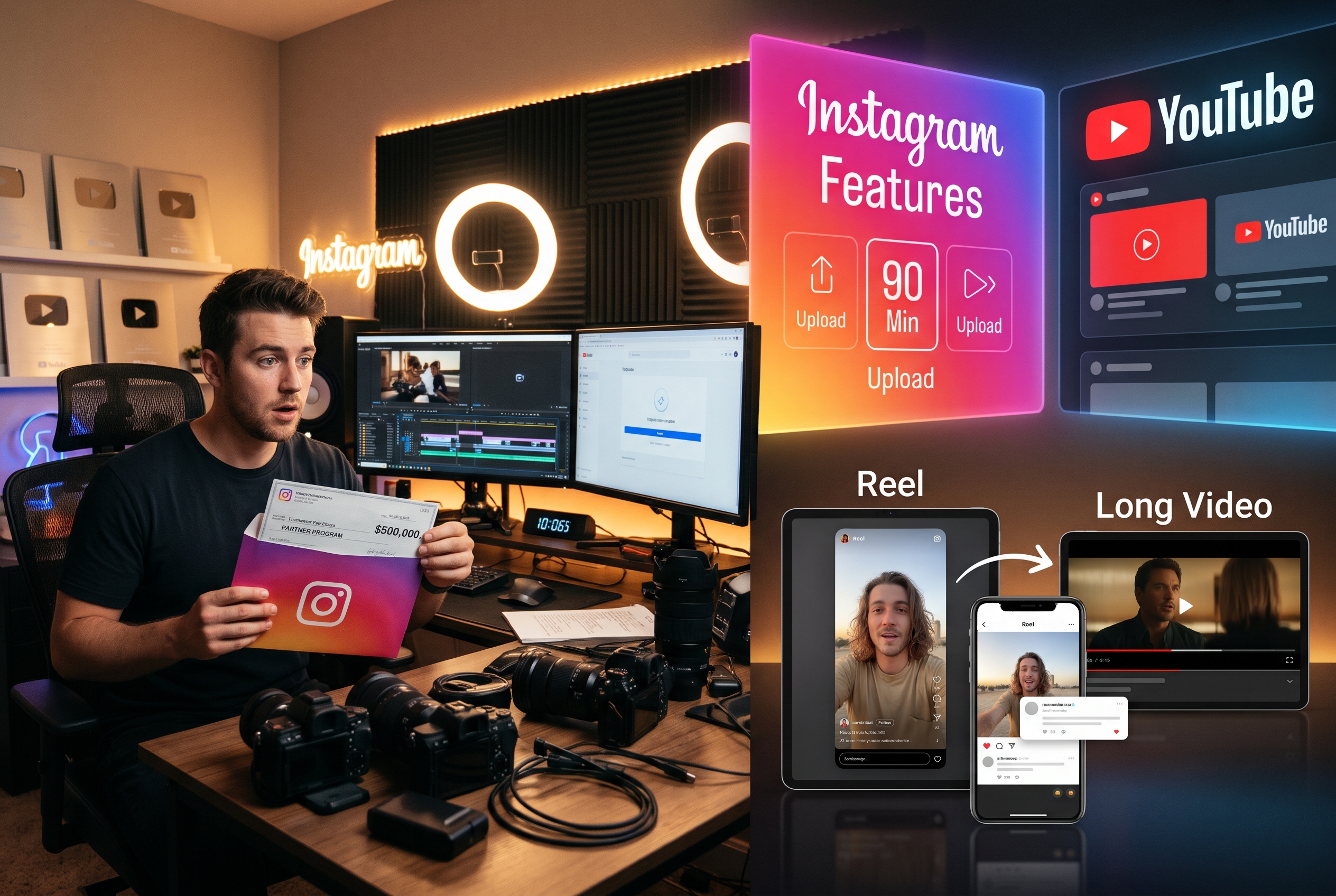
Instagram is pulling out its checkbook, and it has its sights set directly on YouTube’s territory. In a surprising pivot for a platform that practically defined the modern short-video addiction with Reels, Instagram is now offering top YouTube creators massive payouts—ranging from $50,000 to a staggering $500,000—to bring their long-form content to its app.
The requirement is simple: keep your YouTube channel, but upload those same long videos to Instagram’s new product, dubbed “Features,” on the exact same day. With Features supporting videos of up to 90 minutes in length, the Meta-owned giant is making a bold play for sustained viewer attention. But why the sudden shift, and what does it mean for the future of social media?
The Ghost of IGTV and a Brand New Strategy
If Instagram’s push into long-form video sounds familiar, that’s because they’ve tried it before. In 2018, the platform launched IGTV (Instagram Television) with the explicit goal of taking on YouTube. It was a standalone product that ultimately failed to resonate. Creators weren’t convinced, viewers didn’t embrace it, and by 2022, Instagram quietly shut it down to focus all its energy on the meteoric rise of Reels.
Now, eight years after the IGTV experiment, Instagram is trying again. However, this time the strategy is entirely different. Instead of pitting short videos against long videos, Instagram wants them to work in perfect harmony.
Imagine scrolling through your Instagram feed and seeing a snappy, 30-second clip from a fascinating interview. When it catches your attention, you naturally want to hear the rest of the conversation. In the past, you would have closed Instagram and searched for the video on YouTube. Now, Instagram wants you to watch the entire 90-minute interview without ever leaving its app. The Reel serves as the trailer, and the “Feature” is the main event.
The Battle for Attention and the Living Room
In the digital economy, attention equates to money. While short-form content is fantastic for grabbing attention, long-form content is what holds it. The longer users stay on the platform, the more opportunities Instagram has to serve them advertisements.
But there is another massive frontier driving this shift: the television screen. Consumers are increasingly watching internet videos on their smart TVs. Currently, people consume over 1 billion hours of YouTube content on television screens every single day. Instagram wants a slice of that lucrative “living room” audience, having recently expanded its presence onto TV screens in the United States.
The Billion-Dollar Question: How Will Creators Get Paid?
While Instagram’s strategy makes sense on paper, there is a glaring roadblock. YouTube has a deeply entrenched, highly successful revenue-sharing model that pays creators based on the views their videos generate. Instagram does not yet have a comparable system in place for its long-form Features.
Currently, the company is bridging that gap by directly paying select top creators those massive $500,000 checks. But what about the broader creator middle class? Instagram’s head, Adam Mosseri, has acknowledged this concern, stating that the company is actively looking into sustainable ways to pay long-form creators, though specific details remain under wraps.
The Future of the Creator Economy
Does this mean short-form video is dying? Absolutely not. YouTube Shorts currently generate over 200 billion views every day, and Reels remain the lifeblood of Instagram’s current business model. Neither platform is abandoning the short scroll.
Instead, what we are witnessing is an evolution in how different video formats are utilized. Short videos are becoming the top-of-the-funnel hooks designed to bring audiences in, while long videos provide the depth needed to make them stay. Ultimately, creators will no longer have to choose between being a “short-form” or “long-form” creator—they will be expected to master both to build their audience.
Instagram has tried to slay the YouTube giant before and missed. This time, they are returning with a smarter, integrated strategy and very deep pockets. But paying a handful of top creators is the easy part. Building a sustainable, automated business model that keeps both creators and viewers coming back? That will be the real test.
Leave a Reply