
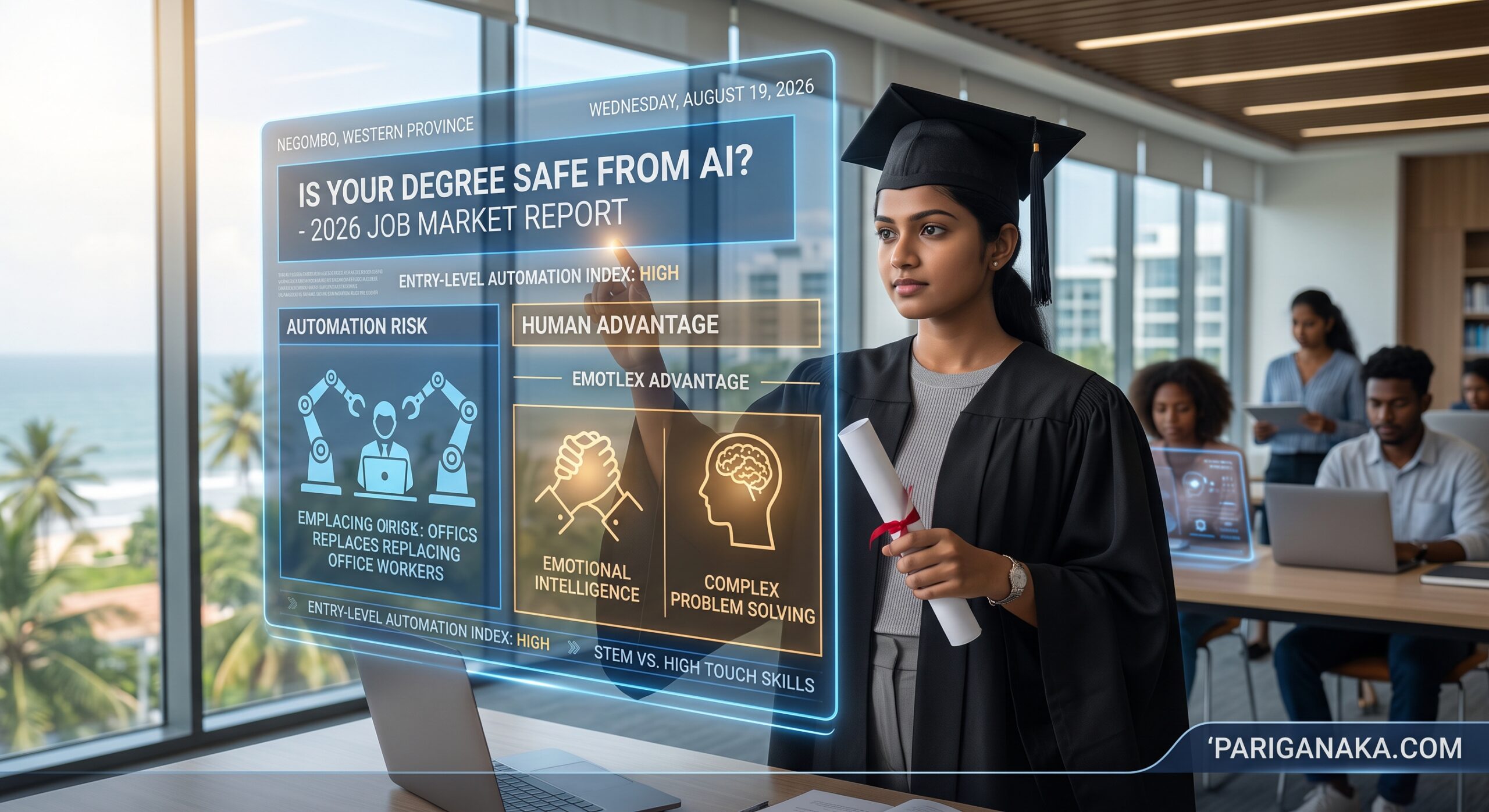
As artificial intelligence rapidly advances, students and young professionals face a daunting question: Is my degree safe from automation? Recent investigations by the BBC World Service, including the What in the World and Asia Specific podcasts, have shed light on the real-world impact generative AI is having on graduates, entry-level positions, and university choices.
Here is a fact-checked look at how AI is actively reshaping the global job market and what it means for your educational path.
1. The Automation of Entry-Level Roles
Entering the job market has always been challenging, but generative AI is altering the landscape for recent graduates.
- Impact on Younger Workers: Recent studies highlighted by the BBC suggest that AI is a contributing factor in making the job hunt harder, with younger workers being replaced by AI in some industries.
- Corporate Workforce Reductions: Major global companies, including Amazon and Duolingo, have publicly indicated that adopting AI will lead to a reduction in their workforce.
2. The STEM Dilemma
Historically, a degree in STEM (Science, Technology, Engineering, and Mathematics) was considered the ultimate safety net.
- Government Initiatives: Governments across Asia, such as Indonesia, are expressing concern over low numbers of STEM graduates and are looking at ways to equip universities for the future job market.
- The Tech Sector Shock: However, there is a growing debate about which careers will withstand the artificial intelligence shock. Because AI-related job losses are currently hitting the global tech sector particularly hard, experts are rethinking the types of traditional tech careers that will actually survive this disruption.
3. The “High Touch” Advantage
If technical skills are increasingly vulnerable to AI automation, where does job security lie? The answer might be rooted in our humanity.
- Human Interaction: According to business leaders discussing the AI era on BBC Global, the jobs that will become the most valuable are those where human interaction matters most.
- Person-to-Person Connection: This concept, sometimes called the “high touch” theory of AI, suggests that the roles destined to thrive in the coming decades are those fundamentally built around person-to-person connection. Degrees that foster high emotional intelligence, complex problem-solving, and deep interpersonal communication may become the new standard for job security.
Final Thoughts
While generative AI is undeniably transforming the types of roles available to recent graduates, it is not necessarily the end of the entry-level job. Instead, the market is pivoting. The safest degrees of tomorrow might not just be the ones that teach you how to program a machine, but the ones that teach you how to leverage human connection in a highly automated world.
How AI is changing the job market
This episode of the What in the World podcast provides real-world accounts of how young professionals are navigating the job hunt and adapting to a market where generative AI is replacing certain roles.
Leave a Reply