
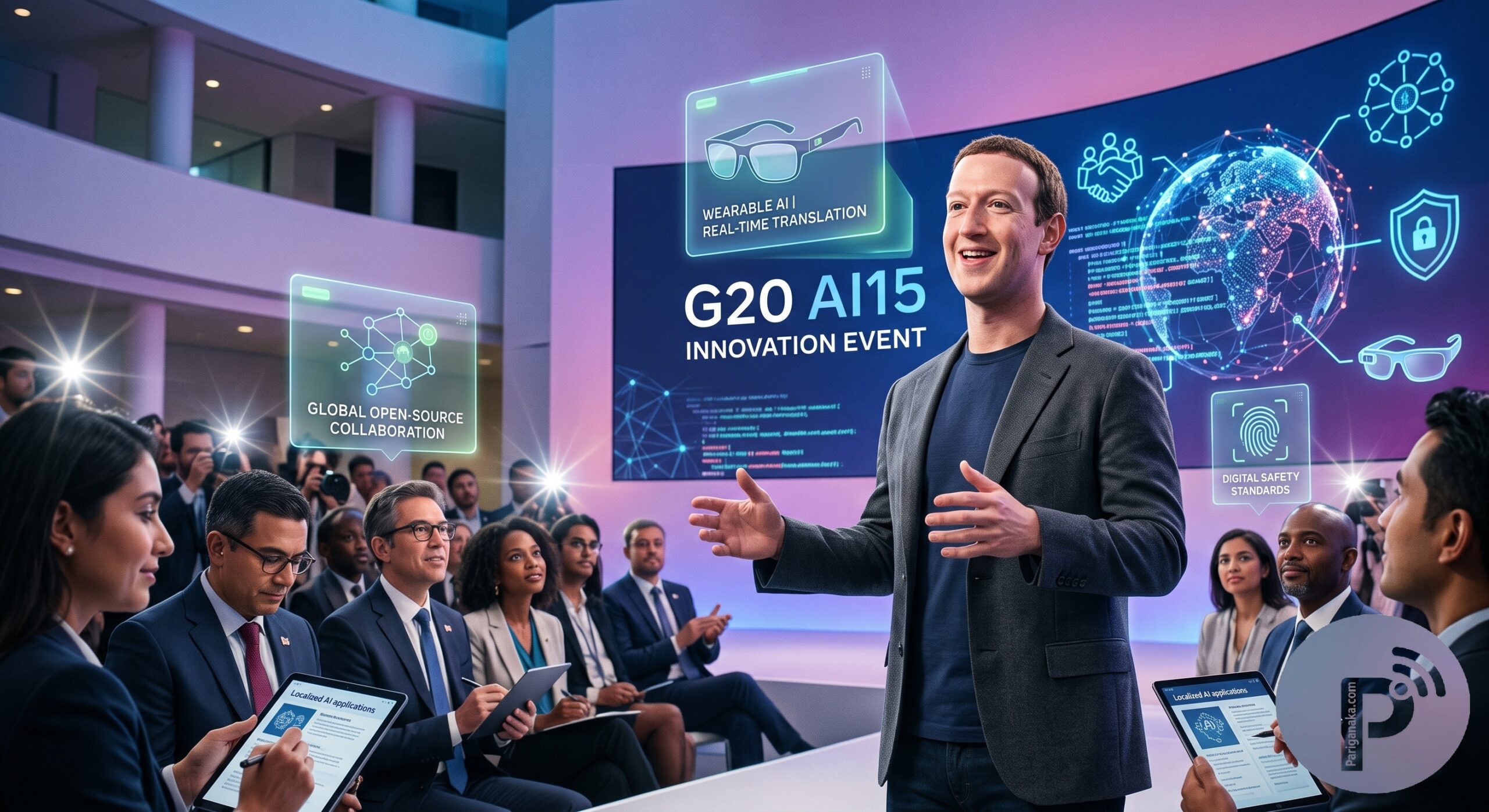
Meta CEO Mark Zuckerberg’s recent address at the G20 AI15 Innovation Event highlighted a pivotal shift in how the world approaches artificial intelligence. Moving away from isolated, proprietary systems, the global focus is pivoting toward collaborative, open-source development and hardware that integrates naturally into human spaces.
The Push for Open-Source Artificial Intelligence A major focal point of the summit was the democratization of AI. By advocating for open-source foundation models, Meta aims to empower independent developers and regional tech communities to build localized, custom solutions. This approach prevents a monopoly by a few massive corporations, fostering a more inclusive digital ecosystem where innovation happens at the grassroots level.
The Next Generation of Smart Wearables Aligning with the rapid evolution of neural networks and highly efficient silicon chips, the summit emphasized the transition from screen-based interactions to wearable technology. Vision-Language-Action (VLA) models are rapidly being integrated into everyday devices like smart glasses. These wearables promise to make augmented reality a seamless part of daily life, offering real-time translation, contextual object recognition, and hands-free navigation without pulling users away from their physical surroundings.
Prioritizing Everyday Digital Safety As autonomous AI systems become more capable, global leaders at AI15 stressed the absolute necessity of robust digital safety frameworks. The discussions underscored the importance of establishing international standards for biometric security, user data encryption, and AI alignment. Protecting digital identity is a foundational requirement for securing users against emerging cyber threats as these tools become mainstream.
Human-Centric Technological Growth The overarching narrative of the G20 AI15 event was not about machines replacing human effort, but enhancing human potential. By developing autonomous systems that understand contextual nuances and operate quietly in the background, the ultimate goal is to give people back their most valuable resource: time. This human-friendly approach ensures that tomorrow’s technology serves as a capable, secure assistant rather than an intrusive disruption.
Leave a Reply