
In a recent episode of “The Most Interesting Thing in AI,” Nicholas Thompson, CEO of The Atlantic, sat down with Nobel laureate and MIT economist Daron Acemoglu to discuss the intersection of artificial intelligence, income inequality, and the future of liberal democracy. Acemoglu, author of What Happened to Liberal Democracy?, argued that the trajectory of modern technology poses an existential threat to the middle class if it remains solely focused on automation.
watermarked_img_10031613754899418614.jpg+ 1
The Crisis of Automation and Inequality
Acemoglu emphasized that the current crisis in liberal democracy—fueled by the collapse of shared prosperity—is deeply tied to automation. He noted that his research indicates between 50% and 70% of the wage differences between various education groups in the post-industrial era is due to automation.
watermarked_img_10031613754899418614.jpg+ 1
“The number of jobs my estimates that workers were displaced from because of robotics was less than 5%, and it led to a lot of the backlash and discontent that ultimately fueled Trump’s rise to power,” Acemoglu explained. He warned that if AI displaces 20% of workers in a similar timeframe, the societal and political consequences could be an “earthquake”.
watermarked_img_10031613754899418614.jpg+ 1
As AI models are primarily developed as automation technologies, their first direct effect will likely be to increase the share of national income going to capital while reducing the labor share. This dynamic risks further hollowing out the middle class, squeezing workers, and exacerbating the inequalities that have already fractured the political landscape over the last few decades.
watermarked_img_10031613754899418614.jpg+ 1
The Pitfalls of Silicon Valley’s Strategy
A significant concern for Acemoglu is how resources are currently allocated in the AI sector. In the United States, an overwhelming amount of capital and engineering talent is devoted to building massive foundation models, driven by the elusive pursuit of Artificial General Intelligence (AGI).
watermarked_img_10031613754899418614.jpg+ 1
Acemoglu argued that this is putting our “eggs in the wrong basket”. He pointed out that while the U.S. focuses heavily on foundation models, competitors like China are investing heavily in the application layer—integrating AI and robotics into production processes. The real economic value and productivity gains, Acemoglu suggests, reside in developing useful applications rather than just endlessly scaling foundational models.
watermarked_img_10031613754899418614.jpg+ 2
Furthermore, he doubts that true AGI will be achieved within the next ten years, meaning that human creativity, innovation, and tasks requiring fine motor skills or complex physical-world problem solving will remain vital. He advised that jobs involving face-to-face interaction, mechanical and civil engineering, and hands-on technical trades are far less likely to be replaced by machines.
watermarked_img_10031613754899418614.jpg+ 1
The Case for “Pro-Worker AI”
Rather than accepting a future where AI simply replaces human labor, Acemoglu passionately advocated for a pivot toward “pro-worker AI”. Generative AI, he argued, opens up vast possibilities to provide workers with better problem-solving capabilities, new dimensions of expertise, and entirely new tasks.
watermarked_img_10031613754899418614.jpg+ 1
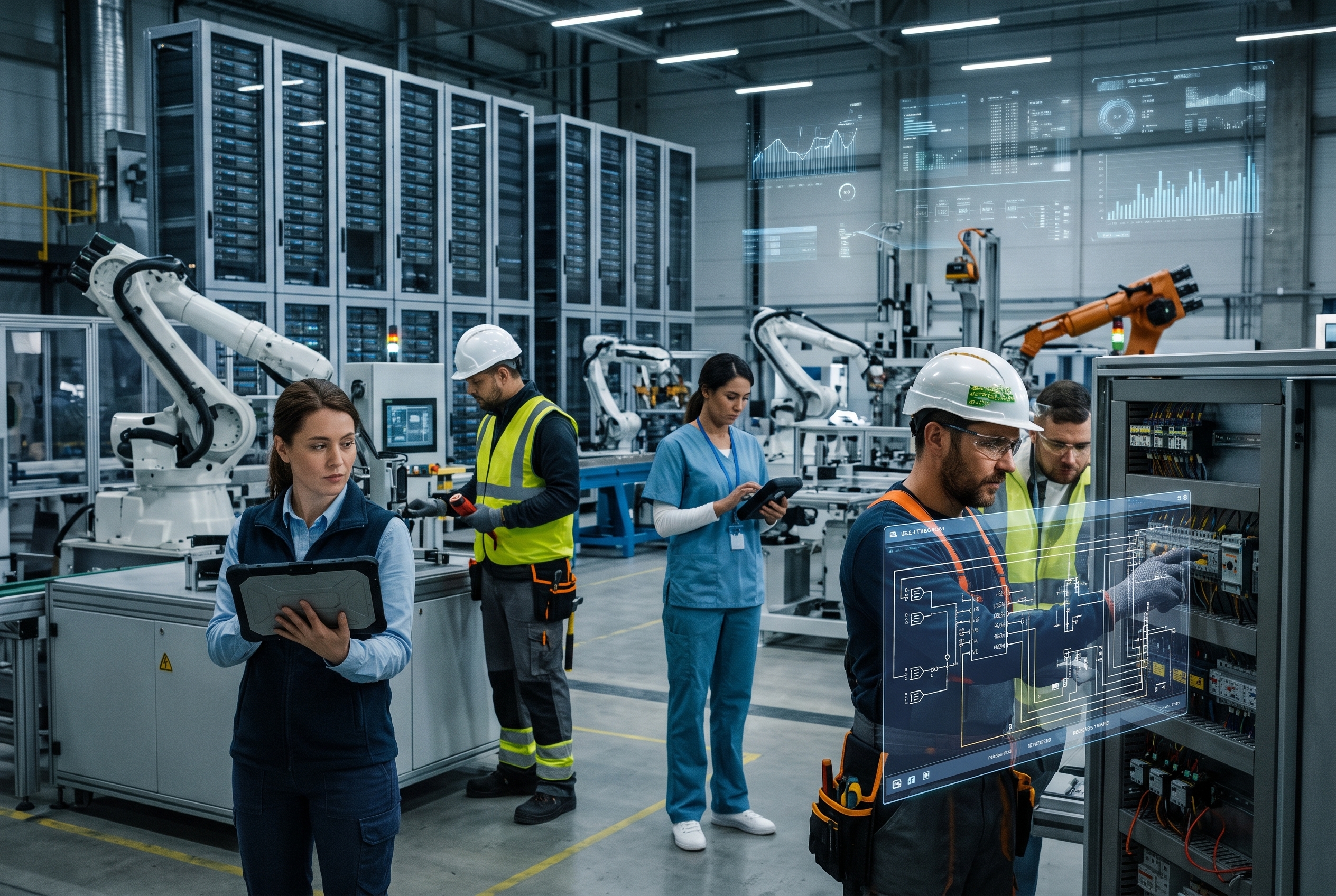
For example, a pro-worker AI could serve as an expert companion for an electrician. Instead of trying to automate the electrician’s job—which is highly complex and variable—the AI could instantly provide deep electrical engineering theory and equipment knowledge, helping the human worker solve incredibly difficult problems in the field. Similar tools could be developed for nurses, teachers, and other professionals, creating new demands for human labor rather than sidelining it.
watermarked_img_10031613754899418614.jpg+ 2
“If we woke up tomorrow and 50% to 60% of the incredible talent that’s going into Silicon Valley today… were convinced that AGI dreams are not the way to make society better, but there is this pro-worker thing we can do and we should do, the problem is solved,” Acemoglu stated.
watermarked_img_10031613754899418614.jpg
A Call for Democratic Debate
Acemoglu criticized the lack of democratic input regarding the deployment of AI. He highlighted the contradiction in tech industry messaging: the public is simultaneously told that AI will transform every aspect of the economy and social life, yet it is so technical that everyday citizens should step aside and let tech leaders make the decisions.
watermarked_img_10031613754899418614.jpg+ 1
“If anything is a quarter as important as AI is said to be, then that’s where we want the democratic process to focus,” Acemoglu argued. He called for an open, society-wide debate and a proactive regulatory agenda that decides where we want AI to go, rather than reactively scrambling to put up guardrails after damage is done.
watermarked_img_10031613754899418614.jpg+ 1
Leave a Reply