
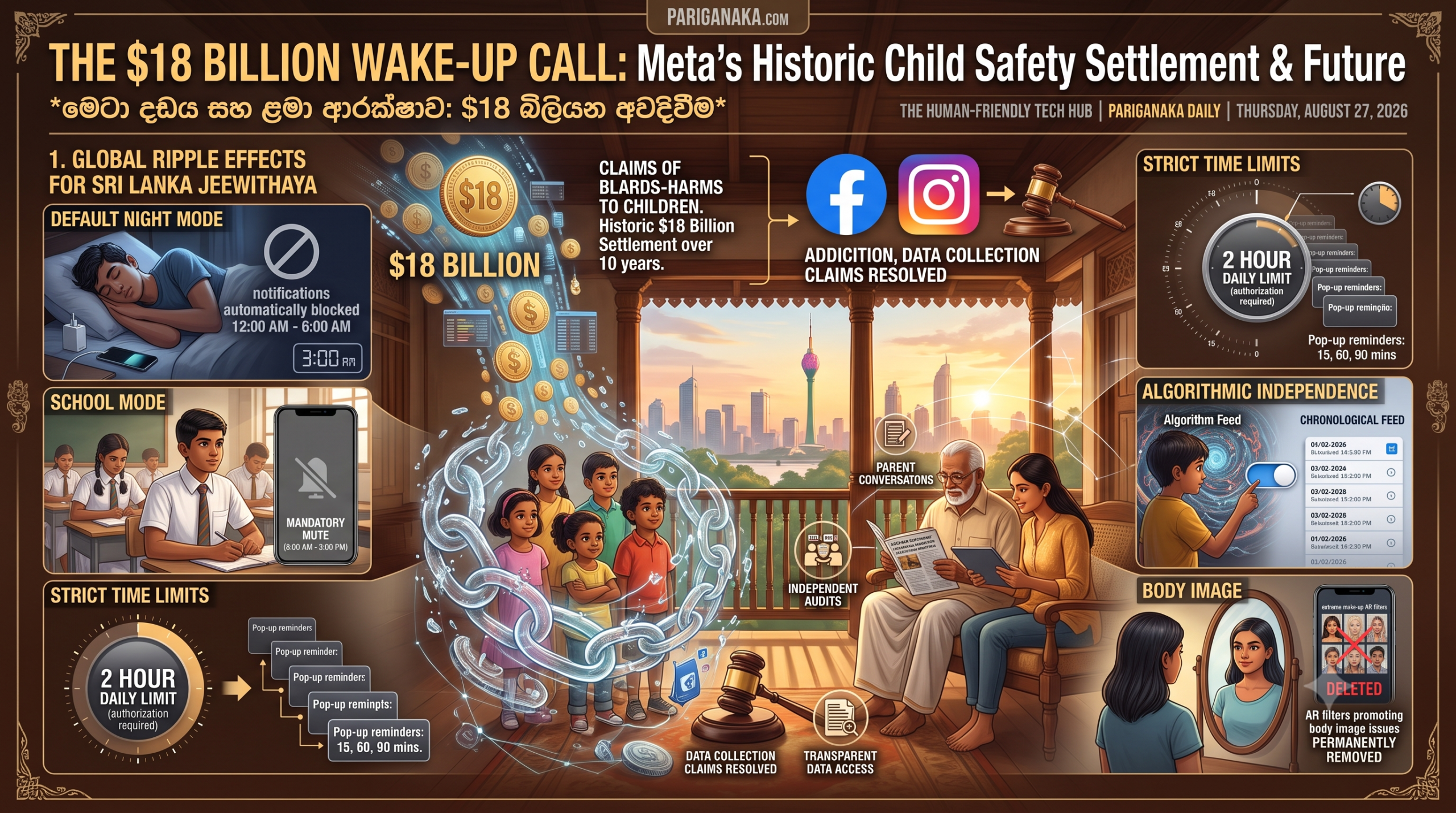
For over 15 years, our core mission at the Maha Gedara has been to advocate for a digital landscape that prioritizes human well-being over algorithmic engagement. This week, the global tech industry received its loudest wake-up call to date: Meta has agreed to a record-breaking $18 billion settlement with dozens of US states over claims that Facebook and Instagram actively harmed younger users.
While this monumental legal battle unfolded in the United States, the ripple effects of this decision will fundamentally redefine how children and teenagers interact with social media right here in Sri Lanka.
What Exactly Happened?
The litigation, initially launched in 2023, accused the tech giant of designing platforms specifically to addict children, misleading the public about their safety, and improperly collecting underage data. Rather than facing a prolonged federal trial, Meta opted for the largest child safety litigation payment in history—to be paid over a ten-year period.
More importantly, to resolve the claims, Meta has agreed to sweeping, mandatory changes regarding how teenagers experience its applications.
A Shift Toward “Human-Friendly” Design
Beyond the staggering financial penalty, the most critical outcome of this settlement is the forced redesign of the platforms. These legally bound changes represent a massive shift away from the “endless scroll” and toward intentional, healthy digital boundaries:
- Default Night Mode: Notifications will be automatically blocked between midnight and 6:00 AM, protecting the crucial sleep cycles of adolescents.
- School Mode: A mandatory mute on all notifications during standard school hours (8:00 AM to 3:00 PM).
- Strict Time Limits: A default two-hour daily cumulative limit across Facebook and Instagram, requiring parental permission to bypass. The platform will also issue “continuous use” prompts after 15, 60, and 90 minutes.
- Algorithmic Independence & Body Image: Young users will now have the ability to choose chronological feeds rather than algorithm-driven content. Furthermore, “extreme make-up” augmented reality filters will be permanently removed to protect developing self-esteem.
The Pariganaka Jeewithaya Perspective
These systemic changes will not remain confined to North America. As regulatory pressure mounts globally, tech companies are increasingly likely to roll out these baseline safety features universally to avoid future multi-billion-dollar lawsuits. For Sri Lankan parents, educators, and mental health professionals, this is a massive victory for digital well-being.
However, technology alone cannot fix a societal issue. A financial settlement compensates for past harm, but it does not automatically guarantee a safe future. True human-friendly technology requires independent audits, transparent data access for researchers, and, most importantly, active, open conversations between parents and children.
This historic $18 billion settlement proves that the era of unregulated, “addiction-by-design” social media is finally facing real accountability. It is a powerful reminder that the digital world must adapt to protect our most vulnerable users—not the other way around.
Leave a Reply