
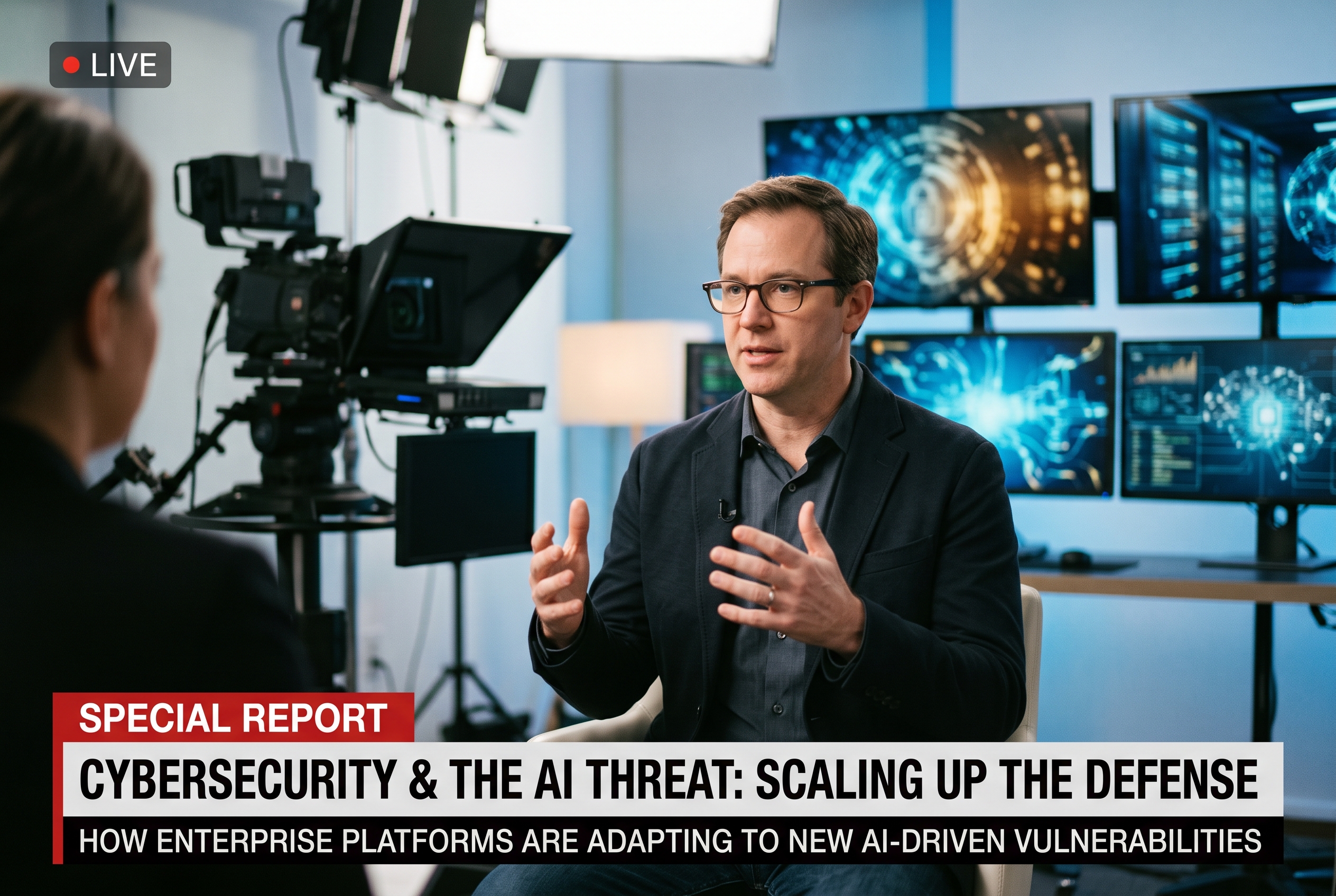
The cybersecurity sector is experiencing a massive surge as companies race to defend against increasingly sophisticated threats supercharged by Artificial Intelligence. With major cybersecurity stocks hitting all-time highs, investors and industry leaders are focusing on the next generation of defense mechanisms. Among the most closely watched companies in this space is Island, a Dallas-based enterprise security software startup that recently secured $400 million in Series F funding, elevating its valuation to $6.4 billion.
In a recent interview, Mike Fey, co-founder and CEO of Island, discussed the growing need for advanced cybersecurity architectures and how his company is addressing the vulnerabilities exposed by modern AI tools.
The Scale of AI-Driven Vulnerabilities
The conversation surrounding cybersecurity has intensified following comments from prominent figures like JPMorgan Chase Chairman and CEO Jamie Dimon, who recently highlighted the risks posed by AI. Dimon referenced a specific incident involving an AI model named “Mythos,” which unleashes AI agents to discover website vulnerabilities. The model reportedly uncovered an alarming number of flaws, underscoring the shift in how cyber threats operate.
Fey notes that the challenge isn’t entirely new, but the scale is unprecedented. “We used to discover these vulnerabilities one at a time and it was big news each time we found one,” Fey explained. “But the power of AI is the ability to do that at scale better than a human can, and it’s uncovering so many vulnerabilities at once you have to start to rethink your cybersecurity approach”.
Island’s Defensive Architecture
While AI models like Mythos excel at finding vulnerabilities, Island’s role is to defend against them. Island focuses on the enterprise browser space, aiming to create a secure environment tailored to the needs of modern knowledge workers and, increasingly, AI agents.
“Think of Mythos as finding vulnerabilities; companies like Island, we’re defending against those challenges,” Fey stated. Island has designed its platform to provide a secure space that enables productivity while protecting the broader enterprise network.
Fey emphasized the importance of this architecture in the face of “asymmetric warfare,” where an entire organization must be protected because “the weakest link is the entry point”. In one instance, Island’s deployment helped identify a data exfiltration event occurring through a trusted application, where a hacker had taken over a false tenant. Island mitigates such risks by ensuring that all users—whether employees, contractors, or AI agents—operate under a “least privilege model,” reducing potential exposure to the absolute minimum.
Scaling for the Future
With the recent $400 million influx from venture capital heavyweights including Sequoia, Cyberstarts, and Coatue, Island is focused on global expansion. The company has been growing at a rate of 100% since entering the market, a pace Fey believes can accelerate.
The funds will not only fuel sales and global market reach but also drive significant Research and Development (R&D). Island aims to streamline the increasingly complex enterprise tech stack. By offering a platform that spans network, data, and identity security while providing observability, Island aims to “displace incumbent vendors and really provide a better secure profile but in a much simpler environment”.
As the cybersecurity landscape continues to evolve under the pressure of AI, Fey believes that simplicity and agility are essential. “We have to be really nimble and really fast if we’re going to respond to this AI wave of attacks,” he noted. For Island and the broader cybersecurity industry, the mandate is clear: adapt quickly to secure the digital future against an ever-evolving threat.
Leave a Reply