A few years ago, installing solar panels and a battery backup in Sri Lanka meant you had to constantly monitor your usage. You would manually switch off the AC when it was cloudy or wait until off-peak hours to charge your electric vehicle (EV).
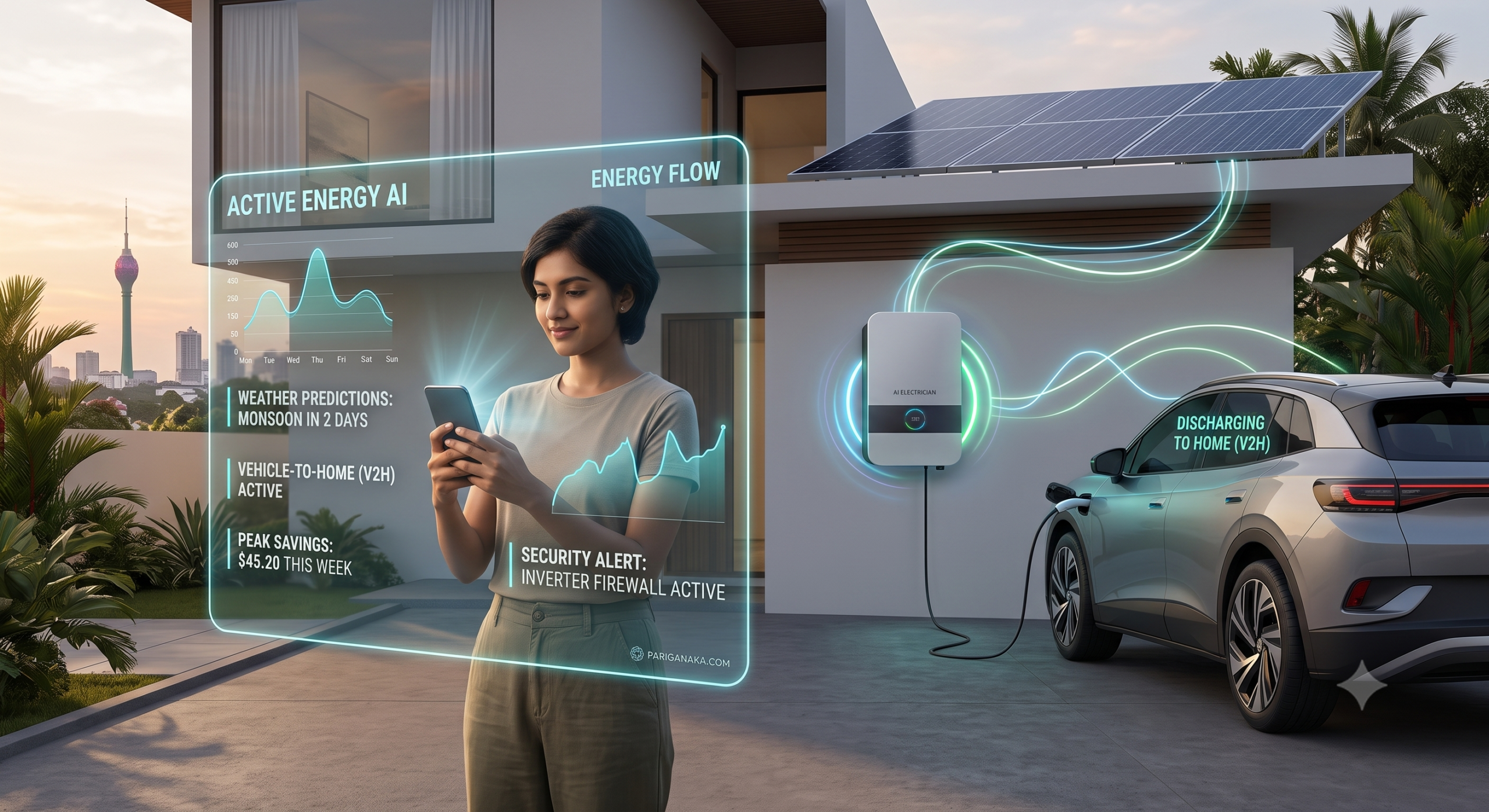
In 2026, that manual struggle is officially over. Today, the brains behind home energy are Artificial Intelligence agents built directly into our home inverters. Here at Pariganaka.com, we are breaking down how “Active Energy AI” is drastically reducing electricity bills in Colombo and what you need to know to secure your home grid.
1. Weather-Predictive Power Hoarding
Your 2026 smart inverter does much more than just convert DC to AC power; it actively communicates with local weather forecasting servers.
- The Cloudy Day Protocol: If the AI detects a high probability of heavy monsoon rain in Colombo for the next two days, it will automatically pull cheap power from the national grid during off-peak night hours to fully charge your home batteries.
- Smart Consumption: During the day, if solar generation drops due to sudden cloud cover, the AI communicates with your smart appliances, subtly lowering the wattage of your refrigerator or delaying the washing machine cycle until the sun comes back out.
2. Your Car is Now Your Generator (Vehicle-to-Home)
One of the biggest shifts in 2026 is the mainstream adoption of bidirectional EV charging. Your electric vehicle is no longer just a mode of transport; it is a massive, rolling power bank.
- Peak Shaving: Between 6:30 PM and 9:30 PM, when national electricity tariffs are at their absolute highest, your smart home AI automatically disconnects from the grid. Instead, it pulls the necessary power directly from your parked EV to run your lights, fans, and TVs.
- Overnight Replenishment: Once the peak tariff window closes, the system switches back and recharges the car using cheap nighttime electricity, ensuring you have a full range for your morning commute.
3. The New Cybersecurity Threat: Ransomware for Inverters
With great automation comes new digital vulnerabilities. Because these smart inverters are constantly connected to your home Wi-Fi and cloud servers, they have become a prime target for cybercriminals.
- Grid Lockout: Hackers are currently attempting to deploy “Energy Ransomware.” They breach poorly secured home inverters, lock the battery output, and demand a cryptocurrency payment to restore your access to your own solar power.
- How to Protect Your Power: Treat your solar inverter like your laptop. Change the default manufacturer passwords immediately upon installation, segment your home Wi-Fi (put IoT devices on a separate guest network), and ensure your installer has enabled automatic over-the-air (OTA) firmware updates.
Quick Guide: Passive Energy vs. Active AI Energy
| Feature | Passive Solar Setup (2020s) ☀️ | Active AI Energy Grid (2026) ⚡ |
| Data Processing | None. Purely hardware-driven. | Connects to weather APIs and tariff schedules. |
| Appliance Control | Manual (You turn things off). | Automated (AI pauses heavy appliances based on load). |
| EV Integration | One-way charging (Grid to Car). | Bidirectional (Car powers the house during peak hours). |
| Security Risk | Very Low. | Medium (Requires strong Wi-Fi passwords and network security). |
The Bottom Line:
The days of blindly consuming electricity are behind us. As we navigate 2026, managing power in Sri Lanka has transformed into an automated, data-driven science. Investing in a smart, AI-driven inverter pays for itself much faster than older passive systems, provided you take the necessary steps to secure it from digital threats.
Upgrade smartly, secure your network, and keep following Pariganaka.com for the latest updates on managing your digital lifestyle!
Leave a Reply