
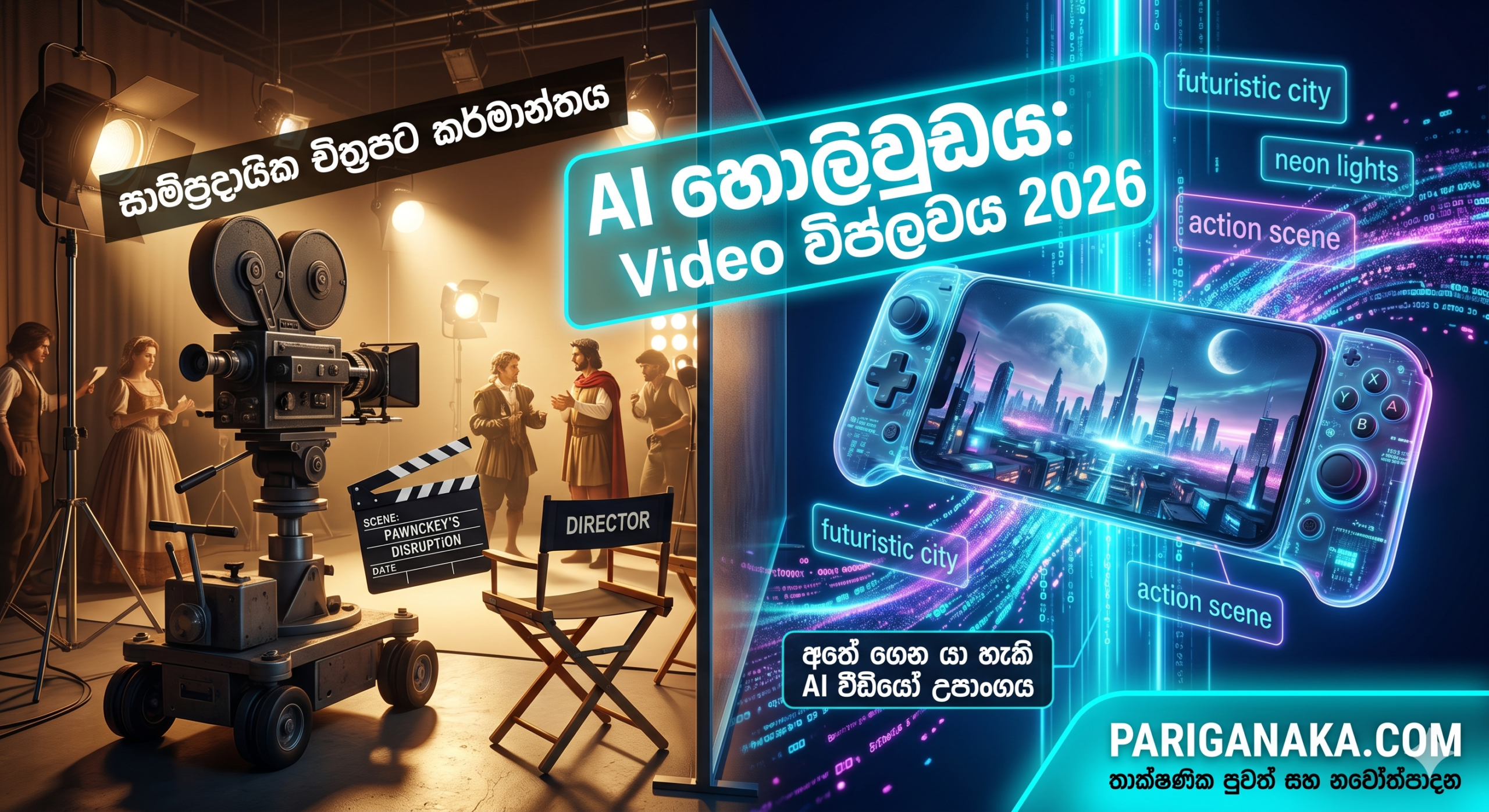
Just a few short years ago, AI-generated video was mostly a viral joke. We all remember the bizarre clips of people with six fingers, morphing faces, and backgrounds that melted together after three seconds. It was a neat parlor trick, but nobody in Hollywood or on YouTube was actually worried.
Fast forward to 2026, and the joke is officially over. The technology hasn’t just improved; it has crossed the “uncanny valley.” With the latest releases of generative video models this year, the barrier to entry for high-end filmmaking has effectively dropped to zero.
Here is how AI video generation is permanently reshaping the entertainment landscape.
🎥 The Breakthrough: Consistency and Photorealism
The biggest hurdle for early AI video was “temporal consistency”—keeping a character looking exactly the same from shot to shot.
This year, platforms like OpenAI’s newest Sora engine and Google’s Gemini Omni have solved this. Creators can now generate a character, lock in their appearance, and place them in a 10-minute short film with multiple camera angles, consistent lighting, and perfect lip-syncing. The generation speed has also skyrocketed; what used to take hours of rendering now happens in near real-time.
🧑💻 The Rise of the “One-Person Studio”
The most massive shift is happening on platforms like YouTube and TikTok.
- Zero-Budget Blockbusters: Independent creators are producing cinematic, high-budget-looking content from their bedrooms. A sci-fi short film that would have required a $50,000 budget for sets, costumes, and CGI can now be generated on a laptop for the cost of a monthly AI subscription.
- Faceless Creators 2.0: We are seeing the rise of “Virtual YouTubers” who look completely human but are entirely AI-generated. They host podcasts, review tech, and act in skits, completely managed by a single writer behind a keyboard.
🏆 How Hollywood is Reacting
The traditional film industry is currently in a massive transition phase, balancing fear with innovation.
- Instant Storyboarding: Directors are no longer drawing stick figures to plan their movies. They are using AI to generate fully animated, photorealistic storyboards to pitch entire movie concepts to studios before a single real camera rolls.
- Digital Likeness Licensing: Instead of spending months on a physical set, some A-list actors are now legally licensing their “digital twins.” They get paid for their appearance in a movie, while an AI generates their performance based on a voice actor or motion-capture double.
- The End of B-Roll: Production companies are almost entirely replacing stock footage with AI. Need a drone shot of a futuristic Tokyo at sunset? You no longer need to hire a helicopter crew; you just type it into a prompt.
The Bottom Line: The physical camera isn’t dead, and we will always crave genuine human performances. But in 2026, AI has become the ultimate equalizer. The only thing separating a kid with a laptop from a Hollywood studio is no longer a massive budget—it is purely the quality of their imagination.
Leave a Reply