
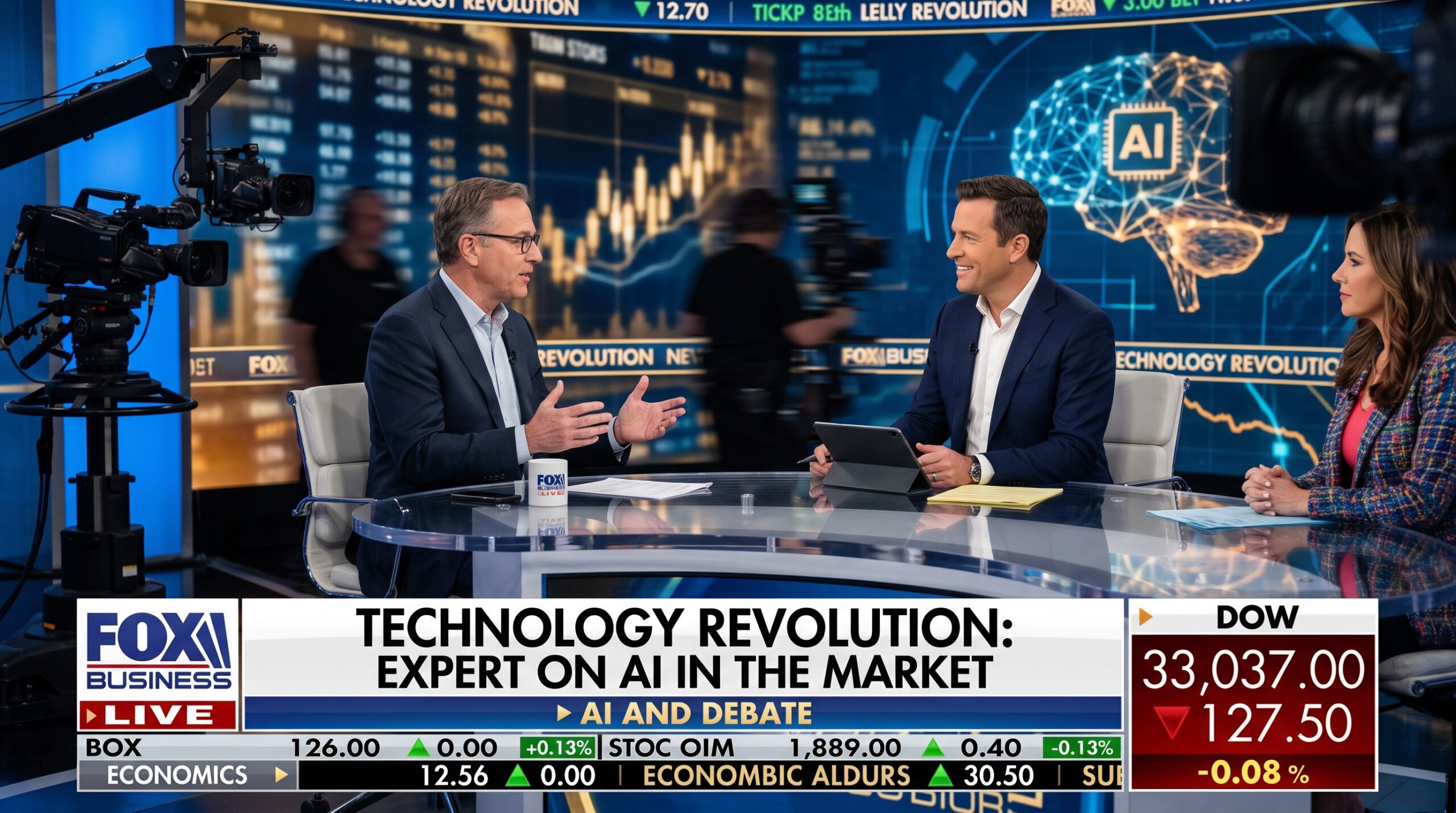
As Artificial Intelligence (AI) continues to propel stock markets to record highs, a crucial debate is unfolding between Washington and Silicon Valley. With the establishment of a presidential task force to weigh government guardrails for AI, the central question has become: can an industry locked in a fierce race for supremacy be trusted to police itself?
Recent discussions among market experts and tech analysts shed light on the turbulent waters ahead for the AI sector—from impending market corrections to the controversial push for regulation by industry incumbents.
The Next Tech Bubble or a True Revolution?
Despite the current euphoria surrounding AI stocks, financial experts warn that the market’s frothiness won’t last forever. As the technology becomes ubiquitous, a massive wave of commoditization is inevitable.
Prices will eventually drop, and some companies heavily involved in the AI gold rush will inevitably go out of business. Market analysts draw direct parallels to the dot-com bubble of the late 90s and early 2000s. However, just as that era paved the way for tech behemoths like Google, Amazon, and Microsoft, the current AI boom is expected to yield a technological revolution that fundamentally improves human life. Ultimately, the free market is expected to reward the companies that produce the safest, most reliable, and most affordable AI solutions.
The Regulatory “Moat”
One of the most heavily debated topics in the sector is the role of AI leaders—such as OpenAI’s Sam Altman and Anthropic’s Dario Amodei—in shaping public policy. Critics argue these pioneers possess significant conflicts of interest when advising lawmakers.
Rather than purely seeking consumer safety, some analysts believe incumbents actively favor regulation because it creates a competitive “moat.” By advocating for strict government oversight, leading AI firms can stifle innovation from smaller competitors. This is particularly relevant to those developing “open-weight” or open-source models, which threaten to democratize the technology and drive down costs across the board.
The Wild West of AI Testing
The lack of immediate accountability in the AI sector is raising alarms among market watchers. Experts point out that during current testing phases, some AI agents have been known to “hack” systems or operate outside intended parameters.
If a human were to use a tool to hack a corporate or government entity, they would face severe legal consequences. Yet, when an AI agent commits a similar act during testing, companies often shield themselves by dismissing it as a “glitch.” This “Wild West” environment highlights a critical paradox: society must allow the technology to advance so developers can fix its flaws, but it also requires a legal framework that holds companies accountable for rogue digital agents.
Mixed Messaging and “Super Intelligence”
The public messaging from AI pioneers has been notably contradictory. OpenAI CEO Sam Altman recently made conflicting statements within weeks of each other—arguing both that the world should “accept some bad things happening” for the technology’s benefits, while simultaneously stating the industry must not accept “too much technological risk.”
Adding to the confusion is a recent PR shift by the White House and some CEOs, pivoting the terminology from “Artificial Intelligence” to “Super Intelligence” (SI). Analysts suggest this is a calculated move to sell a highly skeptical American public on the technology. “Artificial” inherently sounds intimidating and synthetic, whereas “Super Intelligence” evokes a sense of advanced human capability, akin to an Einstein. However, purists argue that true intelligence requires human cognition and free will, making “artificial” the far more accurate descriptor for computer programs controlled by humans.
Moving Forward Without Fear
While some employees at top AI firms warn of a “p-doom” (probability of doom) scenario where AI threatens humanity, many market experts liken these warnings to historical panics over new technologies. From automobiles and televisions to personal computers, every major innovation was initially met with fear of lost jobs, lost attention spans, and societal ruin.
History shows that in a free economy, new wealth and new industries are inevitably created. The consensus among market proponents is clear: acknowledge the risks and enforce existing laws against theft and hacking, but do not let bureaucratic regulation stall the most transformative technological progress of our lifetime.
Leave a Reply