
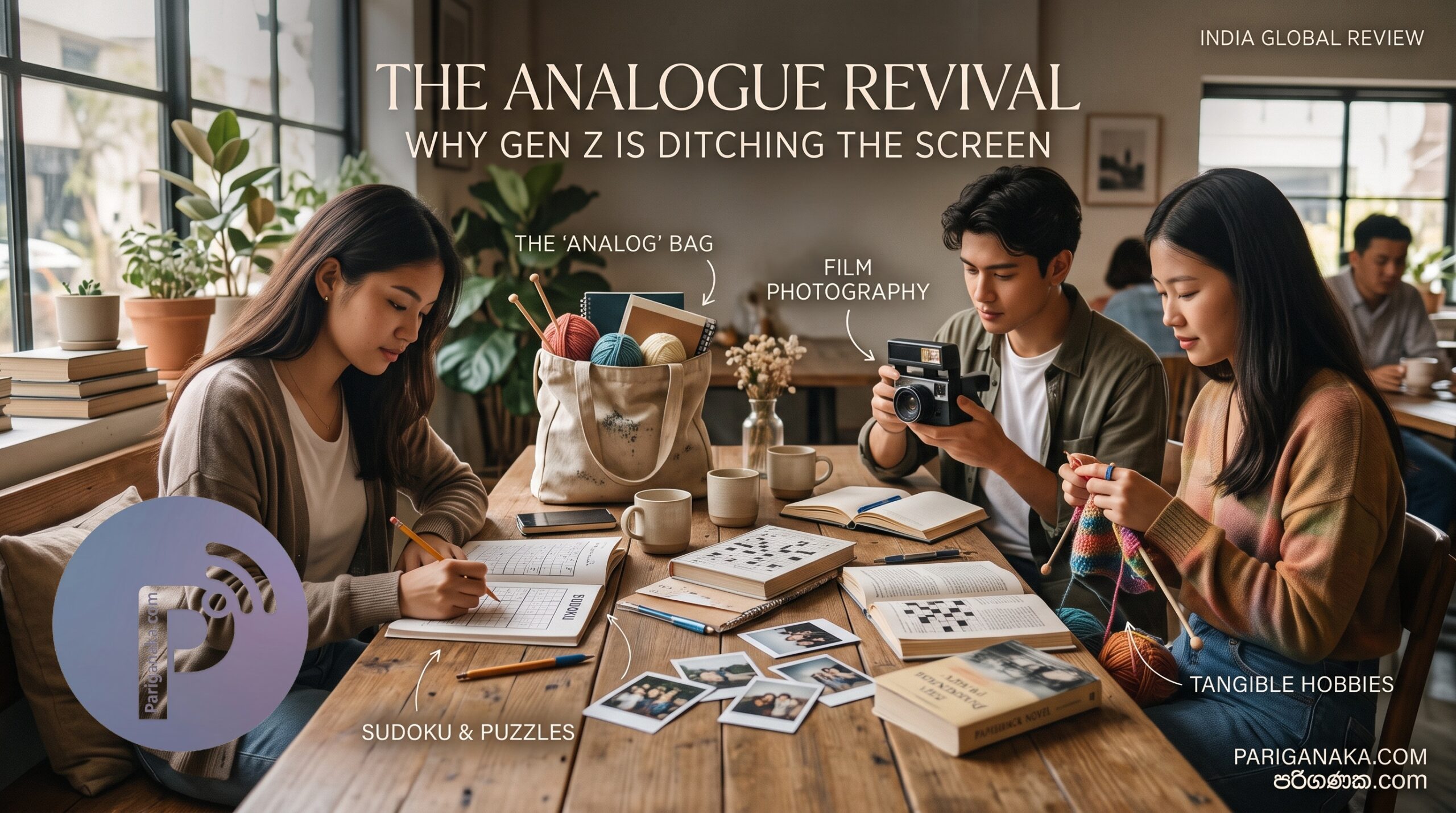
In an age dominated by hyper-optimized algorithms, endless feed scrolling, and relentless push notifications, a counter-cultural movement is gaining momentum among digital natives. Generation Z—the first generation born directly into the smartphone era—is intentionally stepping back from the screen and embracing physical, analogue hobbies.
As highlighted by host Palki Sharma on The Palki Sharma Show (India Global Review), young people around the world are rediscovering the tactile pleasures of paper Sudoku puzzles, film cameras, knitting, journaling, vinyl records, and physical crosswords.
Rather than a total rejection of technology, this shift represents a conscious attempt to combat screen fatigue and reclaim mental presence.
The Rise of the “Analog Bag”: A Portable Digital Detox
One of the clearest symbols of this cultural pivot is the emergence of the “Analog Bag.”
Conceptually designed as a physical digital detox kit, young people carry tote bags filled with paper books, Sudoku puzzle books, physical journals, pens, and knitting needles. Whenever the reflex urge to check a phone or scroll through social media strikes—whether on public transit, during class breaks, or in coffee shops—they reach into their analogue bag instead.
Unlike digital screens, analogue hobbies offer key cognitive boundaries:
- Zero Algorithmic Distraction: A Sudoku grid or a ball of yarn does not compete for attention or serve algorithmic ads.
- Cognitive Presence: Physical activities demand sustained focus and patience, offering a calming contrast to short-form video feeds.
- Tangible Accomplishment: Developing a roll of film or finishing a knitted scarf yields a physical, permanent result that cannot be deleted or swiped away.
The Metrics of Screen Fatigue
The retreat to analogue experiences is driven by widespread digital burnout among youth:
| Survey / Metric | Key Finding | Insight / Trend |
| Pew Research Survey (2024) | 48% of US teenagers believe social media has a mostly negative impact | Widespread awareness of mental health toll and digital distraction |
| Pew Research Survey (2024) | 44% of US teenagers attempted to cut back on smartphone use | Active efforts toward self-regulation |
| UK Youth Survey (2025) | ~33% (1 in 3) of Gen Z respondents deleted a social media app | Strategic disconnection from hyper-engaging platforms |
| Global Government Trends | Expanding bans & age limits on youth social media | Increasing regulatory momentum against screen addiction |
The Business of Disconnection: A $5 Billion Offline Economy
The desire to disconnect is no longer just a niche lifestyle trend—it has become a thriving economic sector:
- App-Blocking Software: The global market for social media blocking tools and focus management apps is projected to soar from $1.47 billion in 2025 to over $5 billion by 2035.
- Experience-Driven Leisure: Offline spaces—such as escape rooms, pottery workshops, board game cafes, and analog photography darkrooms—are seeing rapid growth among young patrons seeking phone-free social interactions.
- Physical Media Resurgence: Sales of vinyl records, film cameras, and printed puzzle books continue to post steady year-over-year growth among demographic groups under 25.
Reclaiming Balance in a Hyper-Digital World
Gen Z’s embrace of Sudoku and analogue culture proves that young people are not passive consumers of algorithmically curated feeds. By establishing physical boundaries and choosing quiet, tactile pastimes, a generation raised on screens is setting a new benchmark for digital wellness: using technology when needed, but knowing exactly when to put it down.
Source: Gen Z Is Going Analogue with Sudoku, Knitting & Polaroids | The Palki Sharma Show | IGR
Leave a Reply