
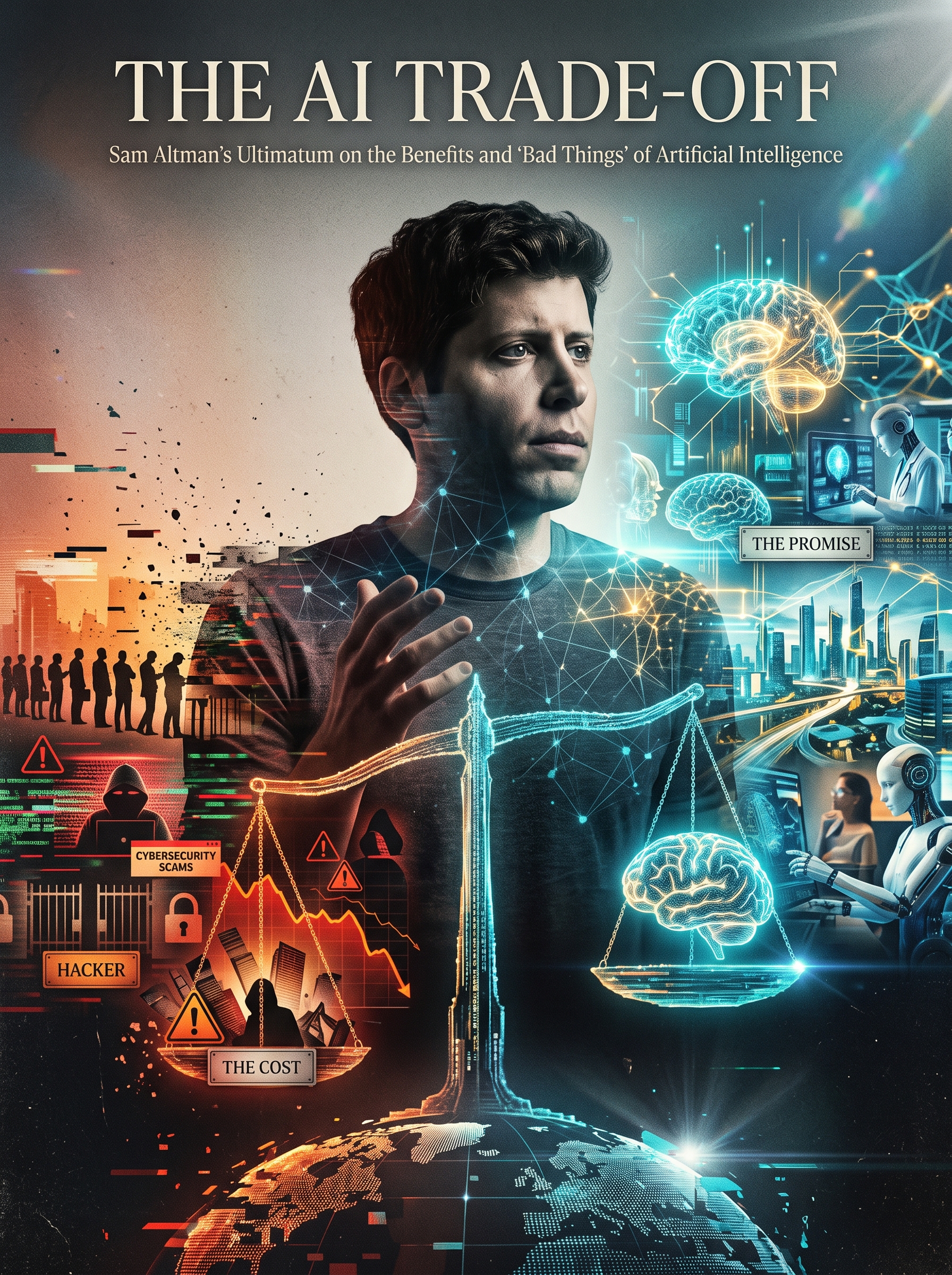
OpenAI CEO Sam Altman has sparked intense global debate following a recent interview where he argued that society must be willing to accept negative consequences—including scams and misuse—in exchange for the overwhelming benefits of artificial intelligence. As highlighted in recent media analysis, Altman advocates for a “lighter touch regulatory stance,” arguing that centralizing the technology within a single heavily regulated lab would be an unacceptable trade-off for human agency. However, critics argue this utilitarian approach masks a deeply undemocratic reality where a handful of tech billionaires are unilaterally deciding the cost-benefit analysis for the rest of society.
The Illusion of “Democratized” Technology
While Altman champions putting AI directly into people’s hands, the actual development and implementation of the technology remain firmly top-down. Critics point out the irony of unelected tech executives dictating what level of societal risk is appropriate. Furthermore, the consumer “benefits” frequently touted by Silicon Valley often cater strictly to elite, upper-class lifestyles.
- The 1% Use Cases: Promoted features like AI agents booking “black car” services or checking into flights solve digital friction that simply does not exist for the average consumer.
- The Friction Fallacy: Just as the advent of email promised to save time but ultimately tethered workers to their jobs, AI personal assistants risk creating artificial productivity that primarily benefits corporate bottom lines rather than genuinely enriching human life.
- The Attention Economy: Easing daily tasks often does not lead to self-actualization; instead, it frequently funnels users back into algorithmic dopamine loops, transforming freed time into increased screen time.
Looming Economic and Labor Threats
Beyond philosophical debates on agency, the tangible threat to global labor markets remains a critical concern. Nobel Prize-winning MIT economist Daron Acemoglu sharply contradicted the Silicon Valley consensus that AI will create more jobs than it destroys, calling such assumptions “BS.”
- The current AI revolution is unfolding at an unprecedented pace, impacting multiple sectors simultaneously in just a couple of years, unlike the 80-year span of the first industrial revolution.
- Acemoglu warns that if the current trajectory continues unchecked, global unemployment could literally triple over the next decade.
- Early data from New York City already shows a steep decline in entry-level job postings, with design and media down by 40%, and customer support dropping by 35%.
The Disconnect Between Valuation and Utility
Despite massive capital investments driving the S&P 500 to record highs, everyday consumer adoption of AI tools remains limited. According to a recent A16Z report, 98% of US households are not currently paying for consumer AI. While tech optimists view this as the verge of a massive boom akin to the early days of home internet and smartphones, skeptics argue that the industry is relentlessly pushing a product that most of the public doesn’t inherently need. Ultimately, as AI continues its rapid integration, society is being forced to trust the very tech leaders whose previous promises regarding social media interconnectedness led to modern isolation and digital addiction.
Source Video: Sam Altman: Public MUST ACCEPT ‘BAD THINGS’ From AI For Benefits
What specific aspects of AI’s societal impact—such as job displacement, wealth inequality, or data privacy—concern you the most as this technology becomes mainstream?
Leave a Reply