
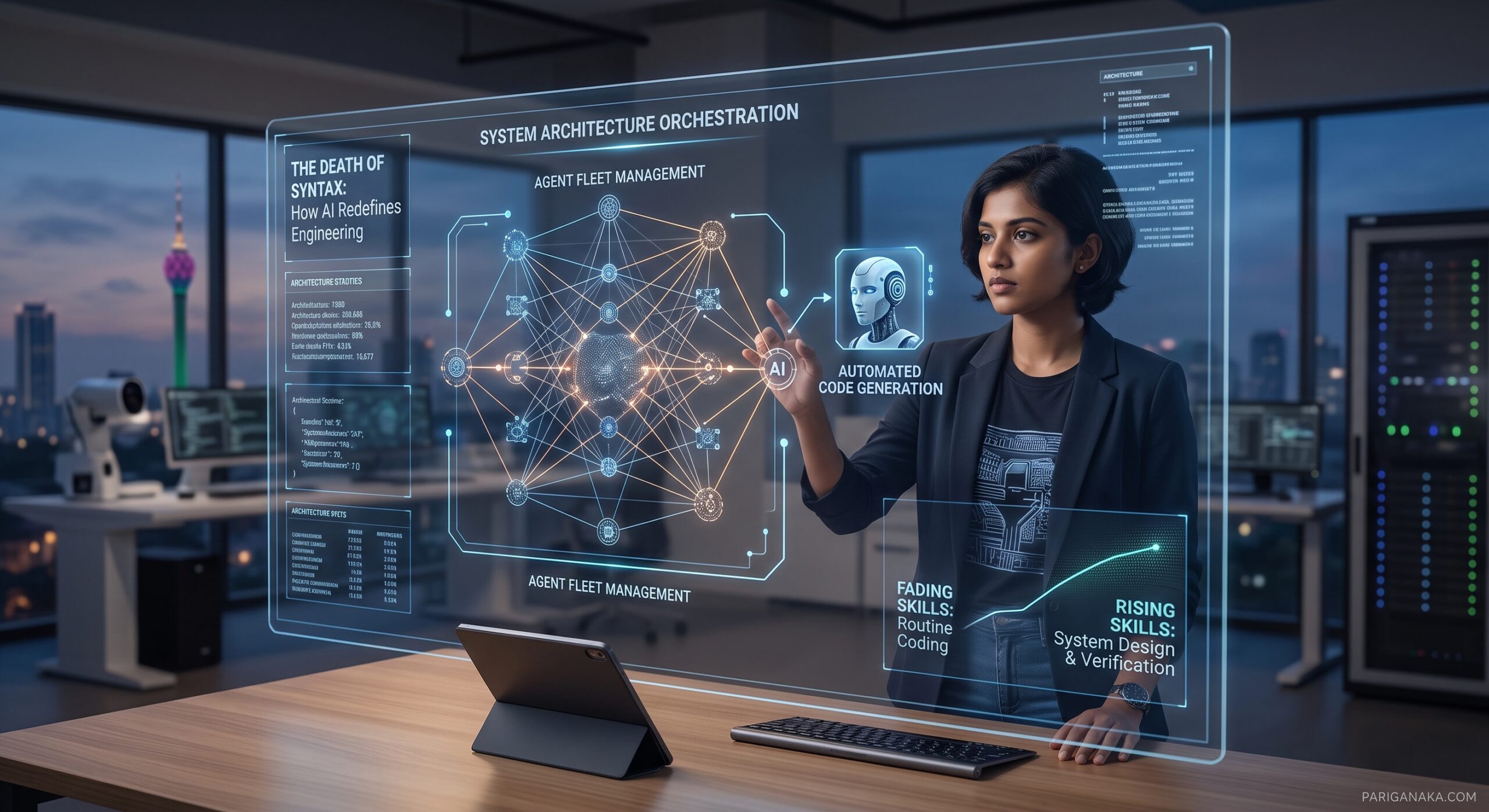
The rise of autonomous coding models reaching “Stockfish-level” proficiency—where synthetic engines outperform human programmers in pure code generation—is not rendering software engineers obsolete. Instead, it is stripping away the mechanical drudgery of the craft and forcing a profound structural evolution.
When the cost of generating standard lines of code drops toward zero, software development transitions from manual syntax production into high-level systems orchestration, rigorous verification, and strategic product design.
1. The Rise of the AI Orchestrator Routine tasks—writing boilerplate CRUD logic, drafting standard unit tests, and configuring repetitive CSS styling—are no longer primary human deliverables.
- Modern engineers define technical requirements, boundary constraints, and architectural blueprints, deploying fleets of specialized AI agents to generate and test the codebase.
- The engineer functions less like a solitary typist and more like an engineering manager directing synthetic junior developers.
2. The Shift from Creation to Verification When autonomous agents can output thousands of lines of code in seconds, the development bottleneck shifts completely from production to validation.
- Audit-First Engineering: Value concentrates in identifying edge-case hallucinations, security vulnerabilities, and subtle logic failures buried inside machine-written code.
- Deterministic Reliability: Precision testing frameworks, automated evaluation suites, and formal verification methodologies become indispensable prerequisites for deployment.
3. Macro Architecture Over Micro Syntax Memorizing library quirks, framework-specific syntax, and standard algorithmic patterns is rapidly losing market value. High-leverage engineering now focuses on the broader system:
- Distributed systems resilience, latency budgeting, data pipeline efficiency, and robust fault tolerance.
- Designing around infrastructure bottlenecks—optimizing system architecture for energy efficiency, compute constraints, and high-density data workloads.
4. The Product-Engineer Emergence AI engines follow explicit, structured instructions exceptionally well, but they lack human intuition, market context, and domain-specific judgment. The boundary separating product management from software engineering is blurring. The highest-earning technical professionals are those capable of translating messy real-world business requirements into tight, executable technical architectures.
Skill Trajectory in Modern Software Development
| Fading Value | High & Growing Value |
|---|---|
| Writing standard syntax / boilerplate | System architecture & API orchestration |
| Memorizing library APIs & framework quirks | Security auditing & vulnerability analysis |
| Manual debugging in simple scripts | Building automated eval harnesses & test suites |
| Pure execution-focused coding | Business domain modeling & product strategy |
| Routine UI slicing and component wiring | Distributed systems & compute efficiency |
The Scaled Engineering Pod This paradigm shift fundamentally alters team structures. A lean squad of three to five engineers operating autonomous development agents can now match the output velocity of a 40-person engineering department from just a few years ago.
Software engineering is not dying; it is shedding its lowest-value layer. Those who cling solely to manual code writing face severe displacement, while engineers who master architecture, verification, and automated orchestration are commanding more leverage and productivity than ever before.
Leave a Reply