
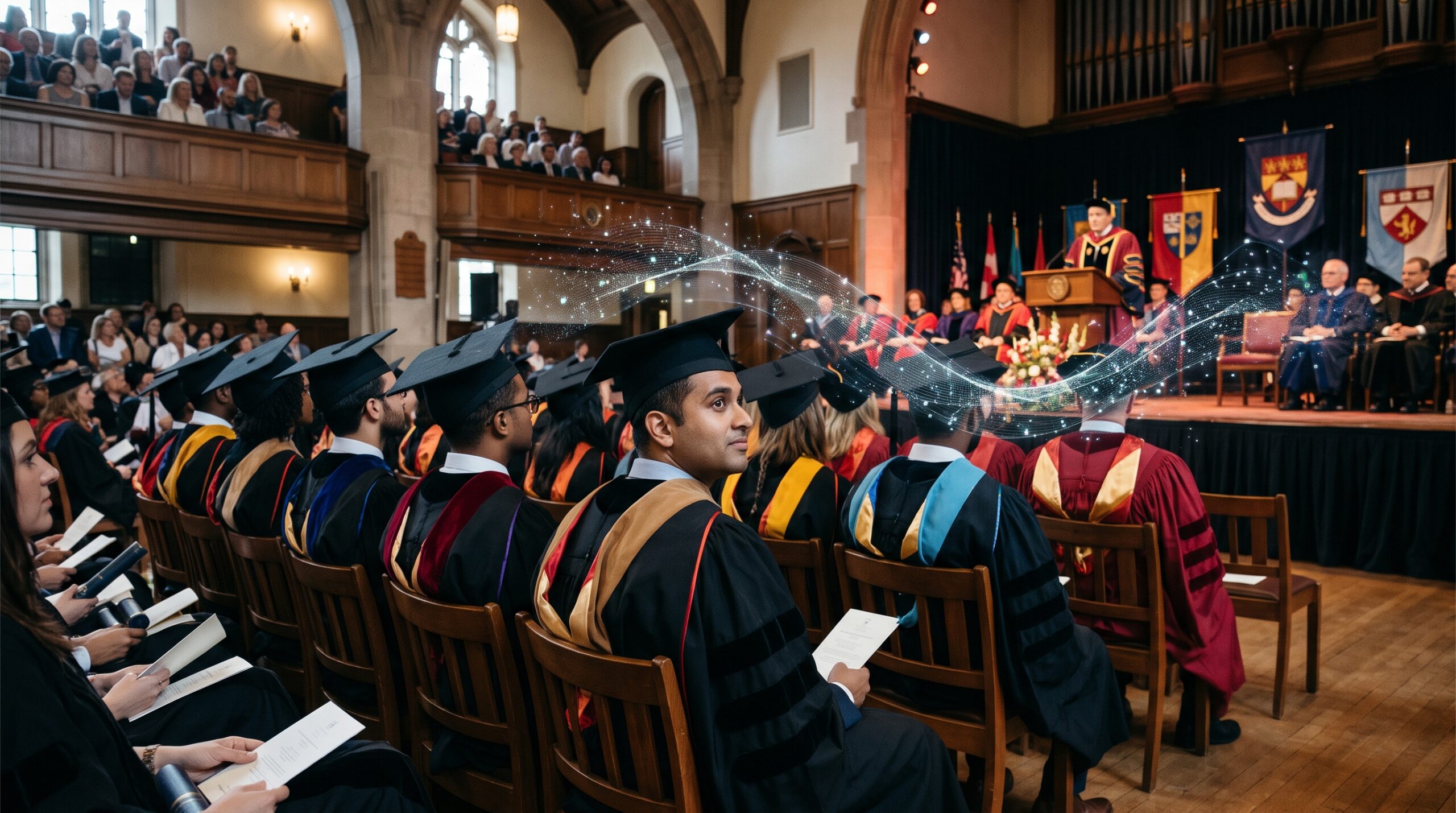
For centuries, the PhD has stood as a testament to intellectual endurance—a deeply rigorous process of expanding the boundaries of human knowledge. However, as the digital landscape accelerates, generative AI is forcing a profound evolution in higher education. With tools capable of synthesizing vast literature in seconds, we are left confronting a pivotal question: is AI eliminating the very struggle that creates true experts?
From Reading Rooms to the AI Era
To understand the impact of AI, we must look at how the dissertation has historically evolved:
- The Analog Era: Before computers, research was an arduous physical process of navigating archives and index cards, with dissertations heavily rooted in pure theoretical philosophy.
- The Digital Shift (1990s-2010s): The arrival of word processors and digital databases transformed academia, moving research into collaborative, global spaces powered by cloud tools and democratized access.
- The AI Revolution: Today, AI tools can map out literature reviews that once took months in a matter of hours.
While AI has eliminated countless hours of grunt work, it introduces complex challenges that touch on the core of digital humanism—the critical balance between human intellect and machine efficiency.
The “Elephant in the Room”: Over-Reliance and Authenticity
As AI tools become deeply integrated into academic workflows, the line between researcher and algorithm is beginning to blur. Some doctoral candidates are increasingly relying on AI to generate arguments they barely comprehend themselves.
This creates a facade of capability. An AI can output polished, articulate text that masks a student’s lack of true understanding, creating an inequality where those who are strategic prompt engineers appear more capable than their peers. Furthermore, AI is prone to fabricating citations and misrepresenting sources, subtly altering the meaning of foundational ideas.
The Erasure of the Intellectual Struggle
Perhaps the greatest threat AI poses to the PhD is the loss of the intellectual struggle. Historically, the messy, frustrating process of late-night reading, revising, and defending ideas is exactly what shaped a scholar’s identity and forged true expertise.
When a student bypasses this struggle by simply feeding prompts into an AI and managing the generated output, they risk becoming mere managers of machine-generated ideas rather than genuine scholars. This frictionless process threatens to hollow out the critical thinking and analytical skills required at the doctoral level.
Navigating the Future of Knowledge
We are at a crossroads where the speed and convenience of AI fundamentally challenge what it means to think deeply. Universities are already adapting, implementing AI use declarations and placing a higher premium on reflexivity, authenticity, and the student’s unique voice.
Ultimately, the future of the PhD will depend on how we harness these powerful tools. Will we use AI to genuinely expand the human mind, or will we allow it to quietly replace the grueling but meaningful work of discovery? A dissertation is fundamentally about using one’s own voice to bridge the gaps in our knowledge—a deeply human endeavor that technology should empower, not replace.
Leave a Reply