
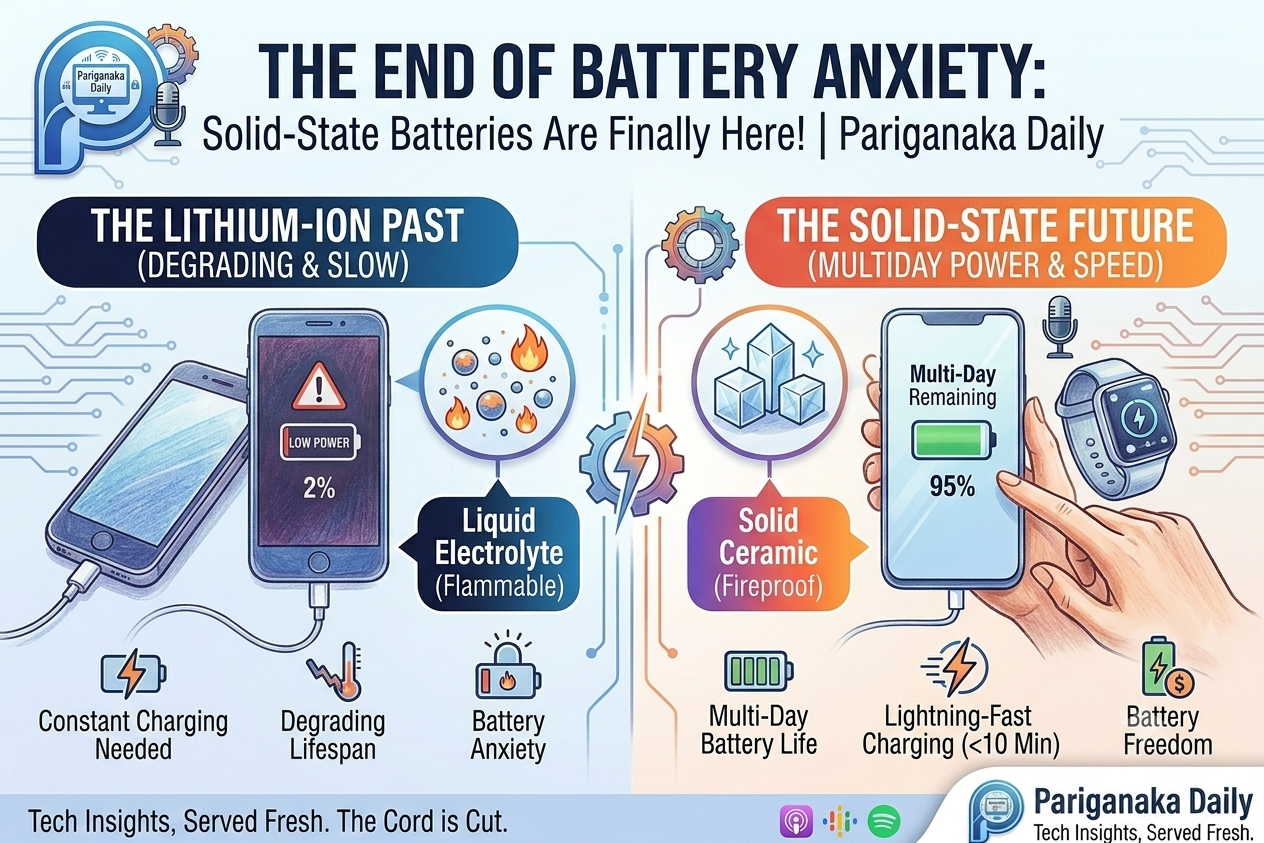
For the past decade, smartphones and laptops have gotten faster, screens have gotten brighter, and AI has become incredibly smart. Yet, we are all still tethered to the wall, watching our battery percentages drop. In late 2026, that is finally changing with the mainstream arrival of solid-state batteries.
At Pariganaka.com, we know that the most frustrating part of modern technology isn’t a complex interface—it’s running out of power right when you need it most. This month, major tech manufacturers are officially rolling out the first wave of consumer devices powered by solid-state batteries, and it is a game-changer for daily tech use.
What is a Solid-State Battery?
To understand why this is a massive leap, we have to look at the lithium-ion batteries that currently power everything from your phone to your electric vehicle (EV).
- The Old Way (Lithium-Ion): These use a liquid chemical electrolyte to move energy back and forth. This liquid takes up space, degrades over time, and, in rare cases, can be highly flammable if punctured or overheated.
- The New Way (Solid-State): As the name suggests, these batteries replace the liquid electrolyte with a solid material—like a specialized ceramic or glass.
Why This Matters for Your Everyday Life
Swapping a liquid for a solid might sound like a minor chemistry update, but the real-world benefits for users are massive:
- Multi-Day Battery Life: Solid-state batteries are incredibly dense. They can hold significantly more energy in the exact same physical space. This means a phone that looks exactly like your current one could easily last three to four days on a single charge.
- Lightning-Fast Charging: Because the solid materials are better at handling electrical currents and heat, these batteries can charge at unprecedented speeds. We are talking about going from 0% to 100% in under 10 minutes, without degrading the battery’s overall lifespan.
- Safer Devices: Without the flammable liquid electrolyte, solid-state batteries are virtually fireproof. They don’t swell up as they age, making your devices inherently safer to keep in your pocket or charge overnight.
Who is Getting It First?
As with all new hardware technologies, the rollout is starting at the premium end of the market.
Several major smartphone manufacturers are launching their late-2026 flagship devices with first-generation solid-state power. Additionally, the wearable market is quickly adopting them; because smartwatches and fitness trackers are so small, the increased energy density of solid-state technology allows for sleeker designs without sacrificing the battery required to run advanced health sensors.
The Pariganaka Takeaway
The transition to solid-state batteries is the most significant hardware revolution we have seen in years. It removes the daily friction of “battery anxiety” and allows us to focus entirely on what our devices can do for us, rather than constantly worrying about keeping them alive.
Technology is at its best when it gets out of your way. With solid-state power, we are finally cutting the cord. Stay tuned to Pariganaka Daily as we test and review the first wave of these new devices!
Leave a Reply