
For over a decade, our smartphones, laptops, and smartwatches have been held back by one frustrating limitation: lithium-ion batteries. No matter how fast our processors get or how beautiful our displays look, we still find ourselves scrambling for a charger by 8:00 PM.
But this week, the tech industry crossed a massive milestone. The long-awaited Solid-State Battery (SSB) revolution is officially here, and it is going to completely change how we use our devices.
Here is everything you need to know about the battery breakthrough that will define 2026.
🔬 What Exactly is a Solid-State Battery?
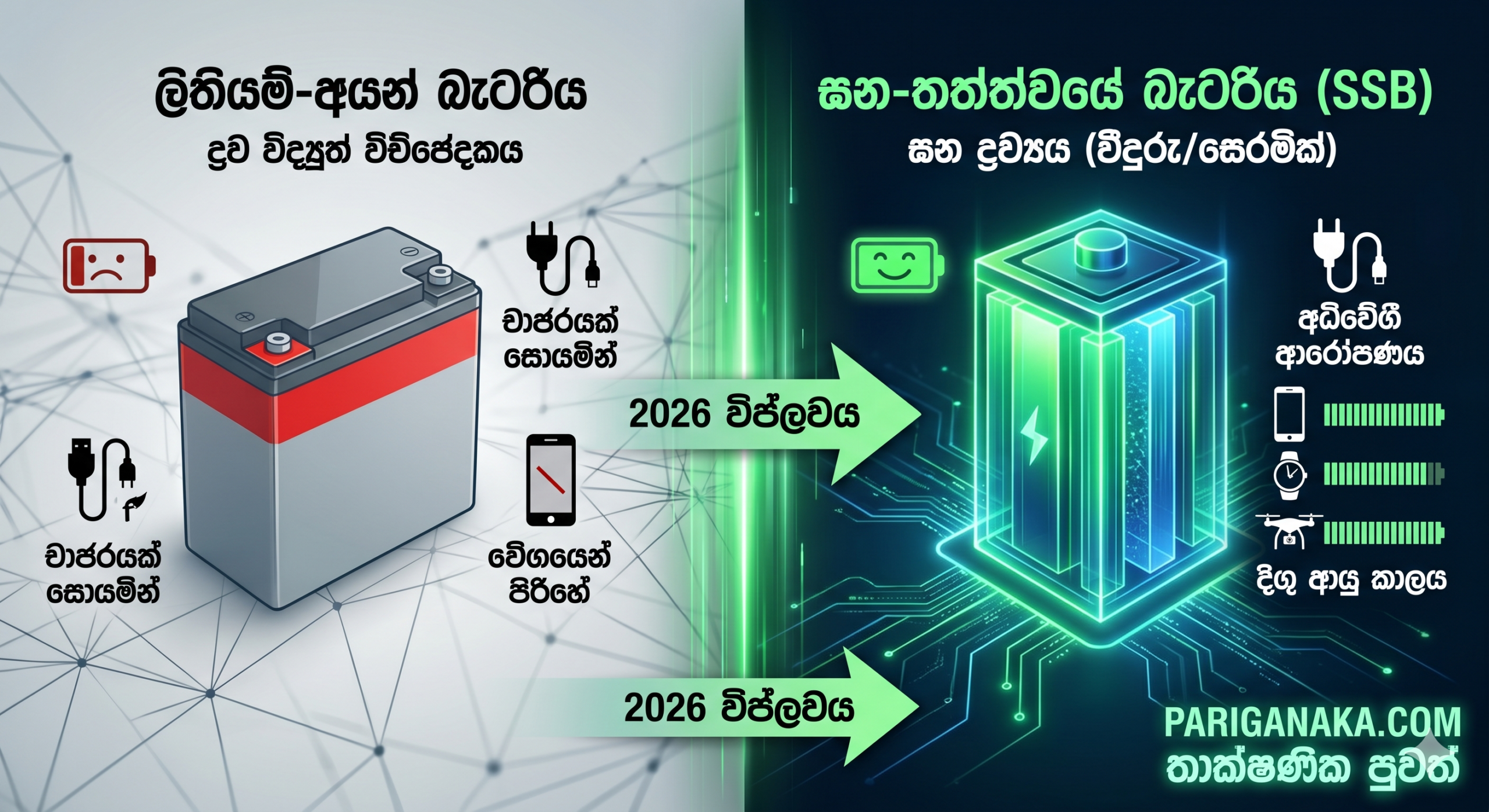
To understand the hype, we have to look at how traditional batteries work. Current lithium-ion batteries use a liquid electrolyte to move energy back and forth. This liquid is volatile, takes up a lot of space, and degrades over time (which is why your two-year-old phone battery dies so quickly).
Solid-state batteries replace that liquid with a solid material (like glass or ceramics). The results are game-changing:
- Double the Capacity: They can hold significantly more energy in the exact same physical space.
- Ultra-Fast Charging: Because there is less risk of overheating, they can safely absorb power much faster. We are talking 0% to 100% in under 10 minutes.
- Zero Fire Risk: Without the flammable liquid electrolyte, the risk of batteries swelling or catching fire is virtually eliminated.
📱 Who is Leading the Charge?
While electric vehicles (EVs) have been testing this tech for a few years, 2026 marks the first time SSBs are small enough and affordable enough for consumer electronics.
- The Smartphone Race: Samsung Display and Battery divisions just announced that their upcoming 2027 flagship devices will feature the first-ever consumer SSB, promising up to 3 days of heavy use on a single 15-minute charge.
- Next-Gen Wearables: Smartwatches are about to get dramatically thinner. Apple is reportedly testing solid-state tech for next year’s Apple Watch Ultra, aiming to extend the battery life to a full two weeks without increasing the weight of the watch.
- The Drone Industry: Commercial drones, which typically max out at 30–40 minutes of flight time, are seeing flight times double, opening up massive new possibilities for delivery and photography.
💡 What This Means for You
The shift to solid-state means more than just leaving your power bank at home.
Because SSBs degrade at a fraction of the rate of lithium-ion batteries, your devices will last much longer before needing a replacement. A phone bought today might drop to 80% battery health in two years, but an SSB device could maintain 95% health over five years. This is a massive win for both your wallet and the environment, as e-waste will drop significantly.
The Bottom Line: We are witnessing the biggest leap in battery technology in 30 years. The days of “battery anxiety” are finally coming to an end.
Leave a Reply