
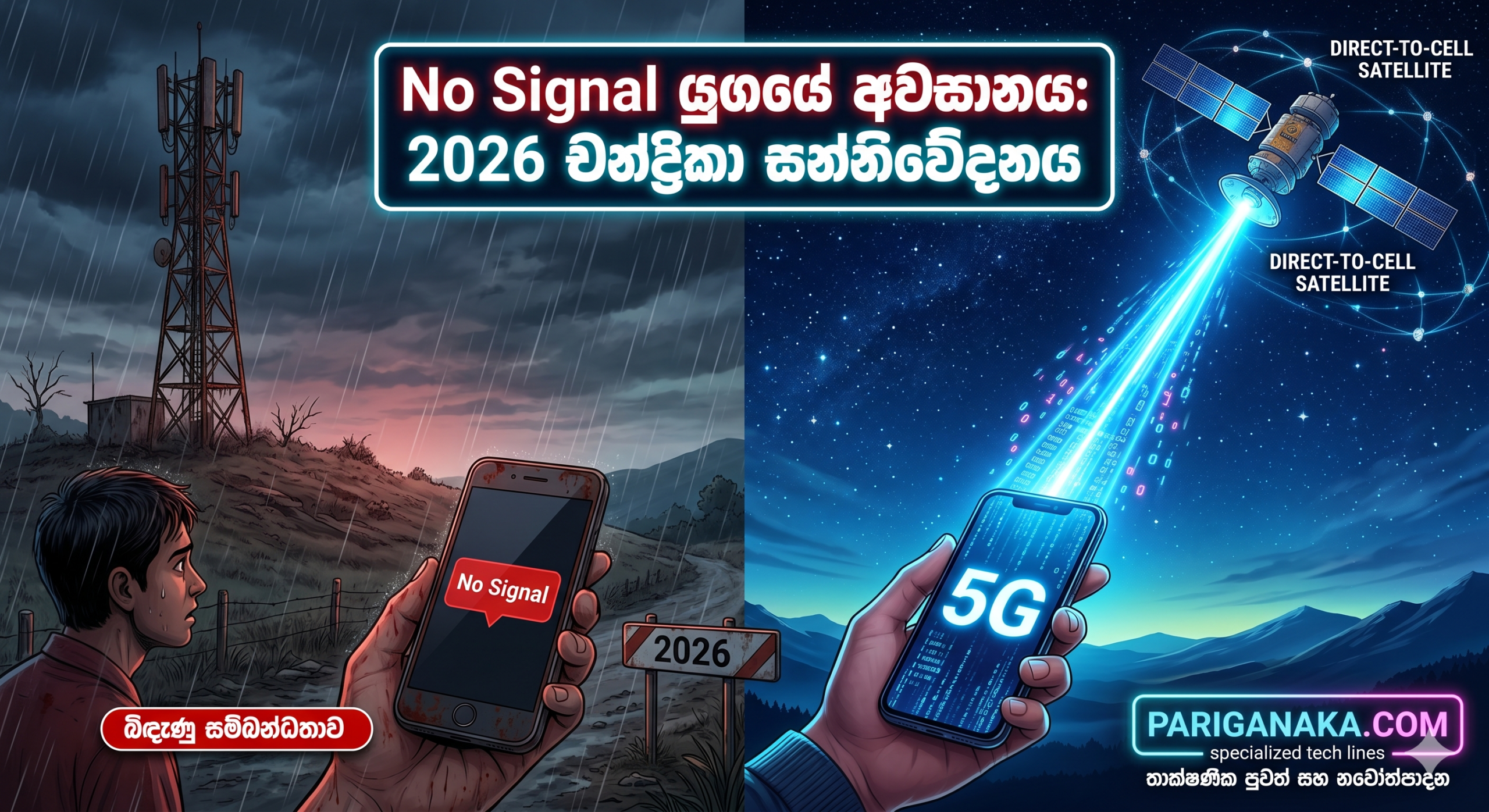
We all know the frustrating feeling. You are traveling through a beautiful rural area, hiking up a mountain, or simply driving on a remote highway, and you look down at your phone only to see those dreaded words: “No Service.” For decades, our connectivity has been chained to physical cell towers on the ground. If you were out of range, you were entirely off the grid.
But in 2026, the concept of a “cellular dead zone” is rapidly becoming a thing of the past. The space race has shifted from exploring the stars to beaming the internet directly into our pockets, thanks to the explosion of Direct-to-Cell Satellite Technology.
Here is how the sky is replacing the cell tower, and why your smartphone is now a satellite phone.
🛰️ No Special Hardware Required
In the past, connecting to a satellite meant carrying around a heavy, expensive, and bulky “satellite phone” with a massive antenna.
The biggest breakthrough in 2026 is that you no longer need extra hardware. Companies like SpaceX (Starlink), AST SpaceMobile, and major telecom providers have launched thousands of advanced Low Earth Orbit (LEO) satellites that act as cell towers in space. They are designed to communicate directly with the standard, unmodified 5G smartphones already sitting in our pockets. Whether you have an iPhone or an Android, your device simply connects to a satellite passing overhead just as easily as it connects to a local Wi-Fi network.
💬 From Emergency SOS to Everyday Browsing
This technology started a few years ago as a basic “Emergency SOS” feature—allowing you to send a highly compressed text message if you were injured in the wilderness.
However, in 2026, the bandwidth has drastically expanded. We have moved far beyond emergencies. Direct-to-cell now supports:
- Seamless Voice Calls: You can hold a perfectly clear phone conversation from the middle of the ocean or the deepest jungle.
- Global SMS & Messaging: WhatsApp, iMessage, and standard SMS work flawlessly without needing ground infrastructure.
- Basic Data Surfing: While you might not be streaming 4K movies in the middle of the desert just yet, the current satellite speeds easily support browsing the web, checking emails, and navigating via GPS maps.
🌍 What This Means for Sri Lanka and the World
The implications of this technology go far beyond convenience; it is a global equalizer.
- Rural Connectivity: Remote villages that telecoms previously ignored because it was too expensive to build physical towers there are now instantly connected to the global economy.
- Fishermen and Maritime Safety: Sri Lankan fishermen venturing far out into the deep sea no longer lose contact with the mainland, dramatically increasing safety and communication.
- Disaster Resilience: When natural disasters like floods or storms knock out local power grids and terrestrial cell towers, satellite connectivity remains untouched, keeping emergency communications open.
The Bottom Line: We are entering an era of true global coverage. The days of hunting for a signal by holding your phone up in the air are over. By 2026, as long as you have a clear view of the sky, you are connected to the rest of the world.
Would you like me to translate this article into Sinhala for your readers, or would you like me to generate the design blueprint and AI prompt for its featured image?
Leave a Reply