
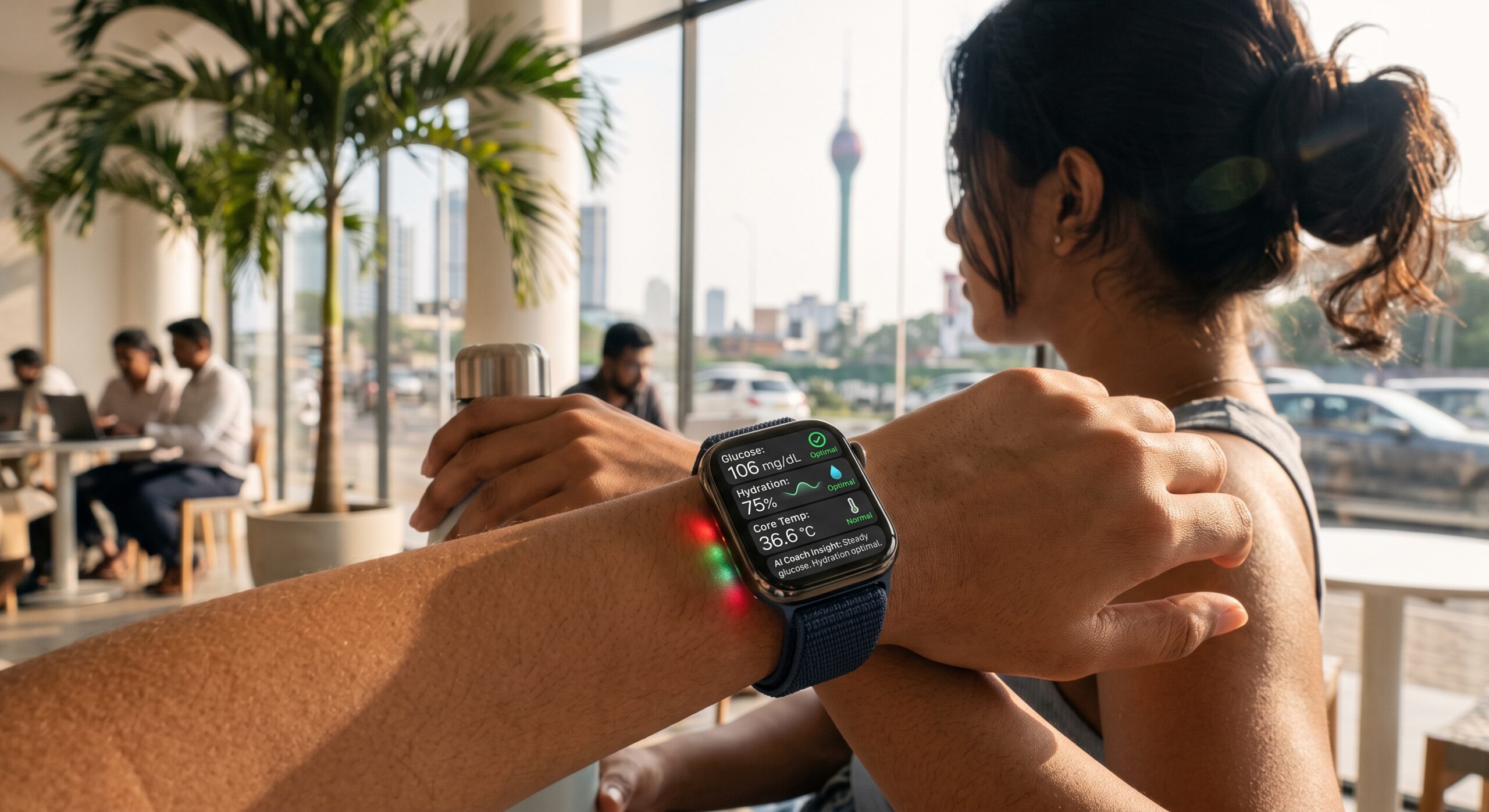
Not too long ago, smartwatches were glorified pedometers. They counted your steps, roughly estimated your heart rate, and buzzed when you received a text message. Today, in 2026, the wearable technology on our wrists has evolved into something far more profound: clinical-grade, continuous health monitors that operate completely pain-free.
The biggest breakthrough in human-friendly tech this year isn’t just about faster processors; it is about the mass consumer adoption of non-invasive biosensors.
What Does “Non-Invasive” Actually Mean?
For decades, accurately tracking internal metrics like blood glucose levels required physical fluids—which usually meant painful daily finger pricks for diabetics. Modern wearables have finally eliminated this requirement.
By utilizing advanced optical absorption spectroscopy and high-frequency radio waves, today’s smartwatches and smart rings can literally “look” through your skin. They measure the unique ways light scatters in your interstitial fluid to determine your blood sugar, hydration levels, and even core body temperature in real-time, without ever breaking the skin.
The Everyday Benefits
- Continuous Glucose Monitoring (CGM) for Everyone: You no longer need to be diabetic to care about blood sugar. Everyday users are utilizing non-invasive glucose tracking to understand how specific meals affect their energy crashes, sleep quality, and focus throughout the workday.
- Dehydration Alerts: Instead of relying on a generic rule of drinking eight glasses of water a day, your smartwatch now pings you with a gentle reminder when your actual cellular hydration drops below optimal levels.
- Predictive Sickness Tracking: By constantly analyzing micro-fluctuations in your baseline body temperature and blood oxygen, modern wearables can often detect the onset of a virus 24 to 48 hours before you even feel the first symptom, allowing you to rest and recover sooner.
The Role of On-Device AI
Having millions of data points is useless without context. This is where modern AI steps in. Instead of just showing you a graph of your blood sugar, the on-device AI acts as a personal health coach. It might suggest, “Your glucose spiked after that rice dish at lunch, which is why your energy is crashing now. Next time, try taking a 10-minute walk right after eating.”
Crucially, because this data is highly sensitive, all this AI processing happens locally on your device. Your medical data never leaves your watch, ensuring complete privacy.
The Bottom Line
Technology is at its absolute best when it works invisibly in the background to improve our quality of life. By removing the pain and friction from personal health tracking, non-invasive wearables are shifting medicine from a reactive practice (treating you when you get sick) to a proactive lifestyle, empowering everyone to take control of their own well-being.
Leave a Reply