
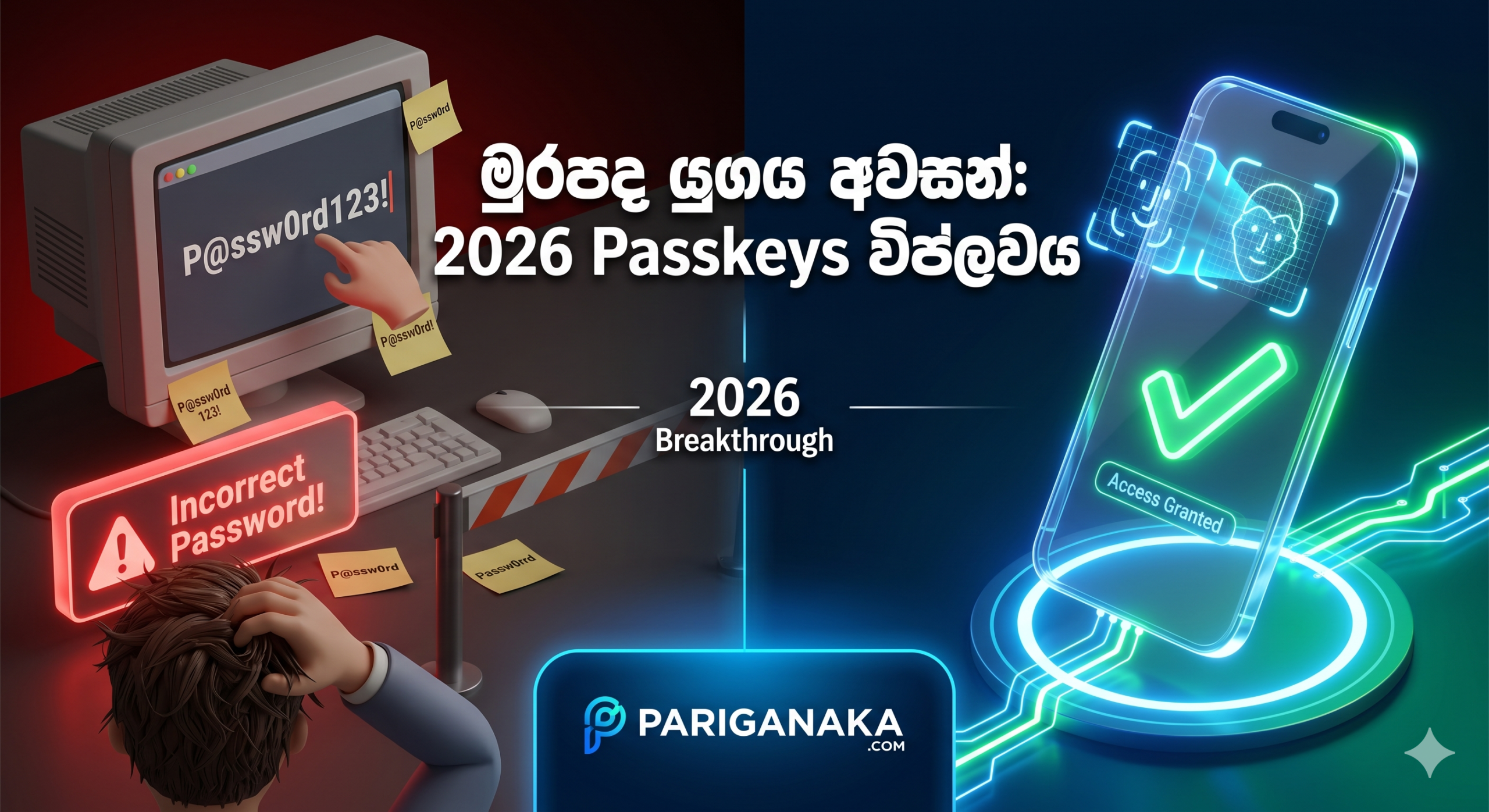
For decades, we have been tortured by the same digital chore: trying to remember if our password needed a capital letter, a number, or a special symbol. We write them on sticky notes, reuse the same weak ones across multiple sites, and inevitably have to click “Forgot Password” more times than we care to admit.
But the era of typing out P@ssw0rd123! is officially coming to a close. In 2026, the tech industry is aggressively phasing out traditional passwords in favor of a much safer, faster alternative: Passkeys.
Here is everything you need to know about the new standard for logging into your digital life.
🔑 What Exactly is a Passkey?
A passkey is a digital credential tied to your specific device (like your smartphone or laptop). Instead of typing a string of characters to prove who you are, a passkey uses your device’s built-in security features.
When a website asks you to log in, you simply use the exact same method you use to unlock your phone:
- Face ID (Facial recognition)
- Touch ID (Fingerprint scan)
- Your device’s screen PIN
Under the hood, it uses advanced cryptography. Your device creates a unique mathematical pair of “keys.” One stays locked safely on your device, and the other is shared with the website. When they match, you are in—no typing required.
🛡️ Why Passkeys Are Better Than Passwords
The shift to passkeys isn’t just about convenience; it is a massive upgrade for global cybersecurity.
- Phishing is Nearly Impossible: Hackers can’t trick you into giving away your passkey on a fake website because there is nothing for you to type or hand over. The underlying code only works on the genuine website.
- No More Data Breaches: If a company’s database gets hacked, the hackers only get the “public” half of the key, which is completely useless without the “private” half stored securely on your phone.
- Zero Memory Required: You will never have to reset a forgotten password again. As long as you can unlock your phone or computer, you can access your accounts.
🌍 Who is Adopting Them?
While passkeys were introduced a few years ago, 2026 marks the tipping point where they have become the default.
Google, Apple, and Microsoft have completely integrated passkeys into their operating systems. Major platforms like WhatsApp, Amazon, and TikTok now prompt users to switch to passkeys upon login. More importantly, major banks and financial institutions are moving away from annoying SMS codes and adopting passkeys as their primary two-factor authentication method.
The Bottom Line: Traditional passwords are a relic of the early internet. By embracing passkeys, we are moving toward a web that is not only much harder for hackers to exploit but also infinitely less frustrating for the rest of us.
Leave a Reply