
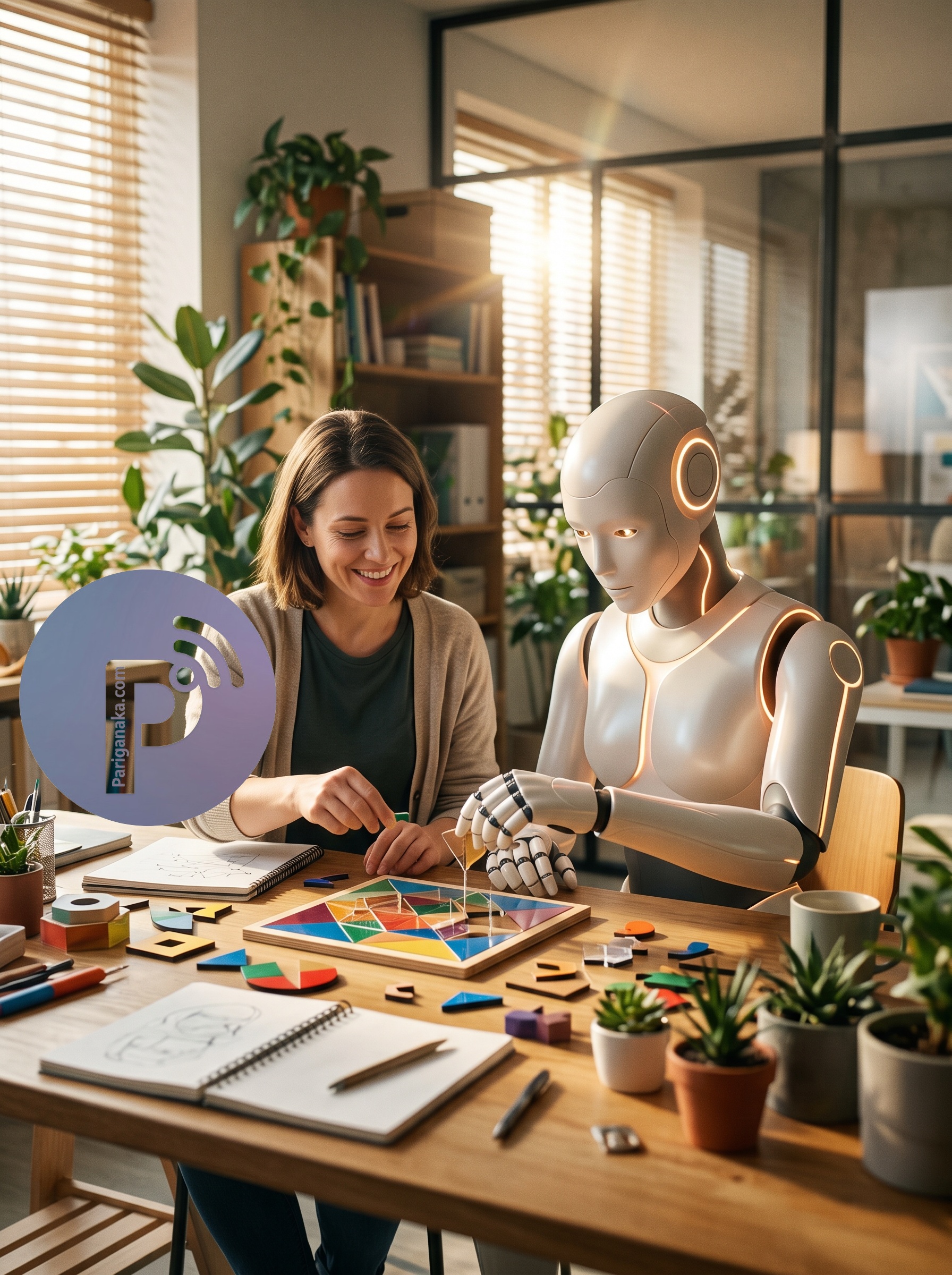
In the medical literature, there is a famous case of a patient who suffered damage to the emotional processing center of his brain. His IQ, logic, and language remained perfectly intact, yet his intelligence became completely paralyzed. Without emotional signals to guide him—a preference for one outcome over another—simple choices like picking a restaurant became impossible ordeals. For decades, scientists believed emotion was the enemy of rational reasoning. This patient proved that feeling is not interference; it is the engine. It tells a system what matters.
This profound insight—that learning requires a surrogate for desire, the pull of success, and the “pain” of failure—is the foundation of Reinforcement Learning, the technology driving the most advanced artificial intelligence in the world today.
The Matchbox Genesis
The concept of teaching a machine through simulated pain and reward began in 1961 with a British computer scientist named Donald Michie. Lacking advanced computers, Michie built a learning machine to play tic-tac-toe out of 300 matchboxes and colored glass beads. Each matchbox represented a board state. When the machine won a game, Michie added beads to the boxes used, reinforcing those choices. When it lost, he removed the beads, “punishing” the machine.
Over time, the machine played perfectly. It had not been programmed with the rules of good strategy; its behavior had been entirely shaped by the accumulated experience of simulated success and failure.
The Leap to Intuition
Michie’s matchboxes laid the groundwork, but scaling that logic to complex environments took decades. In chess, there are more possible board positions than atoms in the observable universe. AI needed a way to generalize and estimate the value of positions it had never seen.
The breakthrough came with deep neural networks. In the 1990s, a system called TD-Gammon mastered backgammon not by being fed human-designed rules, but by evaluating raw board states over 300,000 games of self-play. By 2013, DeepMind applied this to Atari video games. The AI was given nothing but raw pixels, the controller, and the game’s score signal. Driven purely by the desire to maximize the score (reward) and avoid losing (pain), the AI developed an “intuition” for the game mechanics that surpassed human ability in just hours.
Mastering the Messy Reality
While mastering digital games with fixed rules is impressive, the physical world is chaotic. It is filled with unpredictable friction, gravity, and noisy sensors. An AI could beat a grandmaster at chess but fail to wash a dish.
To solve this, researchers moved to continuous control and simulated realities. Because training a physical robot is slow and expensive, AI is trained in virtual simulations running millions of iterations per hour. However, a perfect simulation fails in the real world because reality is never perfect. The solution was “Domain Randomization”—deliberately making the simulation inaccurate. By randomly altering gravity, lighting, and friction in the virtual training ground, the AI learns robust, adaptable behaviors. When transferred to a physical robotic hand or a humanoid playing soccer, the AI thrives because it is already accustomed to chaos.
Today, AI is crossing a new frontier: General Physical Intelligence. Researchers are building machines capable of simulating the consequences of their actions in their own “minds” before moving a robotic limb. Sixty years after an experiment with cardboard matchboxes, machines are finally learning how to imagine the future.
Leave a Reply