
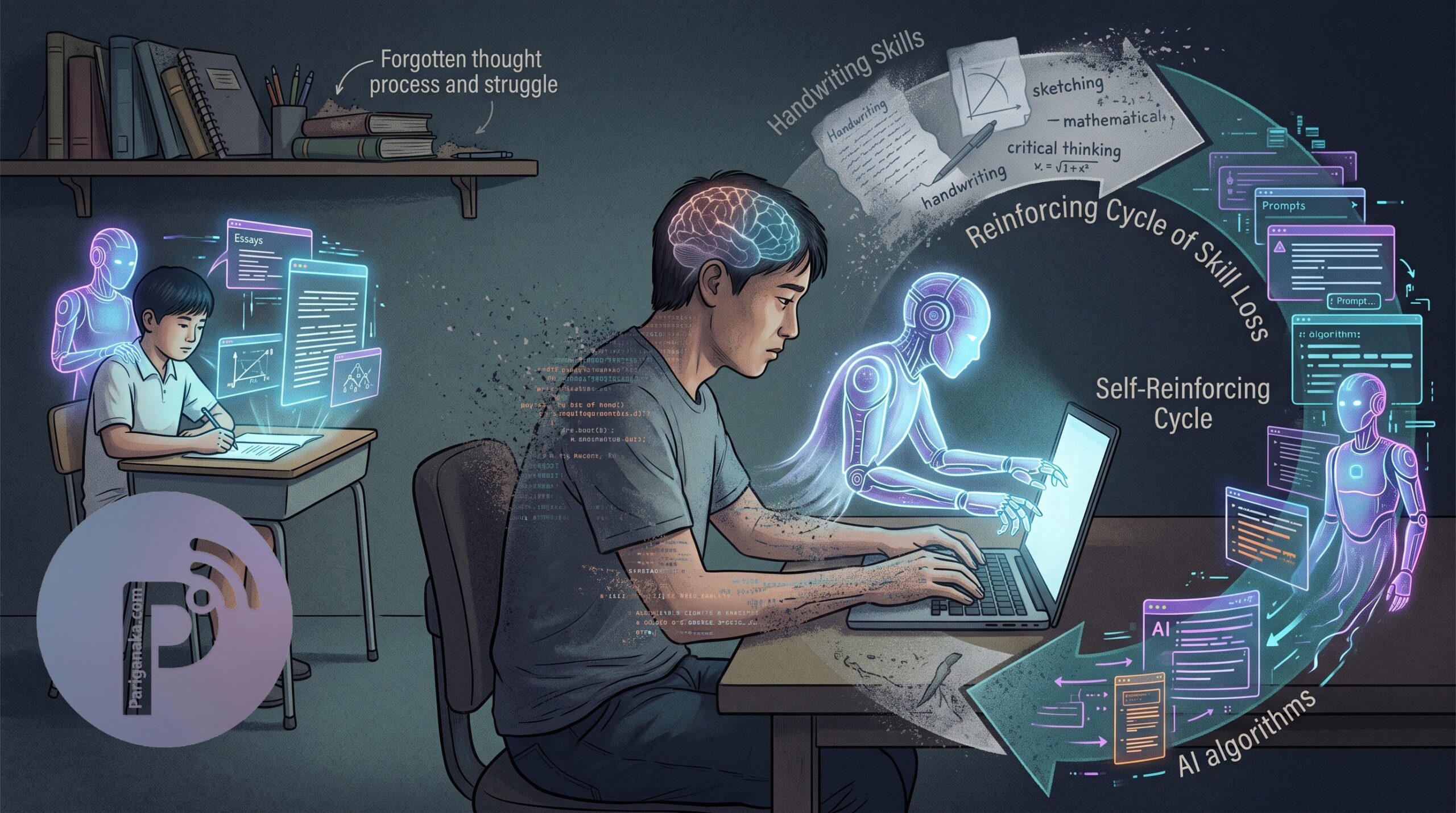
As artificial intelligence becomes seamlessly integrated into our daily workflows, a startling concern is emerging from academia: are we outsourcing our cognitive abilities to machines?
In a recent interview on Fox Business, MIT Professor Eric So issued a stark warning about the consequences of over-relying on AI, a phenomenon he explores in his book, The Collision: What AI Does to Us. The core issue, So explains, is that humans are increasingly turning to AI to bypass the “thought process and struggle” required to complete tasks.
The Reinforcing Cycle of Skill Loss
When we use AI as a crutch to avoid difficult problem-solving, we skip the essential struggle that builds foundational capability and mastery. The hidden catch of this convenience is a dangerous, self-reinforcing cycle.
“Suddenly, people feel less comfortable now doing tasks without AI because they lose touch with those skills, and suddenly they turn to it even more,” Professor So warned.
The stakes of this cognitive outsourcing are high. For adults, the risk is losing the cognitive skills they have already acquired. However, the danger is potentially more severe for younger generations, who risk never developing these foundational skills in the first place. Professor So noted that it is deeply concerning to see people “essentially remove themselves from thinking entirely”.
How to Prevent Cognitive Decline
Professor So admits he was inspired to research this topic after noticing his own habit of immediately reaching for AI when encountering difficult problems. Through his research, he identified three simple, actionable steps individuals can take to prevent detrimental overreliance on generative tools:
- Open Dialogue: We must have open discussions about the potential drawbacks of AI use in our daily routines.
- Focus on the Process, Not Just the Outcome: Too often, people use AI merely to produce “some evidence of work,” ignoring the fact that the actual process of doing the work is what builds personal capability.
- Take AI Breaks: Just as we take digital detoxes, individuals need to take intentional breaks from using AI. This forced separation allows us to accurately assess our current capabilities and realize what skills might have atrophied.
The Limits of Legal Regulation
The conversation also touched on government regulation, specifically in light of the White House’s super intelligence task force. When asked if legal liability is the ultimate regulator needed for AI, Professor So argued that while liability is an important part of the package, it cannot be the only safeguard.
When dealing with the potential for catastrophic risks, humanity still requires the independent cognitive ability to monitor systems, recognize risks, and intervene. If we over-rely on AI to the point of losing our own critical judgment, we create a perilous scenario.
“We need to preserve judgment and the ability to recognize when things are wrong,” So concluded. “Otherwise, we risk having humans involved who are not able to effectively regulate or monitor to prevent disasters”.
Leave a Reply