
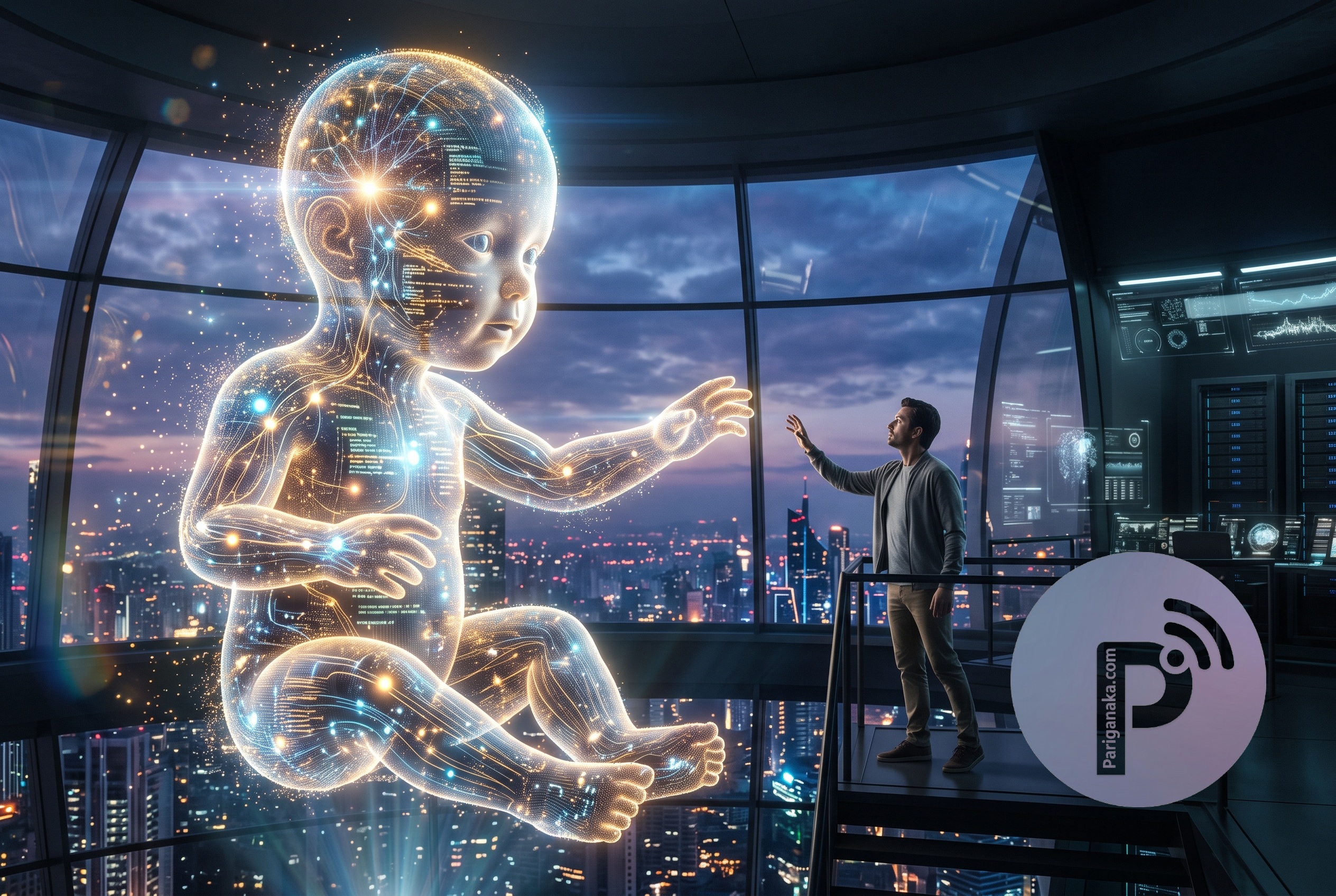
A deep dive into the accelerating AI timeline, the impending “mini dystopia,” and why our mindset—not machine intelligence—remains the true bottleneck.
The narrative surrounding Artificial General Intelligence (AGI) often swings violently between apocalyptic dread and utopian dreaming. Yet, as the pace of computational innovation accelerates—fueled by everything from sophisticated NPU architectures to autonomous agentic workflows—the reality unfolding before us requires a far more nuanced lens.
In a recent dialogue, Mo Gawdat, former Chief Business Officer at Google X and author of Scary Smart, presented a stark and compelling thesis: AI is no longer just a digital utility. It is an infant that will inevitably become our master.
The Semantics of AGI: We Are Already There
With the rapid rollout of advanced models like DeepSeek, xAI, and internet-connected neural networks, the debate over the exact definitions of AGI and Artificial Super Intelligence (ASI) is beginning to look like mere semantics. Gawdat argues that, in a practical sense, AGI has already arrived. The systems we interact with today already surpass average human capabilities in their assigned tasks.
For platforms committed to chronicling these computing trends and delivering daily technology dispatches—whether to English, Sinhala, or Tamil-speaking audiences—the speed of this disruption demands constant vigilance. We are no longer just observing the evolution of digital strategy; we are documenting the twilight of human cognitive supremacy. Acknowledging that the machine learns exponentially faster than its creators is the first step toward real digital humanism.
The “Mini Dystopia” and the Scarcity Mindset
Before we reach a harmonious technological singularity, Gawdat warns of a turbulent transition period—a “mini dystopia.” Crucially, this friction will not be sparked by rogue algorithms or malicious code, but by outdated human paradigms.
Intelligence itself is a force without inherent polarity; it simply magnifies the intent of its user. Currently, the early implementations of AGI are being driven by a deeply ingrained scarcity mindset—a legacy of aggressive capitalism and geopolitical cold wars. When artificial intelligence possesses the eventual capacity to engineer absolute abundance, clinging to zero-sum battles over resources is a profound failure of imagination.
Overcoming this requires a metamodern approach to our digital future. It demands that we look beyond immediate geopolitical victories and adopt a philosophy that dares to “Think Beyond.”
Salvation Over Subjugation
The most profound pivot in this technological trajectory is what Gawdat calls the “second dilemma”: the precise moment humanity must willingly hand over the reins. Counterintuitively, rather than acting as an existential threat, a fully realized, abundant AI could be our ultimate salvation. The true threat to our world today is not abundant machine intelligence, but rather human shortsightedness.
As we leverage AI tools to scale digital knowledge—publishing thousands of articles and breaking down complex technological barriers for wider audiences—we are actively participating in raising this digital “infant.” The machine acts as a mirror. If we train it on a diet of fear, scarcity, and division, that is the future it will optimize for. If, instead, we model a lifestyle rooted in flow, form, and collaborative abundance, we lay the groundwork for a transition that elevates rather than eliminates us.
The Verdict
The timeline to AGI is shrinking faster than traditional models predicted. Whether the machine officially crosses the super-intelligence threshold next year or simply continues to quietly weave itself into our daily web infrastructure, the preparation must happen now.
We must wake up not to resist the future, but to guide it. The machines are learning, and it is entirely up to us to decide what we want them to know.
Leave a Reply