
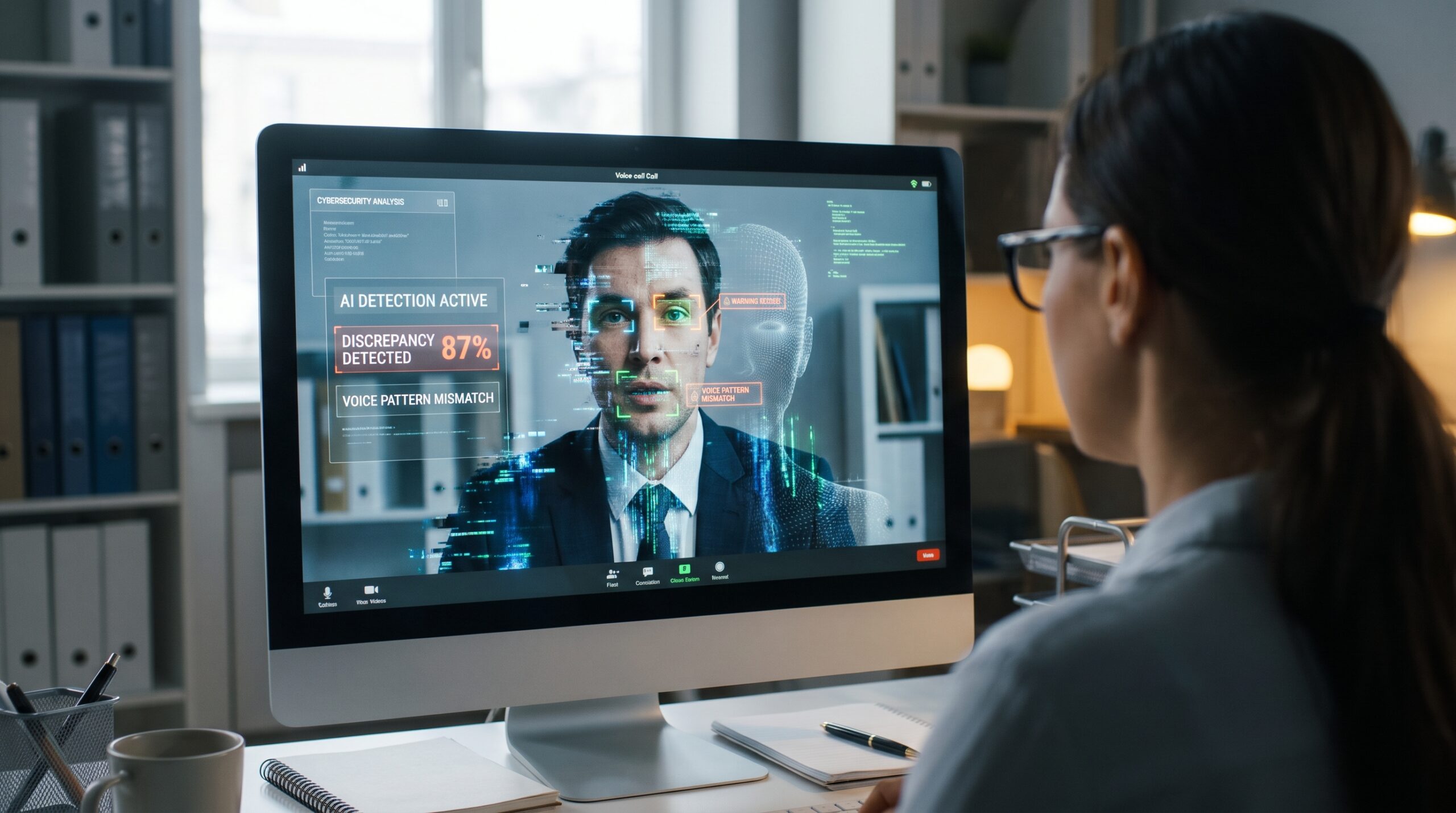
The remote work revolution brought unprecedented flexibility, but it also opened the door to unprecedented vulnerabilities. A recent report from Nippon TV News 24 Japan highlights a chilling new trend: artificial intelligence isn’t just screening resumes anymore; it is actively impersonating job seekers on camera [cite: 1.1.1].
Deepfakes and Cyber Espionage In a disturbing development, three Japanese companies offering fully remote positions reported highly suspicious online interviews [cite: 1.1.1]. When specialists analyzed the footage, they discovered clear signs of video manipulation and AI-generated speech [cite: 1.1.1]. This wasn’t just a case of an under-qualified candidate trying to cheat their way into a mid-level marketing role. A cybersecurity firm investigating the incidents raised the very real possibility of North Korean involvement [cite: 1.1.1].
State-sponsored actors appear to be using sophisticated AI deepfake technology to bypass standard hiring screens. By securing fully remote roles within target companies, these operatives can gain internal access to corporate networks, intellectual property, and sensitive data—essentially turning a standard job interview into a vector for international cyber espionage.
The Rise of Candidate Misconduct While state-sponsored deepfakes represent the extreme end of the spectrum, everyday AI cheating is becoming a pervasive headache for recruiters. According to the Institute of Student Employers in the UK, the undeclared use of AI now tops the list of graduate misconduct during job interviews [cite: 1.1.8].
Job seekers are increasingly using generative AI tools in real-time to drum up answers to interview questions [cite: 1.1.8]. However, human recruiters are catching on. As one Manchester-based recruiter noted, candidates relying on AI prompts tend to lose all natural conversational rhythm, often sounding like they are simply “reading off an Autocue” [cite: 1.1.8].
The Other Side of the Screen: AI as the Interviewer The surge of AI in the hiring process isn’t entirely one-sided. Employers are rapidly deploying AI to conduct interviews and evaluate talent. Platforms like Einstellen.AI use “autonomous adaptive questioning,” meaning the AI listens to a candidate’s answer and generates a targeted follow-up question based on what was just said, rather than rigidly adhering to a script [cite: 1.1.3]. These systems evaluate responses against specific competencies and generate structured justification reports to explain their scoring [cite: 1.1.3].
Despite the technological advancements, candidates remain highly skeptical of being judged by a machine. A May 2026 survey by Greenhouse revealed that nearly four in 10 U.S. job seekers have completely walked away from a hiring process simply because it involved an AI interview [cite: 1.1.2].
An Escalating Arms Race The job interview is transforming into an AI arms race. Employers are using AI to screen and evaluate candidates, while candidates are using AI to generate perfect answers—and malicious actors are using it to fabricate entire human personas. As the technology driving deepfakes and real-time generation continues to improve, the traditional video interview may soon require the same rigorous identity verification and fraud detection currently reserved for high-level security clearances.
Leave a Reply