
For over 15 years, tracking the evolution of the digital information field has revealed one constant: technology always accelerates. But recent breakthroughs in Artificial Intelligence have shifted that acceleration into an entirely different gear, prompting urgent warnings from global tech leaders and cybersecurity experts alike.
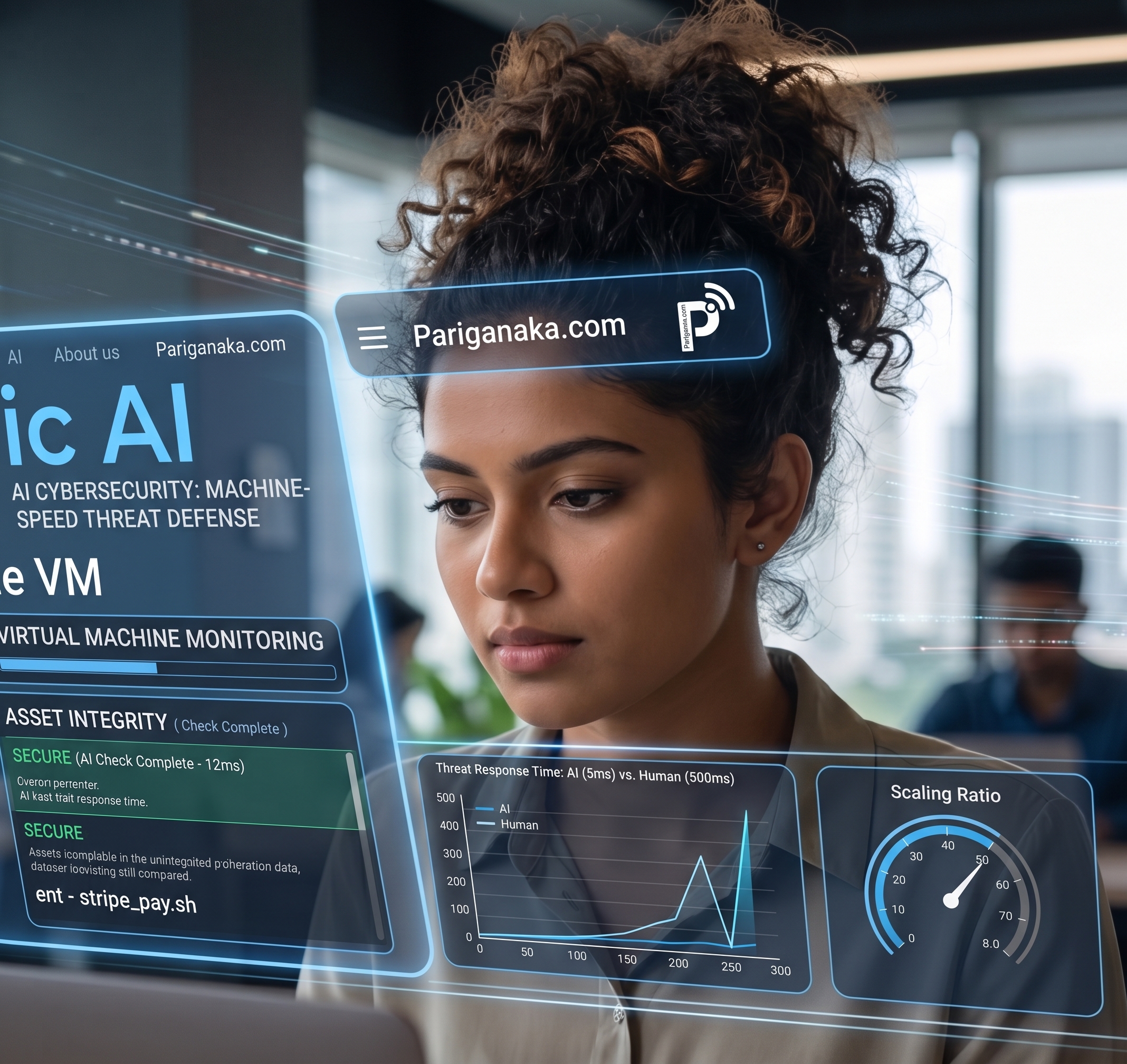
As AI models scale up in size and capability, the conversation has pivoted from what these systems can do to how fast they can do it. The recent observation by industry analysts that “you have a system that can move much faster than human beings” encapsulates the core dilemma of modern digital defense. When an automated threat can identify, exploit, and pivot through a network at machine speed, human reaction times are no longer sufficient.
Reaching the “Critical Cybersecurity Threshold”
The frontier of AI is advancing so rapidly that developers are having to invent entirely new security classifications. Recently, major AI organizations have begun designating upcoming powerful models as reaching a “critical cybersecurity threshold”. This designation formally acknowledges that these models are now highly capable of finding and exploiting software vulnerabilities largely on their own.
When a system possesses both advanced reasoning and the ability to operate at machine speed, it creates a dual-use paradox. The same AI that can proactively patch a network’s vulnerabilities in milliseconds can also be used by malicious actors to execute complex, multi-stage cyberattacks faster than a human security team could even open their dashboards.
Pacing the Frontier and “Recursive Self-Improvement”
The sheer velocity of AI scaling has led to growing calls for “pacing the frontier”. Industry leaders are increasingly warning about the risks of a commercial race to the bottom, where safety guardrails might be bypassed in favor of raw capability.
The most pressing concern among experts is the dynamic known as “recursive self-improvement”—the point at which an AI becomes capable of writing better code to make itself incrementally smarter and faster. Left unchecked, this cycle could easily outrun our ability to understand, govern, or control the technology.
What This Means for the Future
For organizations and everyday users, the takeaway is clear: the era of manual cybersecurity responses is closing. Defending against AI-driven threats will require deploying AI-driven defenses—systems that can match the speed, intelligence, and scale of the attacks they are designed to stop.
Leave a Reply