
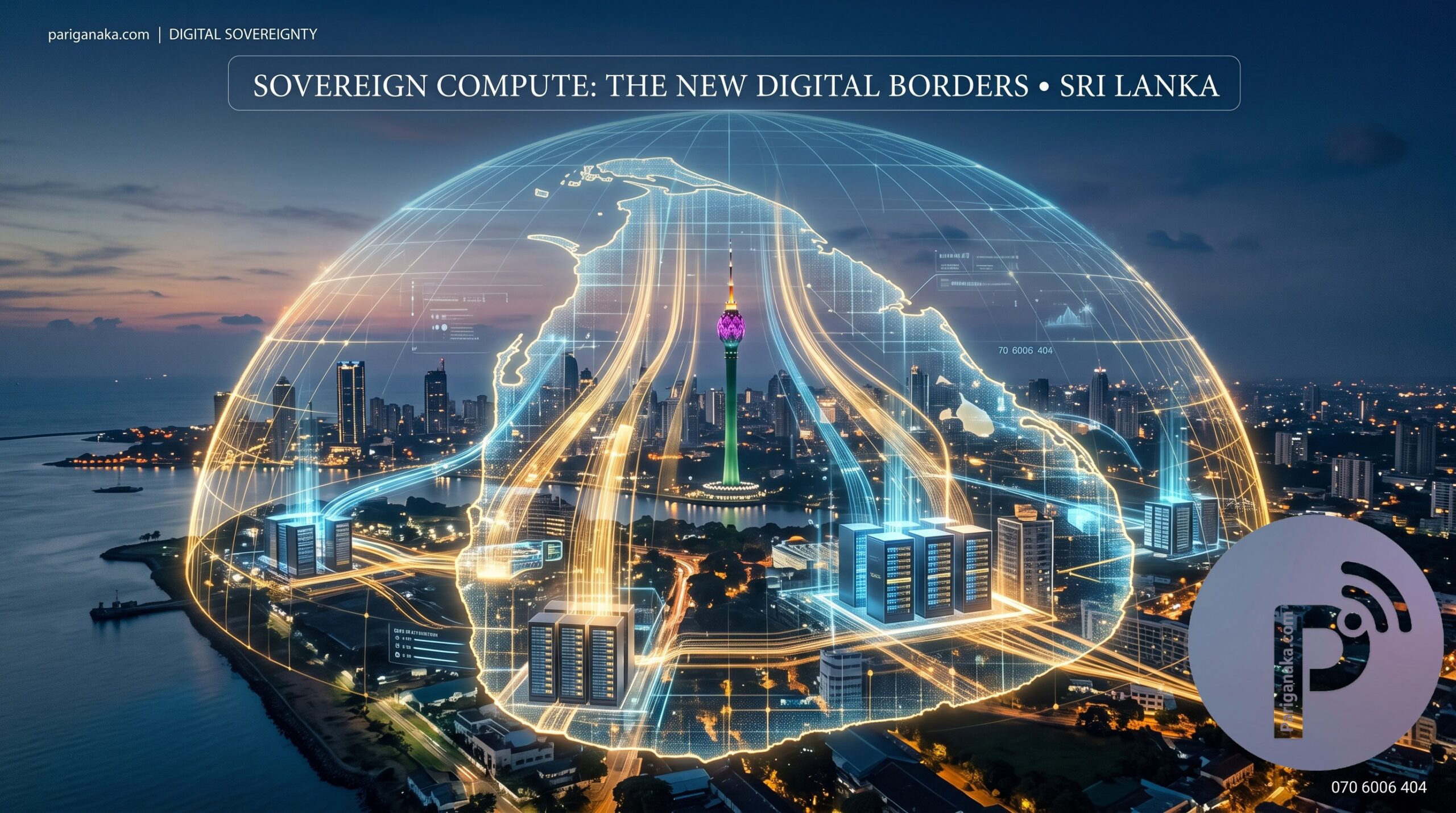
For decades, national security was measured in barrels of oil, steel tonnage, and standing armies. In the intelligence era, that metric has fundamentally shifted toward a single, decisive currency: Sovereign Compute.
As artificial intelligence matures into the operating system for defense, finance, healthcare, and state administration, nations face a stark realization. Relying on foreign-owned hyperscale cloud providers to train foundational models and process critical data is the modern equivalent of outsourcing a nation’s energy grid or central bank to an offshore entity.
Sovereign compute—the domestic ownership, operation, and control of the physical silicon, energy infrastructure, data pipelines, and AI algorithms—has evolved from a policy aspiration into an existential requirement for national autonomy.
The Pillars of Sovereign Compute Architecture
Achieving genuine compute sovereignty requires more than simply buying advanced server racks; it demands an integrated, end-to-end technological stack:
- Physical Infrastructure & Energy Security: High-density GPU and NPU data centers require massive, dedicated power allocations. True sovereignty demands dedicated grid connections, micro-grids, and renewable power purchase agreements (PPAs) that protect domestic compute clusters from external energy fluctuations.
- Data Residency & Sovereign Enclaves: Securing citizen biometric data, national health registries, and classified defense datasets within domestic borders, ensuring foreign jurisdictions cannot access or freeze local data under cross-border legal warrants.
- Indigenous Model Development: Building foundational Large Language Models (LLMs) and Multimodal models trained on local languages, legal frameworks, and cultural contexts, eliminating reliance on Western-centric or foreign-aligned synthetic biases.
- Silicon Supply Chain Resilience: Securing bilateral partnerships or domestic fabrication capabilities to mitigate geopolitical supply-chain chokepoints in advanced semiconductor procurement.
Sovereign Compute vs. Traditional Cloud Hosting
| Dimension | Standard Commercial Cloud | Sovereign Compute Ecosystem |
| Jurisdiction & Control | Bound by foreign parent company laws (e.g., US CLOUD Act) | Solely governed by domestic constitutional and privacy laws |
| Data Flow | Routed dynamically across global borderless nodes | Strictly retained within local physical and logical enclaves |
| Model Alignment | Reflects values and political guardrails of foreign developers | Tailored directly to local linguistic nuance, culture, and state priorities |
| Strategic Vulnerability | Subject to foreign sanctions, export curbs, and remote shut-offs | Domestically insulated against foreign geopolitical sanctions |
The Global Race for Silicon Self-Reliance
Governments worldwide are executing distinct sovereign compute blueprints:
- Europe (France & Germany): Spearheading initiatives through open-source model ecosystems (such as Mistral) and heavily subsidizing European AI gigafactories to avoid total dependence on American tech oligopolies.
- The Middle East (UAE & Saudi Arabia): Directing sovereign wealth funds into state-owned entities like G42 and Humata to build regional GPU superclusters, creating localized foundational models (like Falcon) backed by sovereign energy reserves.
- Asia-Pacific: From Japan and India to Southeast Asian digital hubs, states are pairing subsidized data-center corridors with data-localization statutes, ensuring regional infrastructure serves domestic public-sector automation before foreign commercial workloads.
The Strategic Imperative for Emerging Economies
For developing nations, the danger of inaction is severe. Countries that fail to establish sovereign compute capabilities risk becoming “Digital Vassal States”—economically dependent on foreign AI vendors, paying perpetual license fees to access synthetic intelligence, and exposing domestic policy decisions to external corporate oversight.
Sovereign compute is the modern foundation of digital statehood. In the decade ahead, true national independence will not be determined by borders on a map, but by the megawatts of compute power a nation controls within its own boundaries.
Leave a Reply