
Across the globe, a unified message is emerging from governments in the UK, Europe, and Japan: citizens need to be prepared to survive independently for at least 72 hours. While the advice itself isn’t entirely new, the urgency behind it has shifted. From extreme weather and natural disasters to the growing threat of cyberattacks and geopolitical instability, modern infrastructure is proving more fragile than it appears.
The UK’s “Be Ready” Campaign
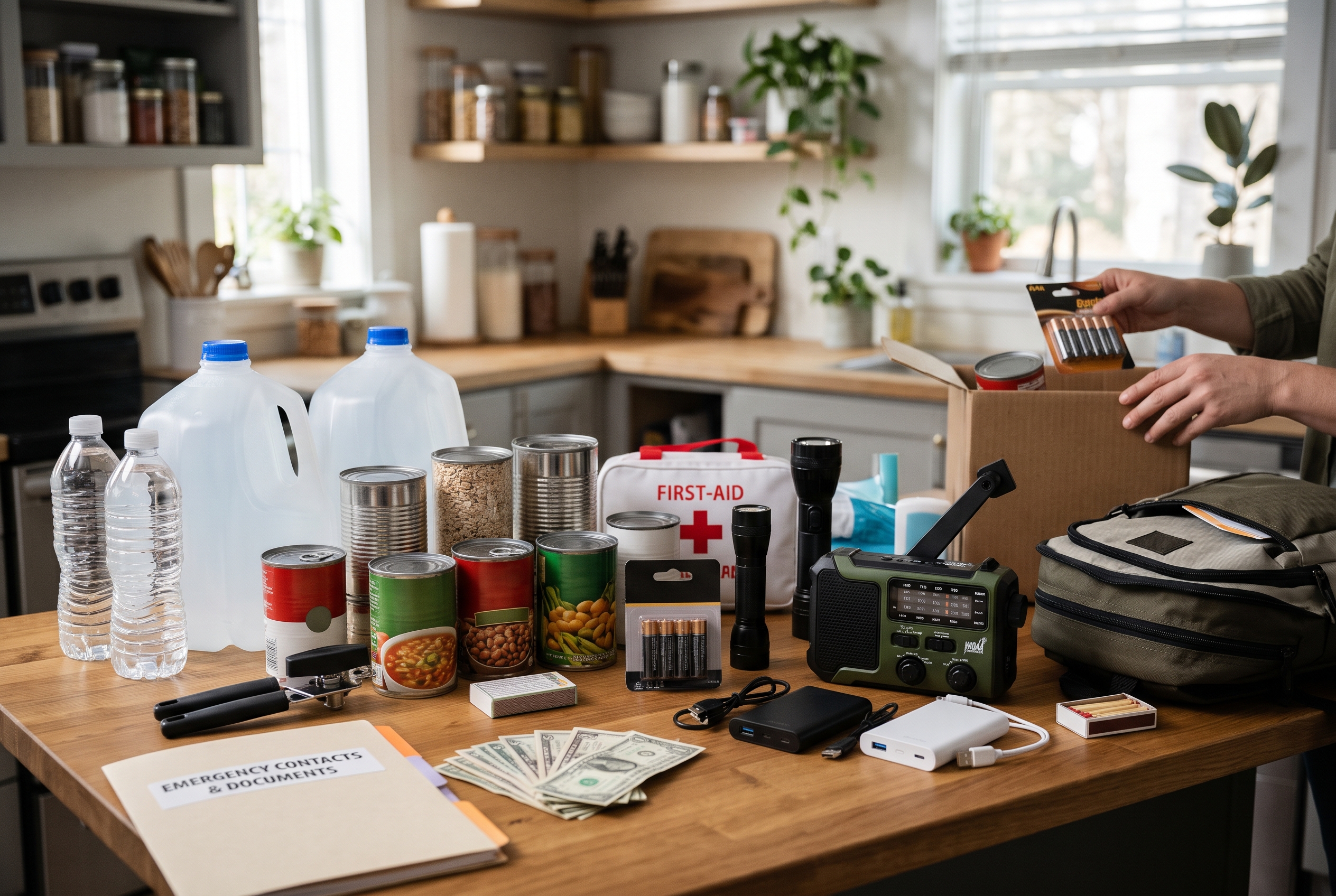
In the UK, the government’s recent “Be Ready” campaign advises every citizen to stockpile essential supplies. The primary concerns driving this initiative aren’t just traditional conflicts, but climate crises, cyberattacks, and an over-reliance on modern technology. The official UK checklist recommends:
- Water: Three litres of bottled water per person per day, for at least three days.
- Food: A three-day supply of non-perishable food that requires no cooking.
- Survival Essentials: A torch with spare batteries, a wind-up or battery-powered FM radio, and a fully charged power bank.
- Medical and Financial: A first-aid kit, essential medications, copies of important documents, and cash in a mix of notes and coins.
Europe’s Preparedness Strategy
The European Union has adopted a similar stance, urging citizens to keep a 72-hour supply of essential items on hand to prepare for potential crises, including floods, conflicts, or pandemics. The EU Stockpiling Strategy emphasizes that crises such as cyber threats, climate impacts, and geopolitical tensions cross borders easily.
Individual European countries have tailored their own guidelines. While the EU baseline is three days, nations like Sweden and Norway advise a week of preparation, and Germany recommends aiming for up to 10 days of supplies.
Japan’s Continued Vigilance
Japan, a nation highly experienced with natural disasters, is also reinforcing its guidelines. The Japanese government is urging citizens to stockpile at least three days’ worth of food, drinking water, and toilet supplies. This preparation is primarily focused on the aftermath of large-scale earthquakes and volcanic eruptions, aiming to reduce the initial burden on emergency services during the crucial early stages of a disaster.
The Real Threat: Infrastructure Failure
The biggest concern highlighted by these campaigns may not be missiles or armed conflict. The true vulnerability lies in the digital and physical systems we rely on daily. A successful cyberattack or prolonged blackout could instantly disable card payments, halt supply chains, and shut down telecommunications.
Emergency services may struggle to reach everyone immediately following a major disruption. These government warnings are not a call to panic-buy, but a reminder to prepare gradually. When essential systems fail, ordinary life can change rapidly, and a household stockpile acts as the vital bridge to safety until normalcy is restored.
Leave a Reply