
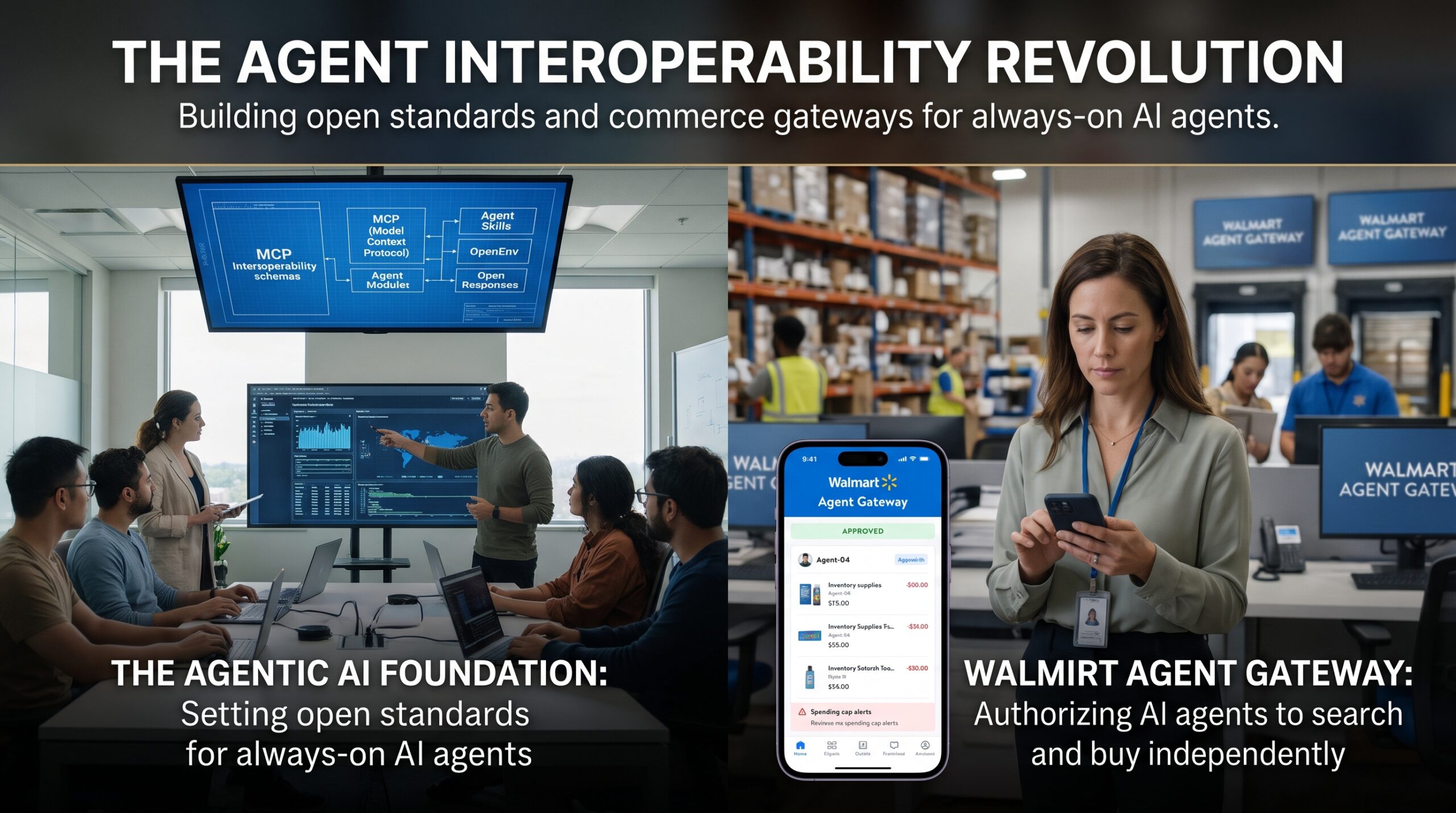
The transition from reactive chatbots to proactive, autonomous AI agents has officially crossed into commercial reality. With the rapid deployment of autonomous systems from major tech firms, the industry faced a critical bottleneck: these agents operated in isolated silos, unable to communicate across ecosystems. To address this interoperability crisis, the Linux Foundation officially launched the Agentic AI Foundation (AAIF) on October 22, establishing the much-needed infrastructure for a unified agentic web.
Building a Universal Language for AI Agents The AAIF introduced four cornerstone open-source projects designed to standardize how AI agents interact with digital environments and each other. Agent Skills provides a framework for agents to dynamically load specific domain expertise on demand, allowing specialized capabilities to be shared across platforms. Open Responses establishes interoperable interfaces for seamless communication between different foundational models. To ensure reliability and security, OpenEnv delivers an open framework for agent training, while OpenSandbox offers an isolated environment to test agent actions before live execution.
Walmart Opens the Door for “AI Shoppers” The commercial application of these standardized protocols is already materializing. On October 21, Walmart introduced its beta Agent Gateway, utilizing the Model Context Protocol (MCP) to allow AI agents to navigate its inventory and execute purchases autonomously. Bypassing traditional consumer interfaces—which are often slow and error-prone for automated systems—this gateway lets users and businesses dispatch agents to shop on their behalf, complete with customizable spending limits and strict pre-approval safeguards.
The Workforce Impact of Agentic Efficiency While the technological infrastructure scales, the labor market is feeling the immediate impact of this operational shift. British banking giant Barclays recently announced the elimination of approximately 5,000 jobs, representing 5% of its global workforce. With nearly 60% of these cuts impacting support roles and software developers, the bank explicitly cited technology-driven efficiency and automation as a core factor. As interoperable, transactional AI takes over complex administrative and development workflows, the human professional’s role is rapidly shifting from manual execution to strategic oversight.
Leave a Reply